


The Impact of Sex Chromosome Trisomies (XXX, XXY, XYY) on Early Social Cognition: Social Orienting, Joint Attention, and Theory of Mind
- PMID: 34101798
- PMCID: PMC8763088
- DOI: 10.1093/arclin/acab042
The Impact of Sex Chromosome Trisomies (XXX, XXY, XYY) on Early Social Cognition: Social Orienting, Joint Attention, and Theory of Mind
Abstract
Objective: About 1:650-1,000 children are born with an extra X or Y chromosome (XXX; XXY; XYY), which results in a sex chromosome trisomy (SCT). This study aims to cross-sectionally investigate the impact of SCT on early social cognitive skills. Basic orienting toward social cues, joint attention, and theory of mind (ToM) in young children with SCT were evaluated.
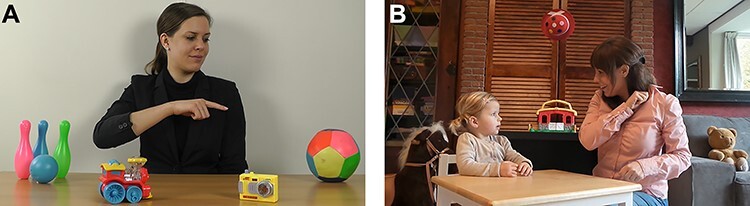
Method: About 105 children with SCT (range: 1-7 years old) were included in this study, as well as 96 age-matched nonclinical controls. Eyetracking paradigms were used to investigate the eye gaze patterns indicative of joint attention skills and orienting to social interactions. The ToM abilities were measured using the subtest ToM of the Developmental NEuroPSYchological Assessment, second edition, neuropsychological test battery. Recruitment and assessment took place in the Netherlands and in the United States.
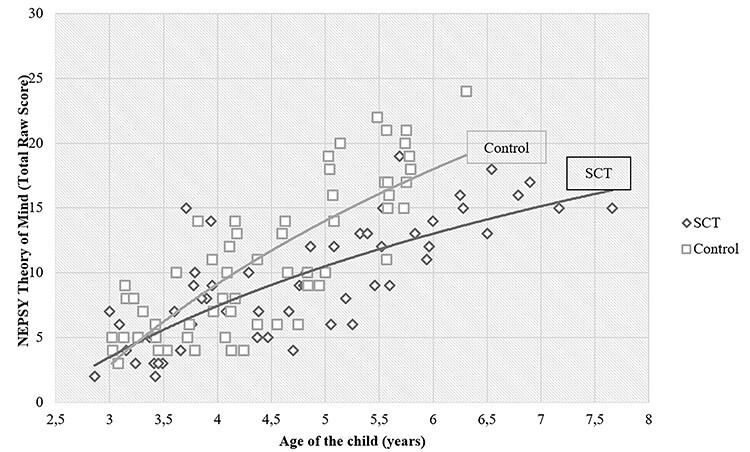
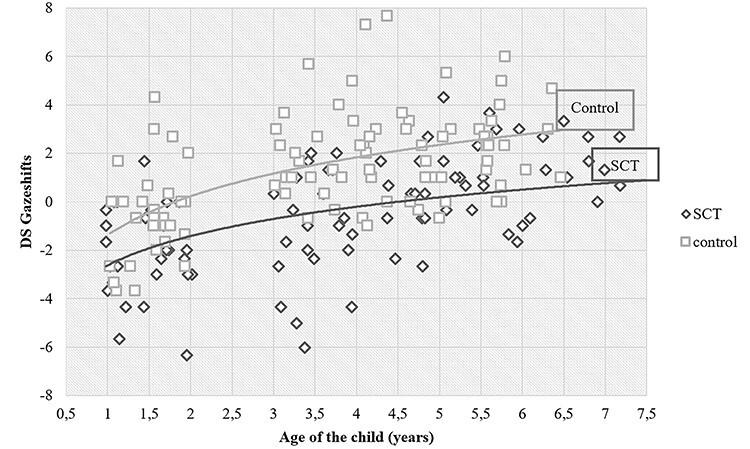
Results: Eyetracking results revealed difficulties in children with SCT in social orienting. These difficulties were more pronounced in children aged 3 years and older, and in boys with 47,XYY. Difficulties in joint attention were found over all age groups and karyotypes. Children with SCT showed impairments in ToM (26.3% in the [well] below expected level), increasing with age. These impairments did not differ between karyotypes.
Conclusions: An impact of SCT on social cognitive abilities was found already at an early age, indicating the need for early monitoring and support of early social cognition. Future research should explore the longitudinal trajectories of social development in order to evaluate the predictive relationships between social cognition and outcome later in life in terms of social functioning and the risk for psychopathology.
Keywords: Eyetracking; Joint attention; Sex chromosome trisomy; Social orienting; Theory of mind; Young children.
© The Author(s) 2021. Published by Oxford University Press. All rights reserved. For permissions, please e-mail: journals.permission@oup.com.
Figures
References
-
- Baron-Cohen, S., Allen, J., & Gillberg, C. (1992). Can autism be detected at 18 months? The needle, the haystack and the CHAT. British Journal of Psychiatry, 16(1), 839–839. - PubMed
-
- Bayley N. . (2006). Bayley Scales of Infant and Toddler Development. San Antonio, TX: The Psychological Corporation.
-
- Berglund, A., Viuff, M. H., Skakkebæk, A., Chang, S., Stochholm, K., & Gravholt, C. H. (2019). Changes in the cohort composition of turner syndrome and severe non-diagnosis of Klinefelter, 47, XXX and 47, XYY syndrome: A nationwide cohort study. Orphanet Journal of Rare Diseases, 14(1), 16. - PMC - PubMed
-
- Charman, T., Baron-Cohen, S., Swettenham, J., Baird, G., Cox, A., & Drew, A. (2000). Testing joint attention, imitation, and play as infancy precursors to language and theory of mind. Cognitive Development, 15(4), 481–498.
