


Randomized study of remote telehealth genetic services versus usual care in oncology practices without genetic counselors
- PMID: 34102012
- PMCID: PMC8267134
- DOI: 10.1002/cam4.3968
Randomized study of remote telehealth genetic services versus usual care in oncology practices without genetic counselors
Abstract
Purpose: To examine the benefit of telehealth over current delivery options in oncology practices without genetic counselors.
Methods: Participants meeting cancer genetic testing guidelines were recruited to this multi-center, randomized trial comparing uptake of genetic services with remote services (telephone or videoconference) to usual care in six predominantly community practices without genetic counselors. The primary outcome was the composite uptake of genetic counseling or testing. Secondary outcomes compare telephone versus videoconference services.
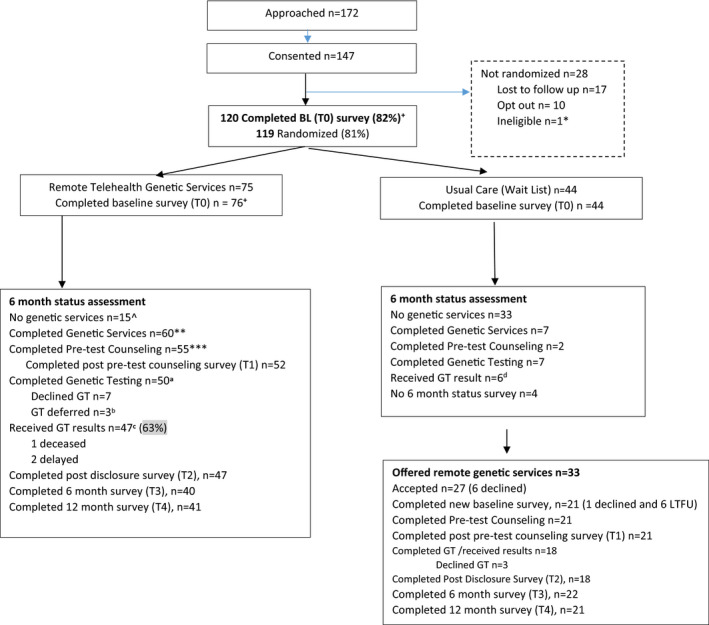
Results: 147 participants enrolled and 119 were randomized. Eighty percent of participants in the telehealth arm had genetic services as compared to 16% in the usual care arm (OR 30.52, p < 0.001). Five genetic mutation carriers (6.7%) were identified in the telehealth arm, compared to none in the usual care arm. In secondary analyses, factors associated with uptake were lower anxiety (6.77 vs. 8.07, p = 0.04) and lower depression (3.38 vs. 5.06, p = 0.04) among those who had genetic services. There were no significant differences in change in cognitive or affective outcomes immediately post-counseling and at 6 and 12 months between telephone and videoconference arms.
Conclusion: Telehealth increases uptake of genetic counseling and testing at oncology practices without genetic counselors and could significantly improve identification of genetic carriers and cancer prevention outcomes.
Keywords: alternative service delivery; cancer genetics; cancer predisposition syndromes; genetic counseling; genetic testing; genetics; telegenetics; telehealth; telemedicine.
© 2021 The Authors. Cancer Medicine published by John Wiley & Sons Ltd.
Conflict of interest statement
Dr. Angela Bradbury has served on advisory boards for AstraZeneca and Merck. There are no other conflicts of interest to disclose.
Figures
References
-
- Force USPST . Genetic risk assessment and BRCA mutation testing for breast and ovarian cancer susceptibility: recommendation statement. Ann Intern Med. 2005;143(5):355‐361. - PubMed
-
- Hawkins AK, Hayden MR. A grand challenge: providing benefits of clinical genetics to those in need. Genet Med. 2011;13(3):197‐200. - PubMed
-
- Terry AB, Wylie A, Raspa M, et al. Clinical models of telehealth in genetics: a regional telegenetics landscape. J Genet Couns. 2019;28(3):673‐691. - PubMed
-
- Hilgart JS, Hayward JA, Coles B, Iredale R. Telegenetics: a systematic review of telemedicine in genetics services. Genet Med. 2012;14(9):765‐776. - PubMed
Publication types
MeSH terms
Grants and funding
LinkOut - more resources
Full Text Sources
Medical
