


Calorie Labeling and Product Reformulation: A Longitudinal Analysis of Supermarket-Prepared Foods
- PMID: 34103209
- PMCID: PMC8384707
- DOI: 10.1016/j.amepre.2021.03.013
Calorie Labeling and Product Reformulation: A Longitudinal Analysis of Supermarket-Prepared Foods
Abstract
Introduction: The 2010 Affordable Care Act required chain retail food establishments, including supermarkets, to post calorie information for prepared (i.e., ready to eat) foods. Implementation of calorie labeling could spur companies to reduce the calorie content of prepared foods, but few studies have explored this. This study evaluates the changes in the calorie content of prepared foods at 2 large U.S. supermarket chains after they implemented calorie labels in April 2017.
Methods: The chains (≈1,200 stores) provided data on the calorie content and labeling status of all items sold between July 2015 and January 2019. In 2021, analyses used a difference-in-differences approach to examine the changes in the calorie content of prepared bakery, entree, and deli items introduced before calorie labeling to those introduced after the labeling compared with changes in similar foods not subject to the new labeling requirement. Primary analyses examined continuously available items; exploratory analyses examined items newly introduced to the marketplace.
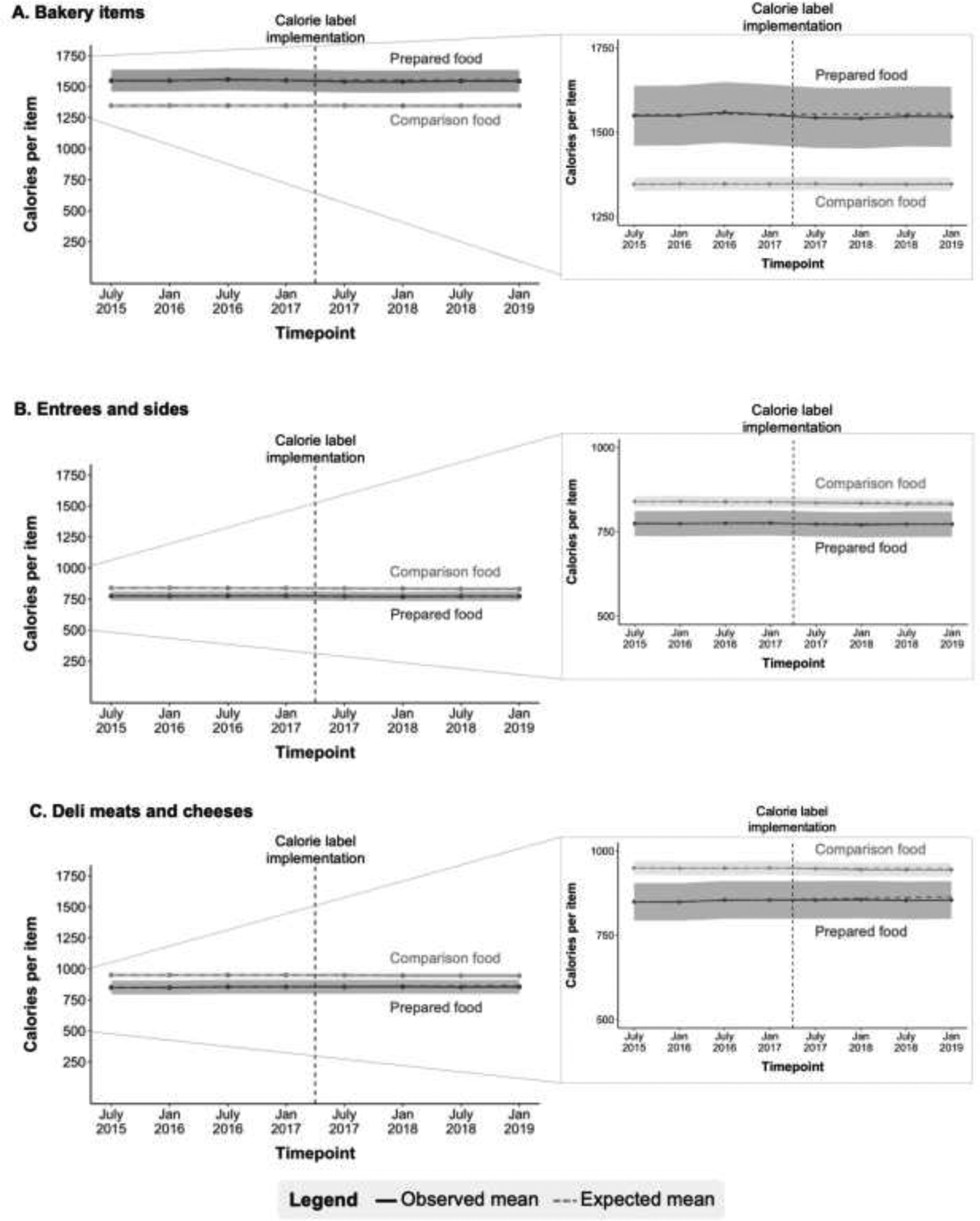
Results: Relative to changes in comparison foods not subject to the labeling requirement, continuously available prepared bakery items decreased by 7.7 calories per item after calorie labels were implemented (95% CI= -12.9, -2.5, p=0.004, ≈0.5% reduction). In exploratory analyses, prepared bakery items introduced after calorie labeling contained 440 fewer calories per item than those introduced before calorie labeling (95% CI= -773.9, -106.1, p=0.01, ≈27% reduction), driven by reductions in product size. No changes were observed in the calorie content of continuously available or newly introduced prepared entrees or deli items.
Conclusions: Implementing calorie labels could encourage product reformulation among some types of prepared supermarket foods. These supply-side changes could lead to reductions in caloric intake.
Copyright © 2021 American Journal of Preventive Medicine. Published by Elsevier Inc. All rights reserved.
Figures
References
-
- Saksena MJ, Okrent AM, Anekwe TD, et al. America’s Eating Habits: Food Away From Home. Washington, DC: U.S. Department of Agriculture, Economic Research Service; 2018. https://www.ers.usda.gov/publications/pub-details/?pubid=90227.AccessedAugust 15, 2020.
-
- Lin B, Guthrie J. Nutritional Quality of Food Prepared at Home and Away from Home, 1977–2008. Washington, DC: U.S. Department of Agriculture; 2012. https://www.ers.usda.gov/webdocs/publications/43698/34513_eib-105.pdf?v=....AccessedApril 3, 2021.
Publication types
MeSH terms
Grants and funding
LinkOut - more resources
Full Text Sources
Miscellaneous
