


Prevalence and seroprevalence of Plasmodium infection in Myanmar reveals highly heterogeneous transmission and a large hidden reservoir of infection
- PMID: 34106995
- PMCID: PMC8189444
- DOI: 10.1371/journal.pone.0252957
Prevalence and seroprevalence of Plasmodium infection in Myanmar reveals highly heterogeneous transmission and a large hidden reservoir of infection
Abstract
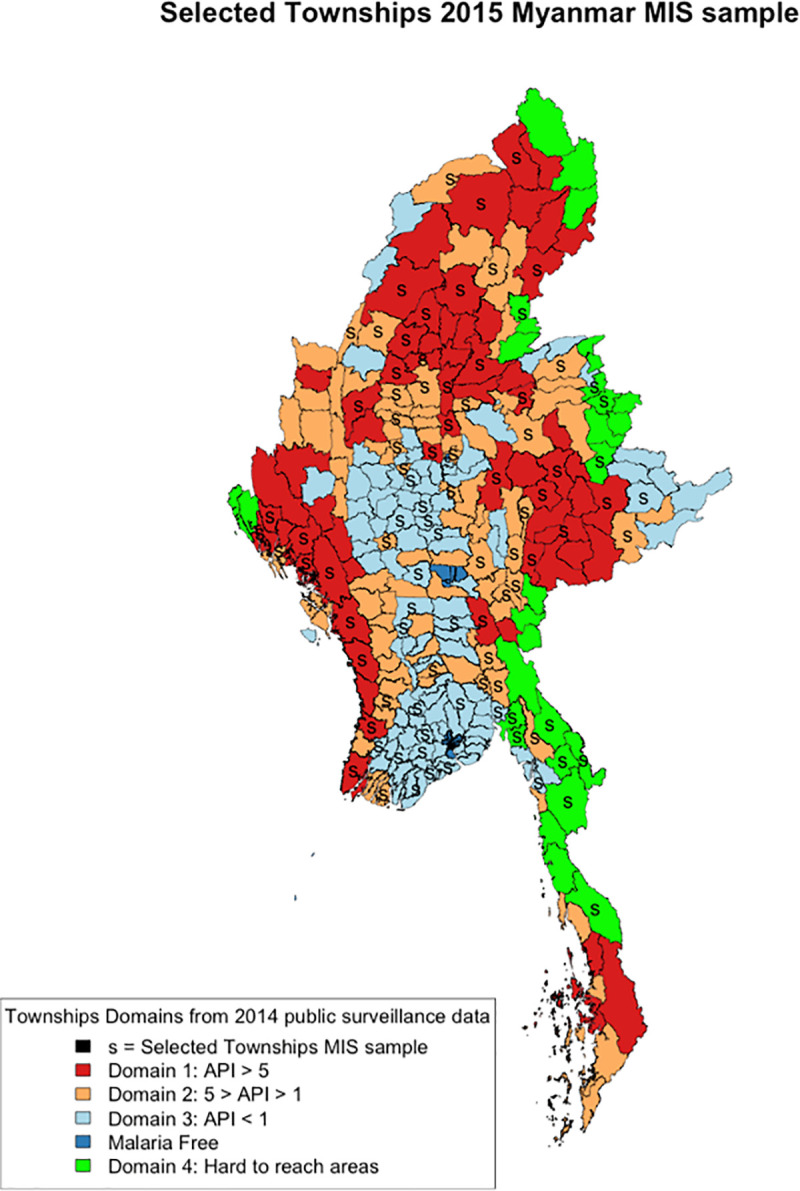
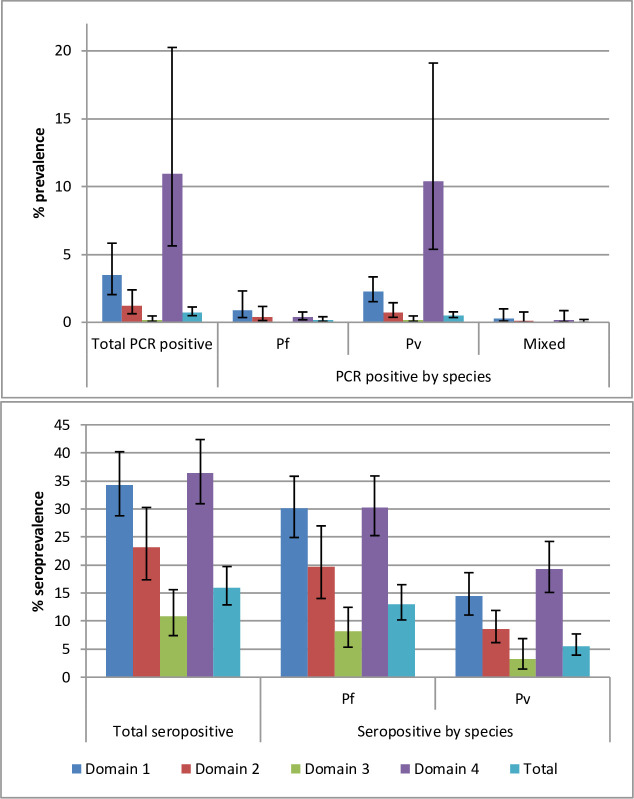
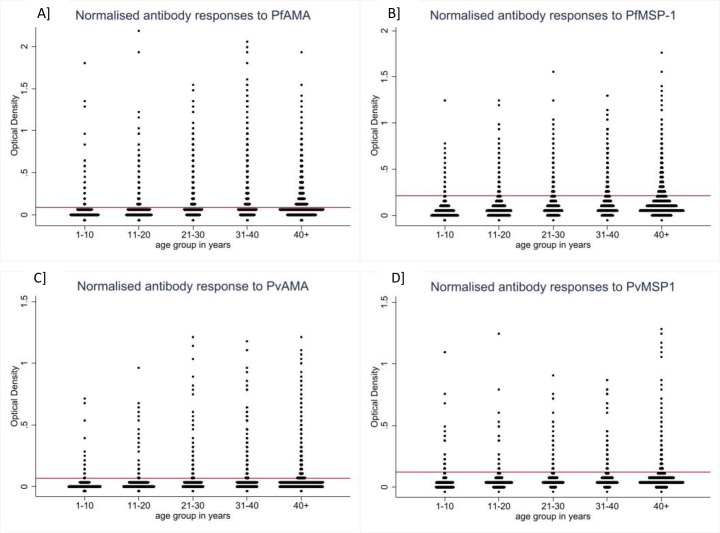
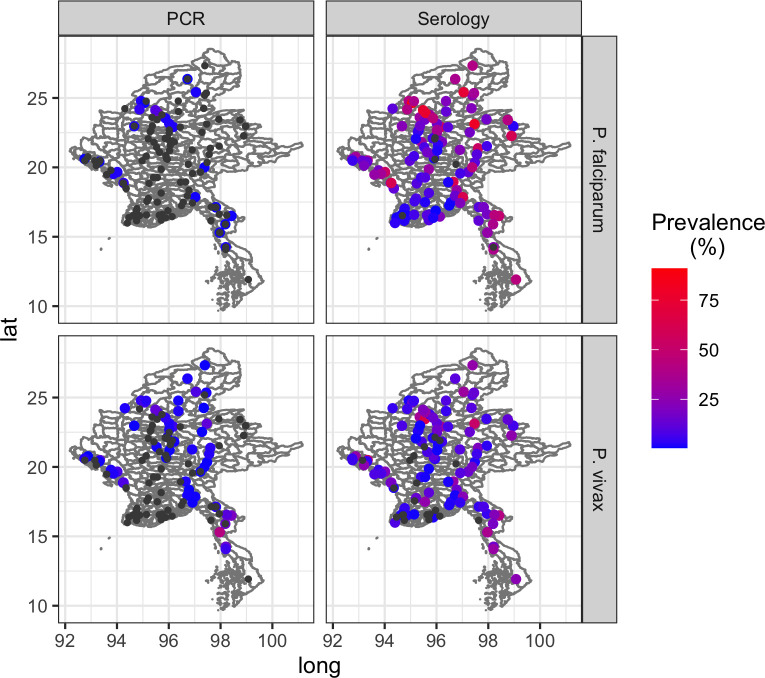
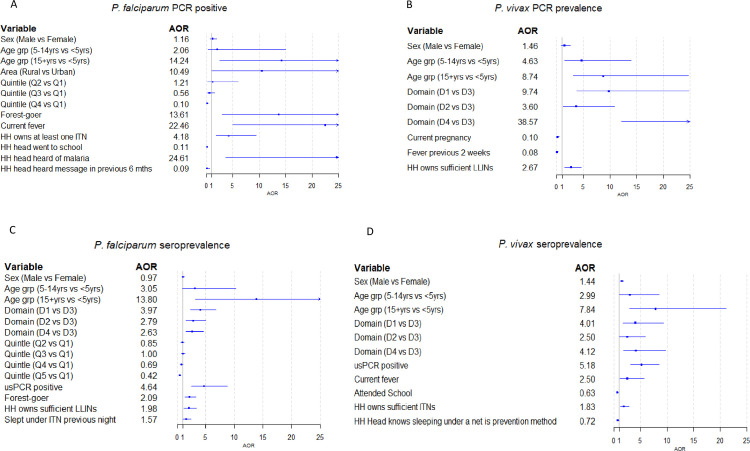
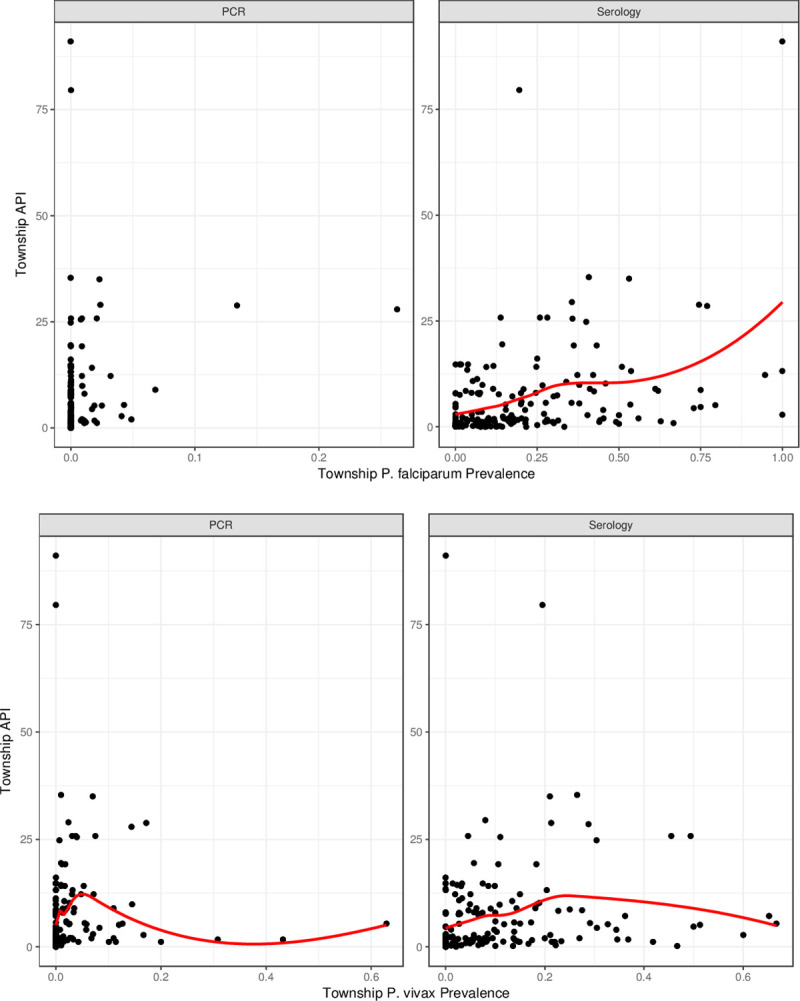
Malaria incidence in Myanmar has significantly reduced over recent years, however, completeness and timeliness of incidence data remain a challenge. The first ever nationwide malaria infection and seroprevalence survey was conducted in Myanmar in 2015 to better understand malaria epidemiology and highlight gaps in Annual Parasite Index (API) data. The survey was a cross-sectional two-stage stratified cluster-randomised household survey conducted from July-October 2015. Blood samples were collected from household members for ultra-sensitive PCR and serology testing for P. falciparum and P. vivax. Data was gathered on demography and a priori risk factors of participants. Data was analysed nationally and within each of four domains defined by API data. Prevalence and seroprevalence of malaria were 0.74% and 16.01% nationwide, respectively. Prevalent infection was primarily asymptomatic P. vivax, while P. falciparum was predominant in serology. There was large heterogeneity between villages and by domain. At the township level, API showed moderate correlation with P. falciparum seroprevalence. Risk factors for infection included socioeconomic status, domain, and household ownership of nets. Three K13 P. falciparum mutants were found in highly prevalent villages. There results highlight high heterogeneity of both P. falciparum and P. vivax transmission between villages, accentuated by a large hidden reservoir of asymptomatic P. vivax infection not captured by incidence data, and representing challenges for malaria elimination. Village-level surveillance and stratification to guide interventions to suit local context and targeting of transmission foci with evidence of drug resistance would aid elimination efforts.
Conflict of interest statement
The authors have declared that no competing interests exist.
Figures
References
-
- World Health Organization. Strategy for Malaria Elimination in the Greater Mekong Subregion (2015–2030). Vol. 53. 2013.
-
- Department of Public Health Myanmar. National Strategic Plan for Intensifying Malaria Control and Accelerating Progress towards Malaria Elimination (2016–2020). 2016.
-
- Tun KM, Imwong M, Lwin KM, Win AA, Hlaing TM, Hlaing T, et al.. Spread of artemisinin-resistant Plasmodium falciparum in Myanmar: a cross-sectional survey of the K13 molecular marker. Lancet Infect Dis [Internet]. 2015;15(4):415–21. Available from: doi: 10.1016/S1473-3099(15)70032-0 - DOI - PMC - PubMed
Publication types
MeSH terms
LinkOut - more resources
Full Text Sources
Research Materials
