Review
. 2021 Jun 30;49(3):1349-1359.
doi: 10.1042/BST20201067.

Biological insights from SMA-extracted proteins

Affiliations
Review

Biological insights from SMA-extracted proteins

Lucas Unger et al. Biochem Soc Trans. .

Abstract

In the twelve years since styrene maleic acid (SMA) was first used to extract and purify a membrane protein within a native lipid bilayer, this technological breakthrough has provided insight into the structural and functional details of protein-lipid interactions. Most recently, advances in cryo-EM have demonstrated that SMA-extracted membrane proteins are a rich-source of structural data. For example, it has been possible to resolve the details of annular lipids and protein-protein interactions within complexes, the nature of lipids within central cavities and binding pockets, regions involved in stabilising multimers, details of terminal residues that would otherwise remain unresolved and the identification of physiologically relevant states. Functionally, SMA extraction has allowed the analysis of membrane proteins that are unstable in detergents, the characterization of an ultrafast component in the kinetics of electron transfer that was not possible in detergent-solubilised samples and quantitative, real-time measurement of binding assays with low concentrations of purified protein. While the use of SMA comes with limitations such as its sensitivity to low pH and divalent cations, its major advantage is maintenance of a protein's lipid bilayer. This has enabled researchers to view and assay proteins in an environment close to their native ones, leading to new structural and mechanistic insights.

Keywords: SMALP; cryo-electron microscopy; membrane proteins; protein complexes; protein–lipid interactions.


Conflict of interest statement

The authors declare that there are no competing interests associated with the manuscript.

Figures
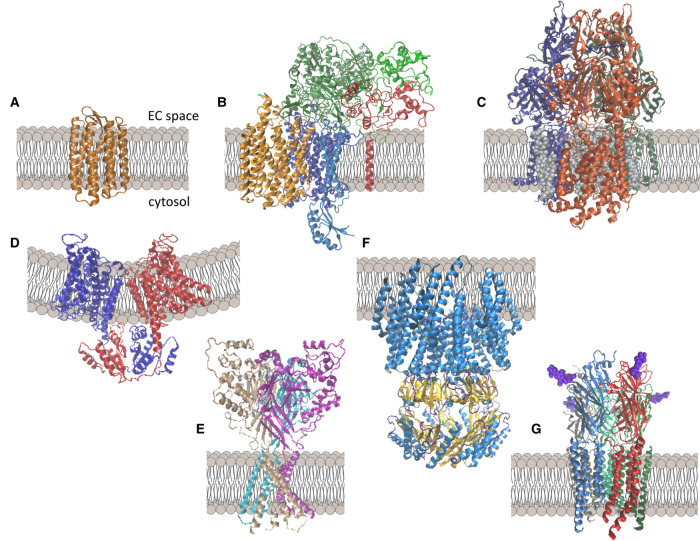
Figure 1.
Figure 1.. Example structures obtained using polymer extracted proteins.
(A) Haloquadratum Walsbyi bacteriorhodopsin (PDB ID 5ITC) [31]. (B) Alternative complex III (PDB ID 6BTM) [38]. (C) AcrB (PDB ID 6BAJ) [21]. (D) KimA (PDB ID 6S3K) [33]. (E) ASIC1 in the low pH desensitized state (PDB ID 6VTK) [50]. (F) YnaI in the closed state (PDB ID 6ZYD) [34]. (G) Glycine receptor (GlyR) with bound glycine (purple) in the super-open state (PDB ID 6PM4) [46].
Figure 2.
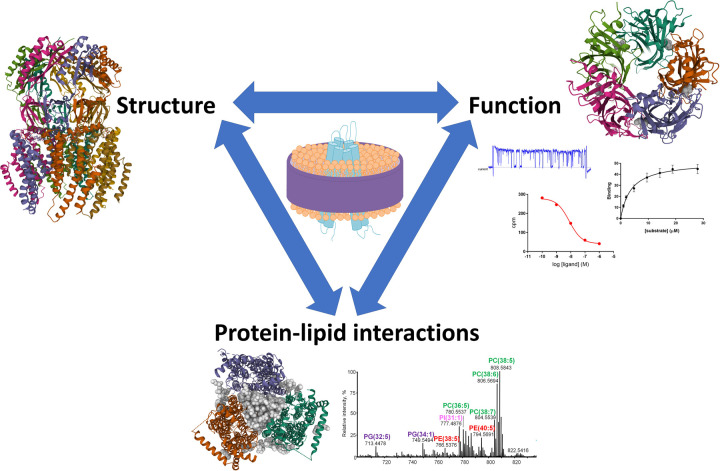
Figure 2.. Polymer extraction of membrane proteins retains interactions between proteins and lipids which is important for both protein structure and function.
Side view structure of YnaI (PDB ID 6ZYD) [34].Top view structure of GlyR showing bound partial agonist taurine (space filling grey) (PDB ID 6PM0) [46], alongside representative images of various types of functional assays. Bottom view of AcrB trimer showing central lipid filled cavity (space filling grey) (PDB ID 6BAJ) [21], alongside a representative mass spectrum for lipids co-purified with a protein from yeast. Structural images made using Mol*[79].

References

    1. Overington, J.P., Al-Lazikani, B. and Hopkins, A.L. (2006) How many drug targets are there? Nat. Rev. Drug Discov. 5, 993–996 10.1038/nrd2199 - DOI - PubMed
    1. Seddon, A.M., Curnow, P. and Booth, P.J. (2004) Membrane proteins, lipids and detergents: not just a soap opera. Biochim. Biophys. Acta Biomembr. 1666, 105–117 10.1016/j.bbamem.2004.04.011 - DOI - PubMed
    1. Choy, B.C., Cater, R.J., Mancia, F. and Pryor, Jr, E.E. (2021) A 10-year meta-analysis of membrane protein structural biology: detergents, membrane mimetics, and structure determination techniques. Biochim. Biophys. Acta Biomembr. 1863, 183533 10.1016/j.bbamem.2020.183533 - DOI - PMC - PubMed
    1. Hardy, D., Desuzinges Mandon, E., Rothnie, A.J. and Jawhari, A. (2018) The yin and yang of solubilization and stabilization for wild-type and full-length membrane protein. Methods 147, 118–125 10.1016/j.ymeth.2018.02.017 - DOI - PubMed
    1. Dawaliby, R., Trubbia, C., Delporte, C., Masureel, M., Van Antwerpen, P., Kobilka, B.K.et al. (2016) Allosteric regulation of G protein-coupled receptor activity by phospholipids. Nat. Chem. Biol. 12, 35–39 10.1038/nchembio.1960 - DOI - PMC - PubMed

Publication types

MeSH terms