


Predictive analytics and tailored interventions improve clinical outcomes in older adults: a randomized controlled trial
- PMID: 34112921
- PMCID: PMC8192898
- DOI: 10.1038/s41746-021-00463-y
Predictive analytics and tailored interventions improve clinical outcomes in older adults: a randomized controlled trial
Abstract
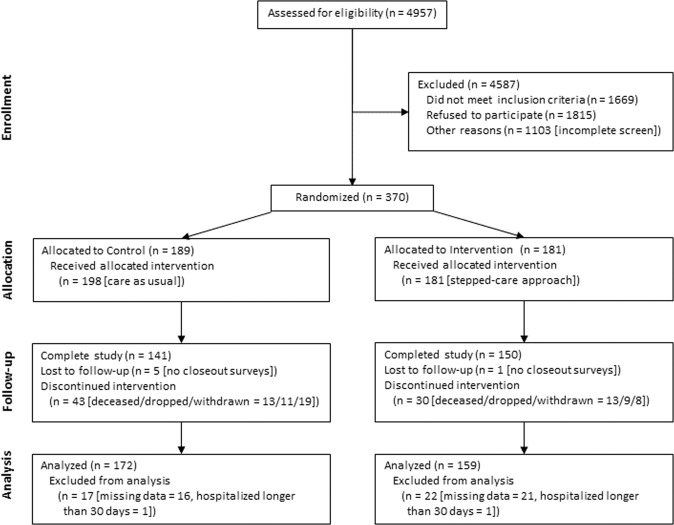
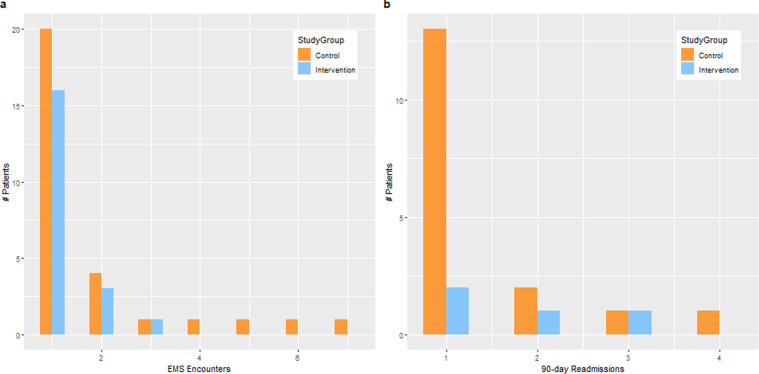
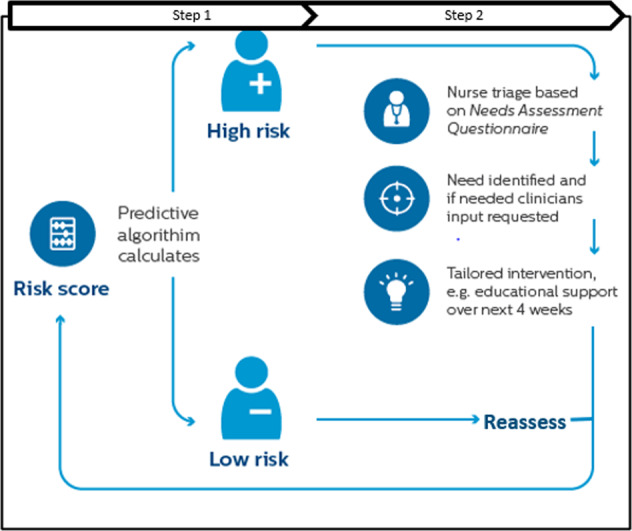
This study explored the potential to improve clinical outcomes in patients at risk of moving to the top segment of the cost acuity pyramid. This randomized controlled trial evaluated the impact of a Stepped-Care approach (predictive analytics + tailored nurse-driven interventions) on healthcare utilization among 370 older adult patients enrolled in a homecare management program and using a Personal Emergency Response System. The Control group (CG) received care as usual, while the Intervention group (IG) received Stepped-Care during a 180-day intervention period. The primary outcome, decrease in emergency encounters, was not statistically significant (15%, p = 0.291). However, compared to the CG, the IG had significant reductions in total 90-day readmissions (68%, p = 0.007), patients with 90-day readmissions (76%, p = 0.011), total 180-day readmissions (53%, p = 0.020), and EMS encounters (49%, p = 0.006). Predictive analytics combined with tailored interventions could potentially improve clinical outcomes in older adults, supporting population health management in home or community settings.
Conflict of interest statement
M.N.S., J.B. and A.O. are Philips Research employees. Philips funded the study. The remaining authors declare no competing interests.
Figures
References
-
- Ortman JM, Velkoff V, Hogan H. An aging nation: the older population in the United States. Econ. Stat. Adm. US Dep. Commer. 2014;1964:1–28.
-
- For Patients With Multiple Chronic Conditions, Improving Care Will Be A Bipartisan Effort, Health Affairs Blog. 10.1377/hblog20170601.060354/full
-
- Centers for Medicare and Medicaid Services (CMC). Chronic conditions among Medicare beneficiaries, Prevalence and Medicare utilization and spending for 21 chronic conditions throughout the years 2007-2017. https://www.cms.gov/Research-Statistics-Data-and-Systems/Statistics-Tren...
LinkOut - more resources
Full Text Sources
