


Concept of myocardial fatigue in reversible severe left ventricular systolic dysfunction from afterload mismatch: a case series
- PMID: 34113768
- PMCID: PMC8186914
- DOI: 10.1093/ehjcr/ytab089
Concept of myocardial fatigue in reversible severe left ventricular systolic dysfunction from afterload mismatch: a case series
Abstract
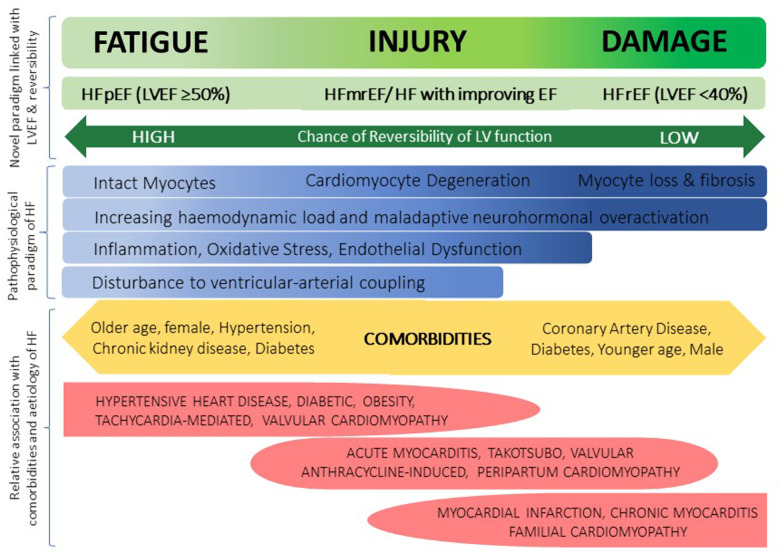
Background: There is already extensive literature on the natural history of hypertensive heart disease (HHD) and aortic stenosis (AS). Once these patients develop severe left ventricular systolic dysfunction (LVSD) despite guideline-directed therapy for heart failure (HF), it is often thought to be end-stage from irreversible adverse remodelling. Our case series challenges this traditional paradigm. A more holistic model that factors in the interactions between the ventricle and vasculature is required. Based on a novel hypothetical concept of myocardial fatigue, we propose that occasionally LVSD is not an inherent myocardial or valvular disease but a consequence of an arterial afterload mismatch. By addressing this, the ventricle may recover and contract efficiently in unison with the arterial system.
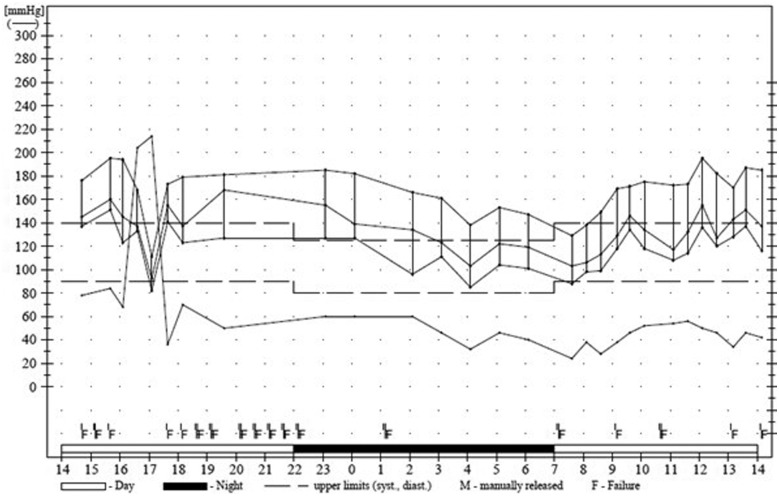
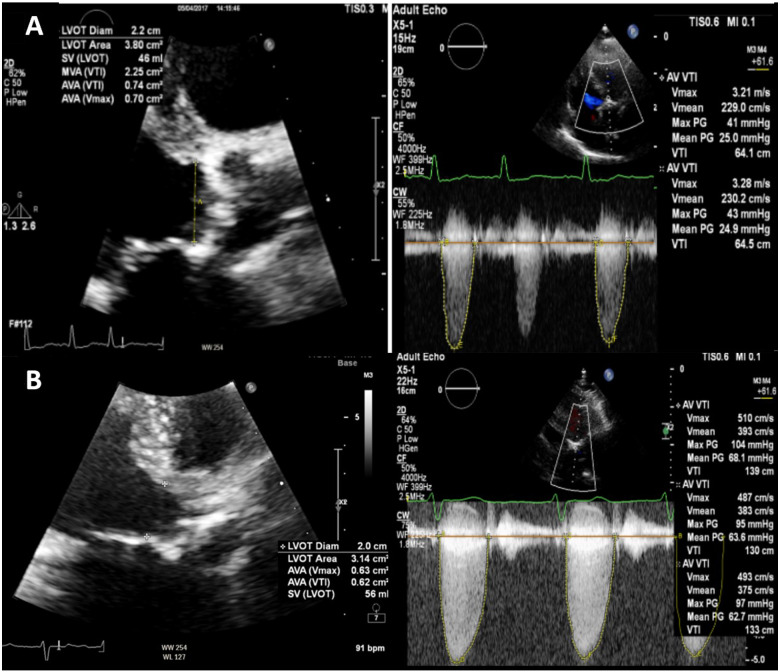
Case summary: We present two cases of severe LVSD in a young lady with long-standing essential hypertension and a gentleman with stable severe AS. Both patients were already established on HF medications. After optimizing their blood pressure control, repeat echocardiography revealed normalization of left ventricular ejection fraction within 3 months, along with a demonstrable improvement in ventricular-arterial coupling and for AS, a reduction in valvular-arterial impedance.
Discussion: Just as Frank-Starling's law was discovered by initially drawing analogies to skeletal muscle behaviour, it is biologically plausible that cardiac fatigue can occur in the setting of afterload mismatch. The chance of recovery rests upon early recognition before it transitions to irreversible myocardial damage. Only by testing new emerging theories of HF can we galvanize original research and find new avenues to understanding this complex syndrome.
Keywords: Afterload; Case report; Heart failure; Myocardial fatigue.
© The Author(s) 2021. Published by Oxford University Press on behalf of the European Society of Cardiology.
Figures

References
-
- Sorrentino MJ. The evolution from hypertension to heart failure. Heart Fail Clin 2019;15:447–453. - PubMed
-
- Carabello BA. Aortic stenosis: from pressure overload to heart failure. Heart Fail Clin 2006;2:435–442. - PubMed
-
- Rame JE, Ramilo M, Spencer N, Blewett C, Mehta SK, Dries DL. et al. Development of a depressed left ventricular ejection fraction in patients with left ventricular hypertrophy and a normal ejection fraction. Am J Cardiol 2004;93:234–237. - PubMed
-
- Shim CY, Hong GR, Ha JW.. Ventricular stiffness and ventricular-arterial coupling in heart failure: what is it, how to assess, and why? Heart Fail Clin 2019;15:267–274. - PubMed
-
- Sonnenblick E, Downing S.. Afterload as a primary determinat of ventricular performance. Am J Physiol 1963;204:604–610. - PubMed
Publication types
LinkOut - more resources
Full Text Sources
Medical
Research Materials
Miscellaneous