


Biological importance of OCT transcription factors in reprogramming and development
- PMID: 34117345
- PMCID: PMC8257633
- DOI: 10.1038/s12276-021-00637-4
Biological importance of OCT transcription factors in reprogramming and development
Abstract
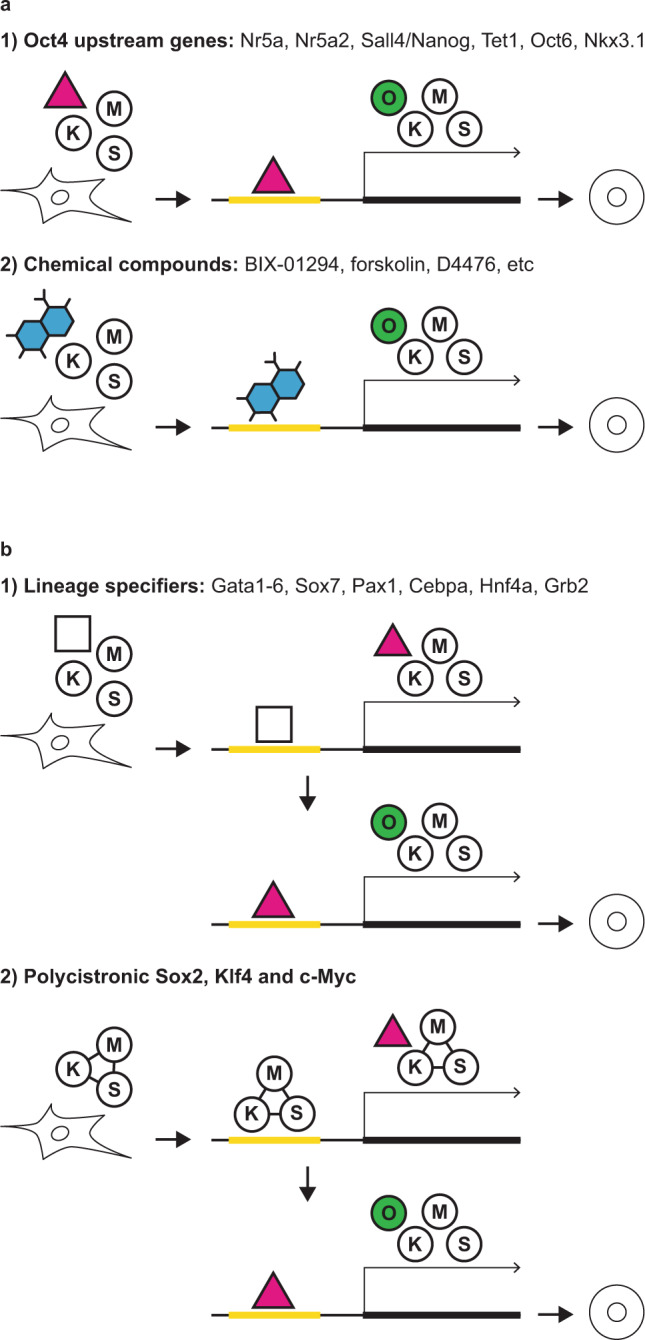
Ectopic expression of Oct4, Sox2, Klf4 and c-Myc can reprogram somatic cells into induced pluripotent stem cells (iPSCs). Attempts to identify genes or chemicals that can functionally replace each of these four reprogramming factors have revealed that exogenous Oct4 is not necessary for reprogramming under certain conditions or in the presence of alternative factors that can regulate endogenous Oct4 expression. For example, polycistronic expression of Sox2, Klf4 and c-Myc can elicit reprogramming by activating endogenous Oct4 expression indirectly. Experiments in which the reprogramming competence of all other Oct family members tested and also in different species have led to the decisive conclusion that Oct proteins display different reprogramming competences and species-dependent reprogramming activity despite their profound sequence conservation. We discuss the roles of the structural components of Oct proteins in reprogramming and how donor cell epigenomes endow Oct proteins with different reprogramming competences.
Conflict of interest statement
The authors declare no competing interests.
Figures
References
-
- Rosenfeld MG. POU-domain transcription factors: pou-er-ful developmental regulators. Genes Dev. 1991;5:897–907. - PubMed
-
- Schöler HR. Octamania: the POU factors in murine development. Trends Genet. 1991;7:323–329. - PubMed
-
- Wegner M, Drolet DW, Rosenfeld MG. POU-domain proteins: structure and function of developmental regulators. Curr. Opin. Cell Biol. 1993;5:488–498. - PubMed
-
- Herr W, Cleary MA. The POU domain: versatility in transcriptional regulation by a flexible two-in-one DNA-binding domain. Genes Dev. 1995;9:1679–1693. - PubMed
-
- Kang J, Shakya A, Tantin D. Stem cells, stress, metabolism and cancer: a drama in two Octs. Trends Biochem Sci. 2009;34:491–499. - PubMed
Publication types
MeSH terms
Substances
LinkOut - more resources
Full Text Sources
