


A better classification of wet markets is key to safeguarding human health and biodiversity
- PMID: 34119013
- PMCID: PMC8578676
- DOI: 10.1016/S2542-5196(21)00112-1
A better classification of wet markets is key to safeguarding human health and biodiversity
Abstract
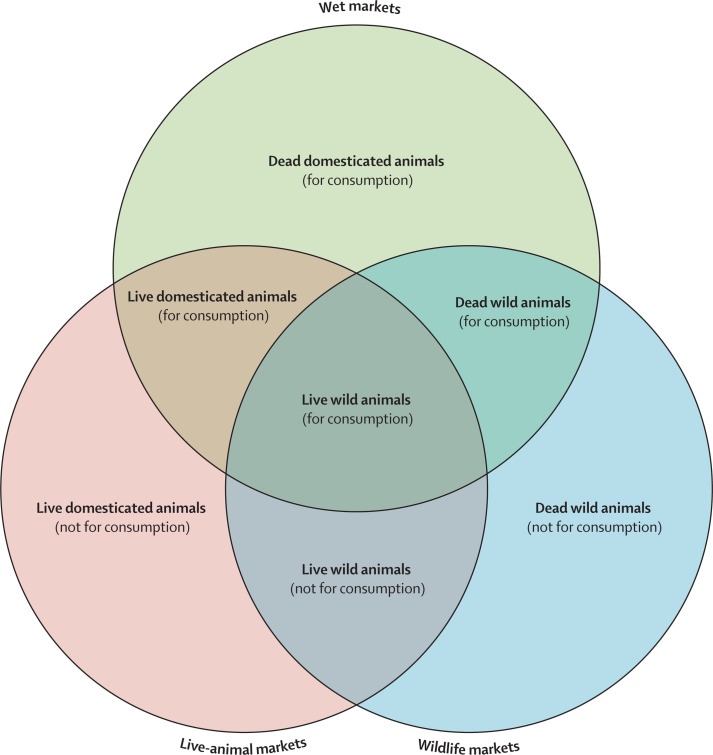
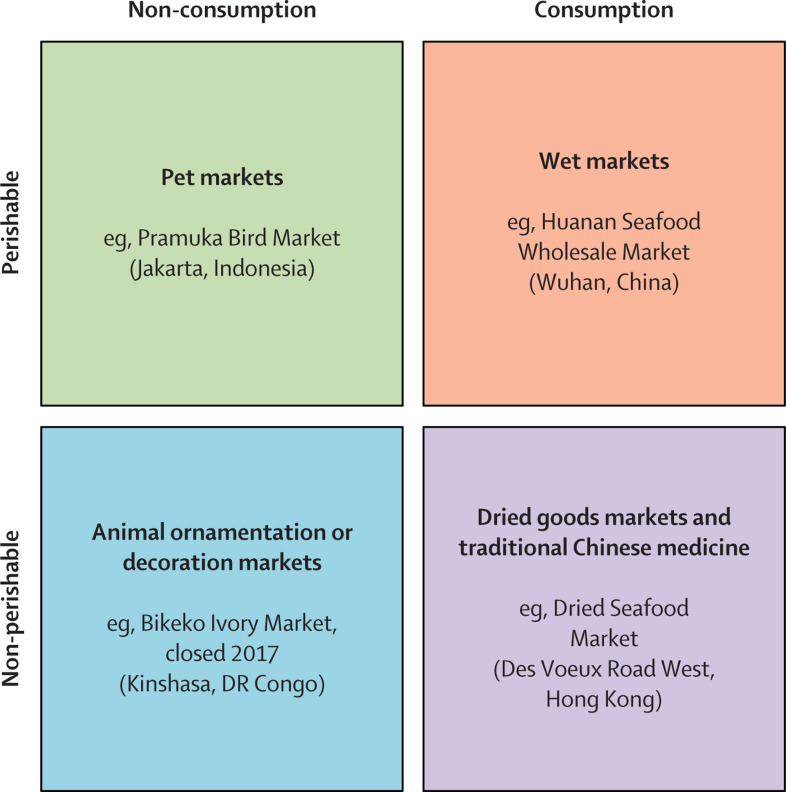
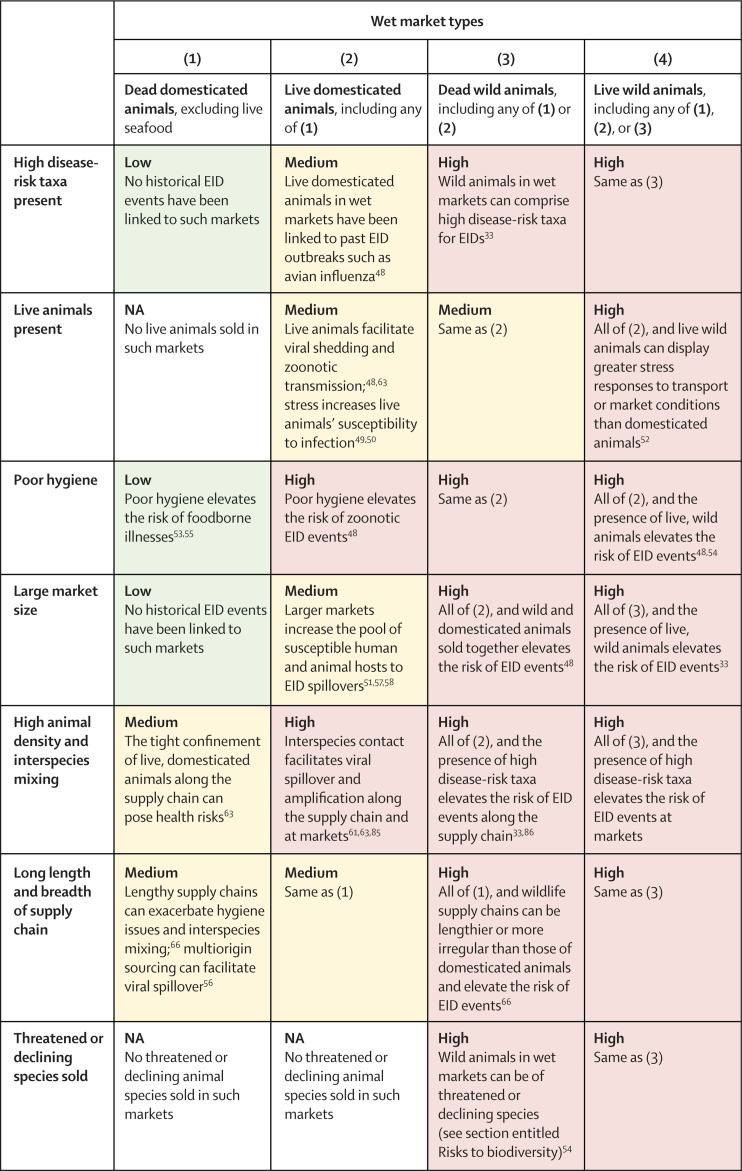
Wet markets have been implicated in multiple zoonotic outbreaks, including COVID-19. They are also a conduit for legal and illegal trade in wildlife, which threatens thousands of species. Yet wet markets supply food to millions of people around the world, and differ drastically in their physical composition, the goods they sell, and the subsequent risks they pose. As such, policy makers need to know how to target their actions to efficiently safeguard human health and biodiversity without depriving people of ready access to food. Here, we propose a taxonomy of wet markets, oriented around the presence of live or dead animals, and whether those animals are domesticated or wild (either captive-reared or wild-caught). We assess the dimensions and levels of risk that different types of wet markets pose to people and to biodiversity. We identify six key risk factors of wet markets that can affect human health: (1) presence of high disease-risk animal taxa, (2) presence of live animals, (3) hygiene conditions, (4) market size, (5) animal density and interspecies mixing, and (6) the length and breadth of animal supply chains. We also identify key factors informing risk to biodiversity. Finally, we recommend targeted, risk-adjusted policies to more efficiently and humanely address the dangers posed by wet markets.
Copyright © 2021 The Author(s). Published by Elsevier Ltd. This is an Open Access article under the CC BY-NC-ND 4.0 license. Published by Elsevier Ltd.. All rights reserved.
Conflict of interest statement
Declaration of interests We declare no competing interests.
Figures
References
-
- WHO . World Health Organization; 2021. WHO-convened global study of origins of SARS-CoV-2: China part.
-
- Walzer C, Kang A. Abolish Asia's ‘wet markets,’ where pandemics breed. Wall Street Journal. Jan 27, 2020 https://www.wsj.com/articles/abolish-asias-wet-markets-where-pandemics-b...
-
- Moore C. Scott Morrison joins forces with EU to ban wet markets. Daily Mail. April 29, 2020. https://www.dailymail.co.uk/news/article-8267849/Scott-Morrison-joins-fo...
-
- Farsides S. UN Biodiversity Chief calls for a global ban on “wet markets” to prevent future pandemics. International Observatory of Human Rights. April 6, 2020. https://observatoryihr.org/news/un-biodiversity-chief-calls-for-a-global...
Publication types
MeSH terms
LinkOut - more resources
Full Text Sources
Medical
Miscellaneous
