


Neuronal nitric oxide synthase regulates regional brain perfusion in healthy humans
- PMID: 34120160
- PMCID: PMC8953449
- DOI: 10.1093/cvr/cvab155
Neuronal nitric oxide synthase regulates regional brain perfusion in healthy humans
Abstract
Aims: Neuronal nitric oxide synthase (nNOS) is highly expressed within the cardiovascular and nervous systems. Studies in genetically modified mice suggest roles in brain blood flow regulation while dysfunctional nNOS signalling is implicated in cerebrovascular ischaemia and migraine. Previous human studies have investigated the effects of non-selective NOS inhibition but there has been no direct investigation of the role of nNOS in human cerebrovascular regulation. We hypothesized that inhibition of the tonic effects of nNOS would result in global or localized changes in cerebral blood flow (CBF), as well as changes in functional brain connectivity.
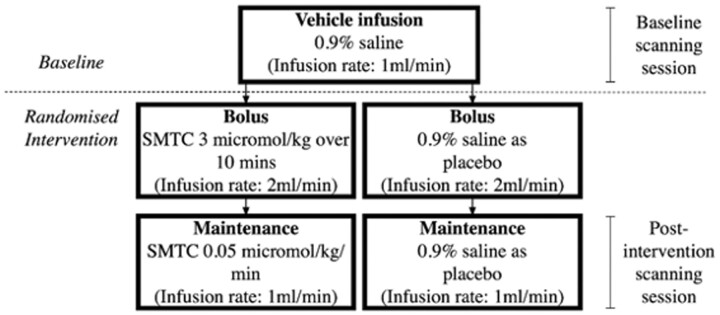
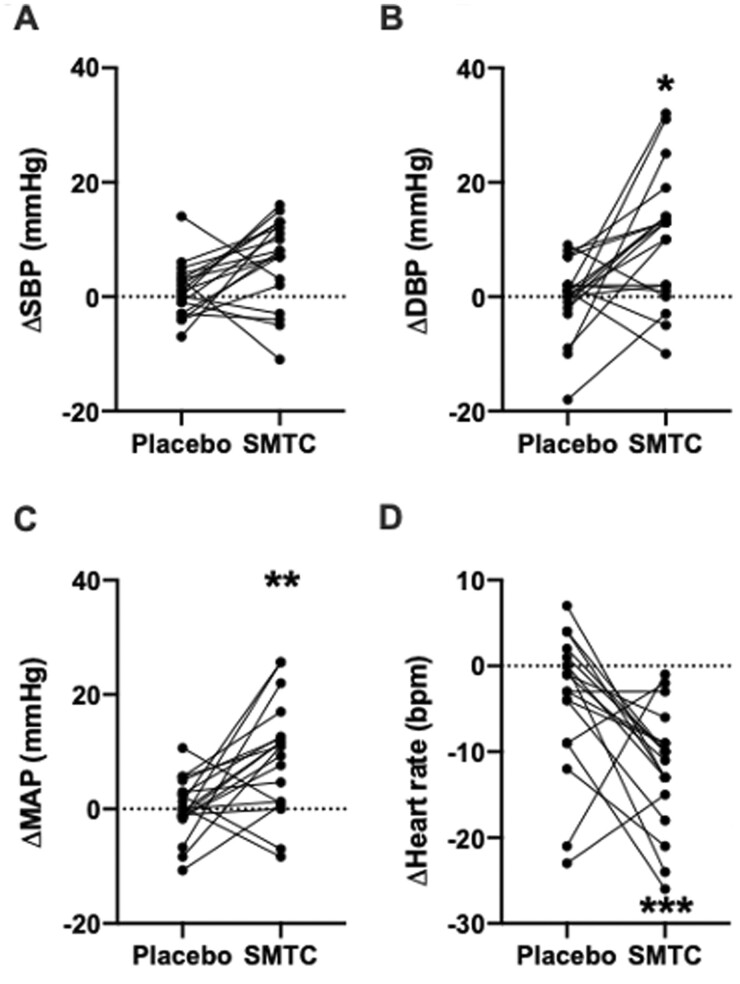
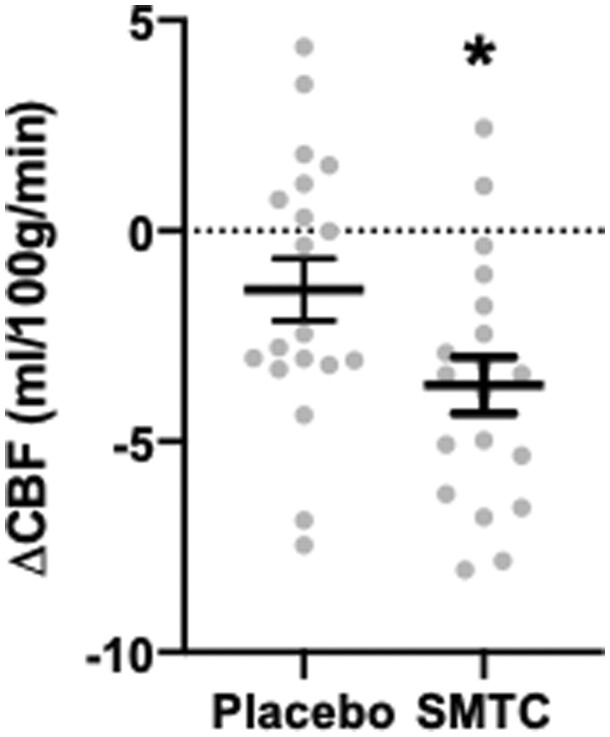
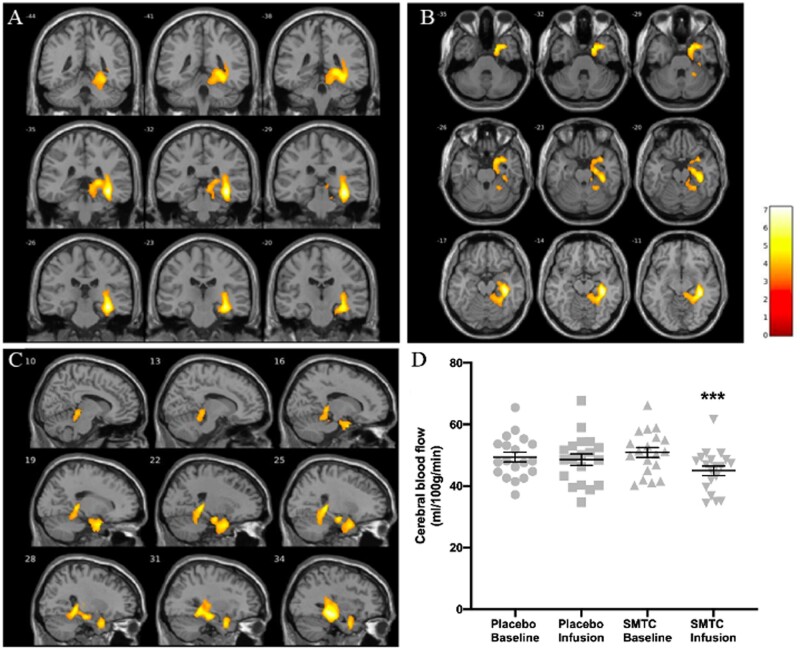
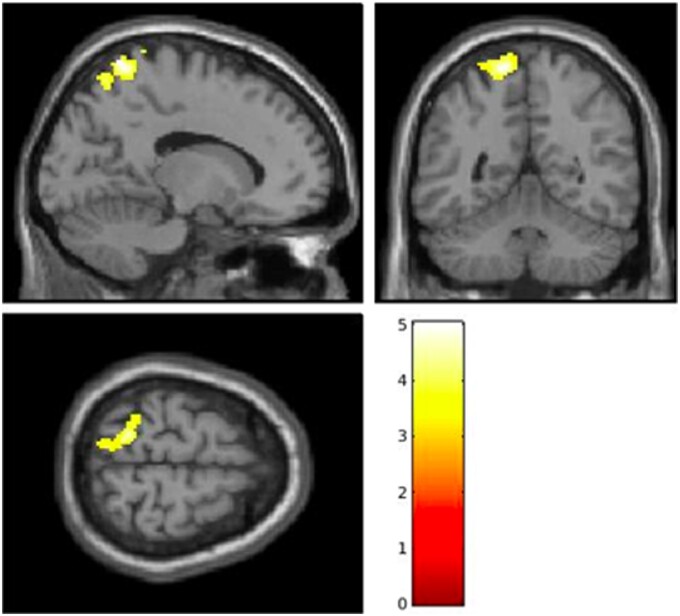
Methods and results: We investigated the acute effects of a selective nNOS inhibitor, S-methyl-L-thiocitrulline (SMTC), on CBF and brain functional connectivity in healthy human volunteers (n = 19). We performed a randomized, placebo-controlled, crossover study with either intravenous SMTC or placebo, using magnetic resonance imaging protocols with arterial spin labelling and functional resting state neuroimaging. SMTC infusion induced an ∼4% decrease in resting global CBF [-2.3 (-0.3, -4.2) mL/100g/min, mean (95% confidence interval, CI), P = 0.02]. In a whole-brain voxel-wise factorial-design comparison of CBF maps, we identified a localized decrease in regional blood flow in the right hippocampus and parahippocampal gyrus following SMTC vs. placebo (2921 voxels; T = 7.0; x = 36; y = -32; z = -12; P < 0.001). This was accompanied by a decrease in functional connectivity to the left superior parietal lobule vs. placebo (484 voxels; T = 5.02; x = -14; y = -56; z = 74; P = 0.009). These analyses adjusted for the modest changes in mean arterial blood pressure induced by SMTC as compared to placebo [+8.7 mmHg (+1.8, +15.6), mean (95% CI), P = 0.009].
Conclusions: These data suggest a fundamental physiological role of nNOS in regulating regional CBF and functional connectivity in the human hippocampus. Our findings have relevance to the role of nNOS in the regulation of cerebral perfusion in health and disease.
Keywords: Brain; Cerebral blood flow; Neuronal nitric oxide synthase; Vascular.
© The Author(s) 2021. Published by Oxford University Press on behalf of the European Society of Cardiology.
Figures
References
-
- Zhou L, Zhu DY. Neuronal nitric oxide synthase: structure, subcellular localization, regulation, and clinical implications. Nitric Oxide 2009;20:223–230. - PubMed
-
- Chi OZ, Liu X, Weiss HR. Effects of inhibition of neuronal nitric oxide synthase on NMDA-induced changes in cerebral blood flow and oxygen consumption. Exp Brain Res 2003;148:256–260. - PubMed
-
- Garthwaite J, Charles SL, Chess-Williams R. Endothelium-derived relaxing factor release on activation of NMDA receptors suggests role as intercellular messenger in the brain. Nature 1988;336:385–388. - PubMed
-
- Iadecola C. Regulation of the cerebral microcirculation during neural activity: is nitric oxide the missing link? Trends Neurosci 1993;16:206–214. - PubMed
