


SARS-CoV-2, other respiratory viruses and bacteria in aerosols: Report from Kuwait's hospitals
- PMID: 34121237
- PMCID: PMC8447393
- DOI: 10.1111/ina.12871
SARS-CoV-2, other respiratory viruses and bacteria in aerosols: Report from Kuwait's hospitals
Abstract
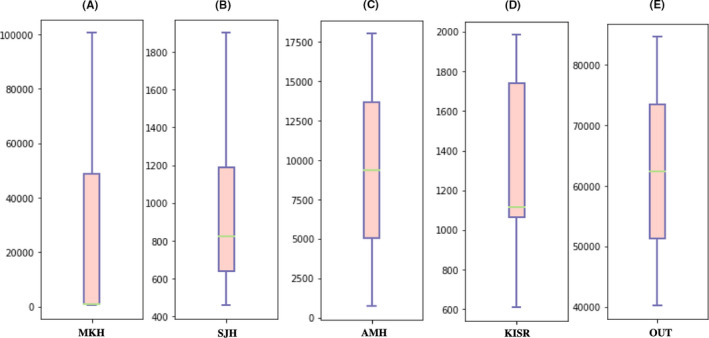
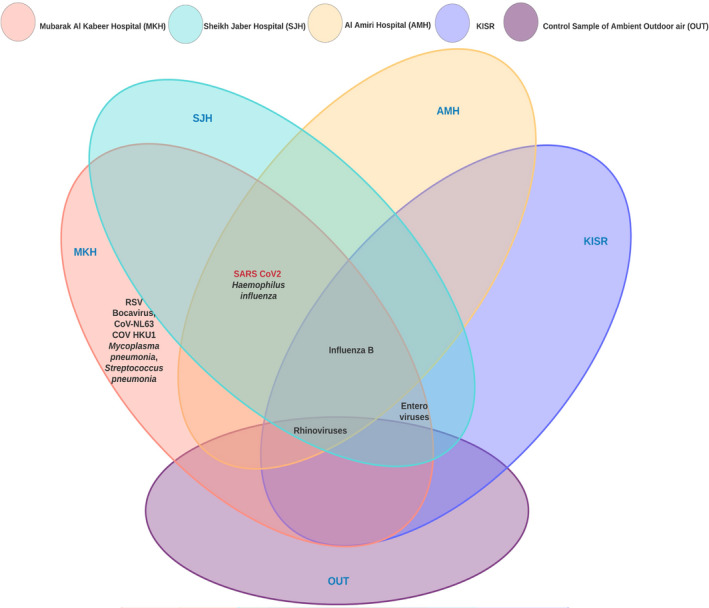
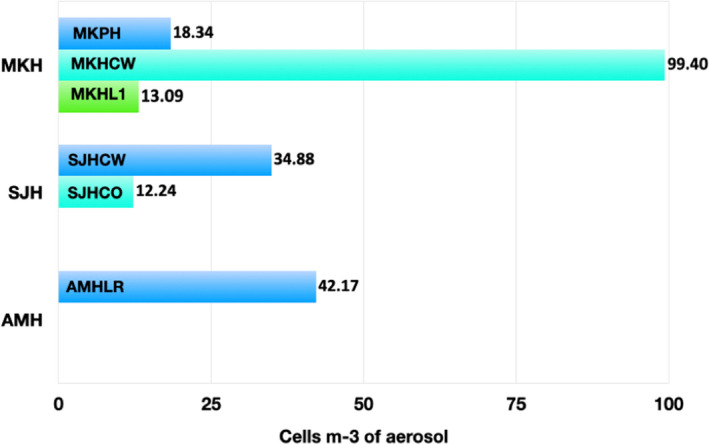
The role of airborne particles in the spread of severe acute respiratory syndrome coronavirus type 2 (SARS-CoV-2) is well explored. The novel coronavirus can survive in aerosol for extended periods, and its interaction with other viral communities can cause additional virulence and infectivity. This baseline study reports concentrations of SARS-CoV-2, other respiratory viruses, and pathogenic bacteria in the indoor air from three major hospitals (Sheikh Jaber, Mubarak Al-Kabeer, and Al-Amiri) in Kuwait dealing with coronavirus disease 2019 (COVID-19) patients. The indoor aerosol samples showed 12-99 copies of SARS-CoV-2 per m3 of air. Two non-SARS-coronavirus (strain HKU1 and NL63), respiratory syncytial virus (RSV), and human bocavirus, human rhinoviruses, Influenza B (FluB), and human enteroviruses were also detected in COVID-positive areas of Mubarak Al Kabeer hospital (MKH). Pathogenic bacteria such as Mycoplasma pneumonia, Streptococcus pneumonia and, Haemophilus influenza were also found in the hospital aerosols. Our results suggest that the existing interventions such as social distancing, use of masks, hand hygiene, surface sanitization, and avoidance of crowded indoor spaces are adequate to prevent the spread of SARS-CoV-2 in enclosed areas. However, increased ventilation can significantly reduce the concentration of SARS-CoV-2 in indoor aerosols. The synergistic or inhibitory effects of other respiratory pathogens in the spread, severity, and complexity of SARS-CoV-2 need further investigation.
Keywords: SARS-CoV-2; indoor air; pathogenic bacteria; qPCR; respiratory viruses.
© 2021 John Wiley & Sons A/S. Published by John Wiley & Sons Ltd.
Conflict of interest statement
The authors explicitly state that there was no conflict of interest.
Figures
References
-
- Al Salameen F, Habibi N, Uddin S, et al. Characterization and Identification of Micro‐ Organisms Associated with Airborne Dust in Kuwait Final report (EM075C) Kuwait Institute for Scientific Research. 2020; Final Report KISR.
-
- Anon . https://www.worldometers.info/coronavirus/. 2021. Accessed 24 February, 2021
-
- Liu Y, Ning Z, Chen Y, et al. Aerodynamic analysis of SARS‐CoV‐2 in two Wuhan hospitals. Nature. 2020;582(7813):557‐560. - PubMed
-
- Moore SC, Penrice‐Randal R, Alruwaili M, et al. Amplicon based MinION sequencing of SARS‐CoV‐2 and metagenomic characterisation of nasopharyngeal swabs from patients with COVID‐19. medRxiv. 2003;2020(2020):2005.
Publication types
MeSH terms
Substances
Grants and funding
LinkOut - more resources
Full Text Sources
Medical
Miscellaneous
