Review
. 2021 May 28:11:559161.
doi: 10.3389/fonc.2021.559161. eCollection 2021.

Combination Strategies to Augment Immune Check Point Inhibitors Efficacy - Implications for Translational Research

Affiliations
Review

Combination Strategies to Augment Immune Check Point Inhibitors Efficacy - Implications for Translational Research

Hrishi Varayathu et al. Front Oncol. .

Abstract

Immune checkpoint inhibitor therapy has revolutionized the field of cancer immunotherapy. Even though it has shown a durable response in some solid tumors, several patients do not respond to these agents, irrespective of predictive biomarker (PD-L1, MSI, TMB) status. Multiple preclinical, as well as early-phase clinical studies are ongoing for combining immune checkpoint inhibitors with anti-cancer and/or non-anti-cancer drugs for beneficial therapeutic interactions. In this review, we discuss the mechanistic basis behind the combination of immune checkpoint inhibitors with other drugs currently being studied in early phase clinical studies including conventional chemotherapy drugs, metronomic chemotherapy, thalidomide and its derivatives, epigenetic therapy, targeted therapy, inhibitors of DNA damage repair, other small molecule inhibitors, anti-tumor antibodies hormonal therapy, multiple checkpoint Inhibitors, microbiome therapeutics, oncolytic viruses, radiotherapy, drugs targeting myeloid-derived suppressor cells, drugs targeting Tregs, drugs targeting renin-angiotensin system, drugs targeting the autonomic nervous system, metformin, etc. We also highlight how translational research strategies can help better understand the true therapeutic potential of such combinations.

Keywords: clinical trials; combination strategies; immune checkpoint inhibitors (ICI); immunotherapy adjuncts; preclinical model; translational research.


Conflict of interest statement

All authors are affiliated with the company HealthCare Global Enterprises Ltd.

Figures
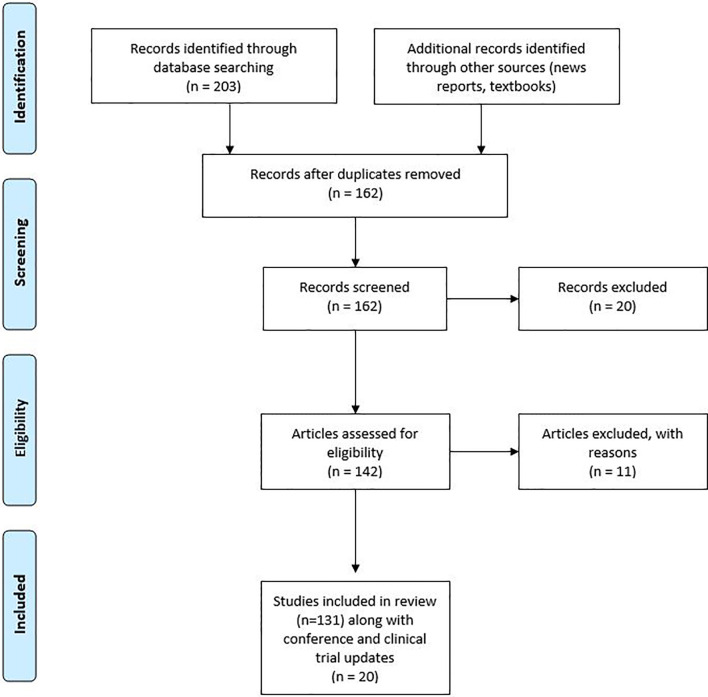
Figure 1
Figure 1
Research strategy with PRISMA flow diagram.
Figure 2
Figure 2
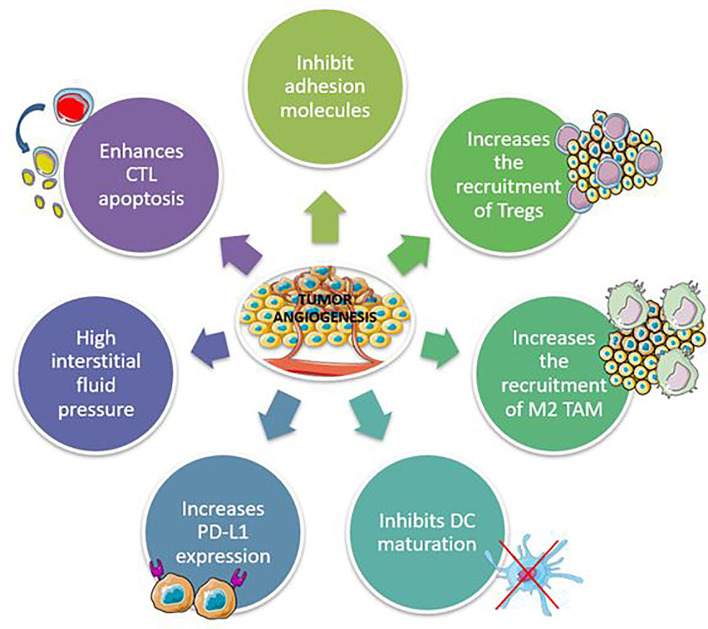
Mechanisms involved in the development of immunosuppressive tumor microenvironment by tumor angiogenesis. CTL, Cytotoxic T lymphocytes; TAM, Tumor-associated macrophages.
Figure 3
Figure 3
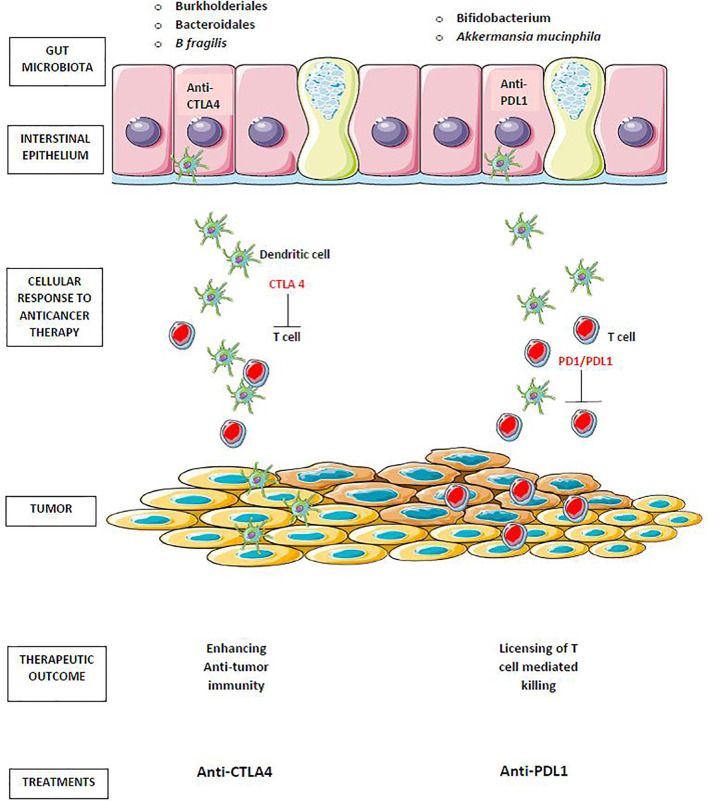
Gut microbiota in cancer immunotherapy. Translocation of Burkholderiales and Bacteroidales, enhances antitumor immunity of anti–cytotoxic T-lymphocyte antigen 4 (anti-CTLA-4). The antitumor effect of anti–PD-1/PD-L1 therapy enhanced by the preexisting antitumor immunity that is particularly effective in mice harboring intestinal Bifidobacterium spp and Akkermansia mucinphila.
Figure 4
Figure 4
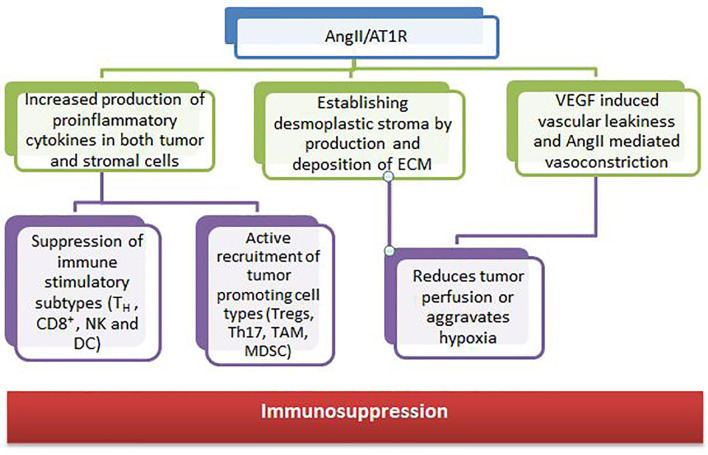
Contribution of angiotensin II and angiotensin receptor to the tumor microenvironment.
Figure 5
Figure 5
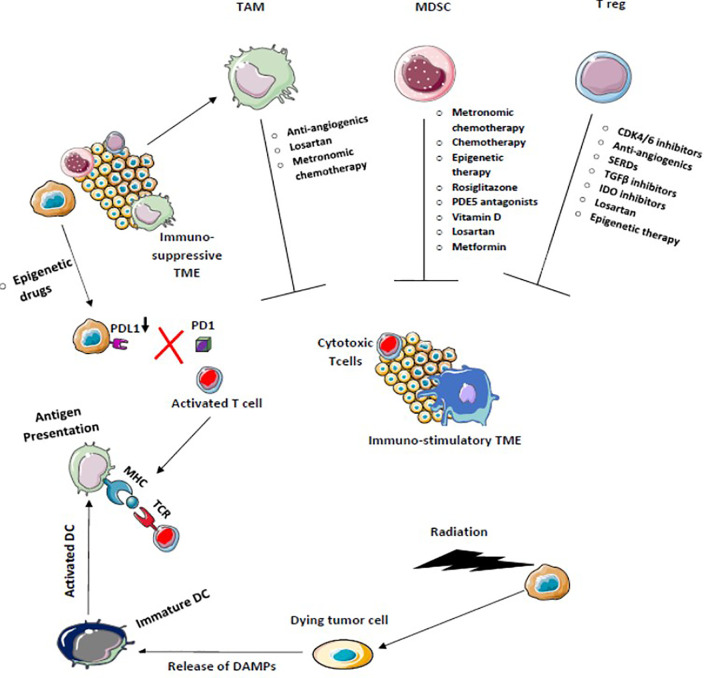
Chemotherapy, Radiotherapy, and Epigenetic therapy which facilitates immunogenic cell death increase antigen presentation enhances cross-priming of dendritic cells, and decreases PDL-1 expression on tumor cells activates the antitumor immune response. Drugs that target Tregs, tumor-associated macrophages (TAM), and myeloid-derived suppressor cells block immunosuppression and enhance T effector T cell function to convert immunosuppressive tumor microenvironment into the immune-stimulatory environment.
Figure 6
Figure 6
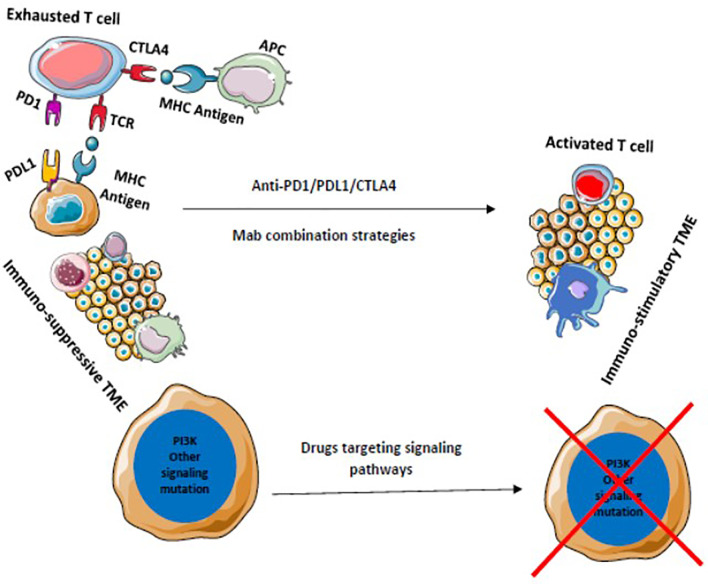
Drugs that target multiple signaling pathways kill tumor cells and stimulates immune cells to provide a durable adaptive immune response. Blocking of multiple immune checkpoints stimulates immune responses against tumors.

References

    1. Brief History of Cancer Immunotherapy Approaches and Theories. Available at: https://www.healio.com/hematology-oncology/learn-immuno-oncology/cancer-....
    1. Dobosz P, Dzieciątkowski T. The Intriguing History of Cancer Immunotherapy. Front Immunol (2019) 17(10):2965. 10.3389/fimmu.2019.02965 - DOI - PMC - PubMed
    1. Hodi FS, O’Day SJ, McDermott DF, Weber RW, Sosman JA, Haanen JB, et al. Improved Survival With Ipilimumab in Patients With Metastatic Melanoma. N Engl J Med (2010) 363(8):711–23. 10.1056/NEJMoa1003466 - DOI - PMC - PubMed
    1. Topalian SL, Hodi FS, Brahmer JR, Gettinger SN, Smith DC, McDermott DF, et al. Safety, Activity, and Immune Correlates of Anti–PD-1 Antibody in Cancer. N Engl J Med (2012) 366(26):2443–54. 10.1056/NEJMoa1200690 - DOI - PMC - PubMed
    1. Brahmer JR, Tykodi SS, Chow LQM, Hwu W-J, Topalian SL, Hwu P, et al. Safety and Activity of Anti–PD-L1 Antibody in Patients With Advanced Cancer. N Engl J Med (2012) 366(26):2455–65. 10.1056/NEJMoa1200694 - DOI - PMC - PubMed