


Mechanistic models of microbial community metabolism
- PMID: 34125127
- PMCID: PMC8202304
- DOI: 10.1039/d0mo00154f
Mechanistic models of microbial community metabolism
Abstract
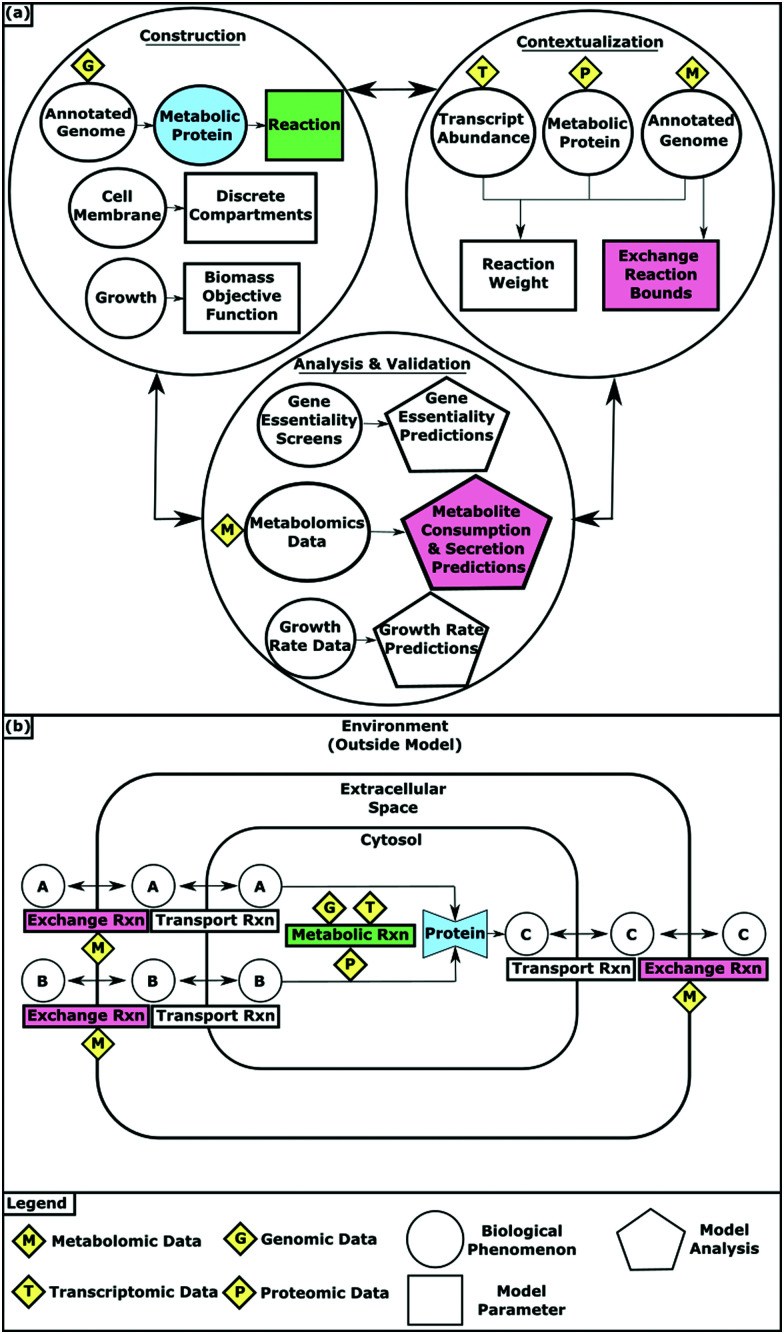
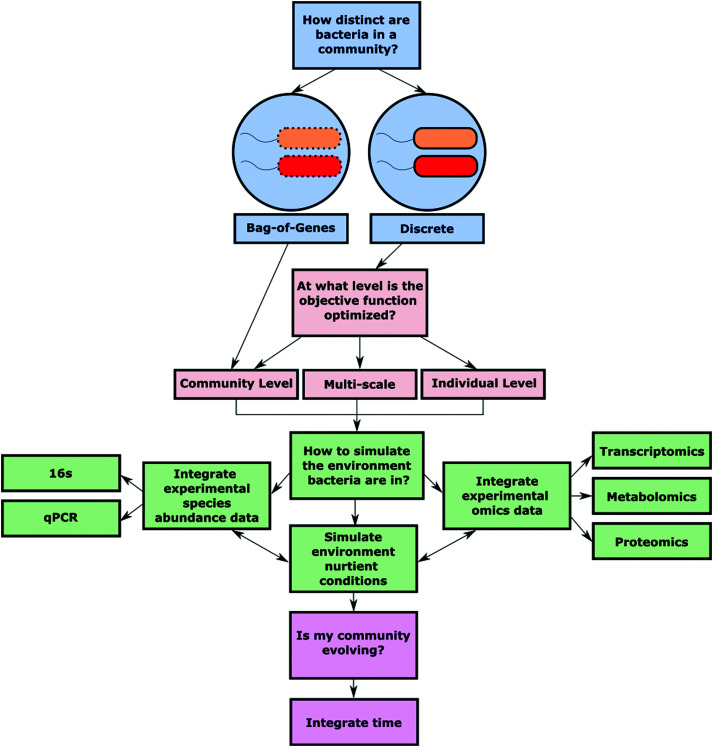
Microbial communities affect many facets of human health and well-being. Naturally occurring bacteria, whether in nature or the human body, rarely exist in isolation. A deeper understanding of the metabolic functions of these communities is now possible with emerging computational models. In this review, we summarize frameworks for constructing mechanistic models of microbial community metabolism and discuss available algorithms for model analysis. We highlight essential decision points that greatly influence algorithm selection, as well as model analysis. Polymicrobial metabolic models can be utilized to gain insights into host-pathogen interactions, bacterial engineering, and many more translational applications.
Conflict of interest statement
There are no conflicts of interest to declare.
Figures
References
-
- Vishwakarma K., Sharma S., Kumar N., Upadhyay N., Devi S. and Tiwari A., Contribution of microbial inoculants to soil carbon sequestration and sustainable agriculture, in Microbial inoculants in sustainable agricultural productivity, Springer, New Delhi, 2016, pp. 101–113
Publication types
MeSH terms
Grants and funding
LinkOut - more resources
Full Text Sources
