. 2021 Jun 15;17(6):e1009093.
doi: 10.1371/journal.pcbi.1009093. eCollection 2021 Jun.

Designing microbial communities to maximize the thermodynamic driving force for the production of chemicals

Affiliations

Designing microbial communities to maximize the thermodynamic driving force for the production of chemicals

Pavlos Stephanos Bekiaris et al. PLoS Comput Biol. .

Abstract

Microbial communities have become a major research focus due to their importance for biogeochemical cycles, biomedicine and biotechnological applications. While some biotechnological applications, such as anaerobic digestion, make use of naturally arising microbial communities, the rational design of microbial consortia for bio-based production processes has recently gained much interest. One class of synthetic microbial consortia is based on specifically designed strains of one species. A common design principle for these consortia is based on division of labor, where the entire production pathway is divided between the different strains to reduce the metabolic burden caused by product synthesis. We first show that classical division of labor does not automatically reduce the metabolic burden when metabolic flux per biomass is analyzed. We then present ASTHERISC (Algorithmic Search of THERmodynamic advantages in Single-species Communities), a new computational approach for designing multi-strain communities of a single-species with the aim to divide a production pathway between different strains such that the thermodynamic driving force for product synthesis is maximized. ASTHERISC exploits the fact that compartmentalization of segments of a product pathway in different strains can circumvent thermodynamic bottlenecks arising when operation of one reaction requires a metabolite with high and operation of another reaction the same metabolite with low concentration. We implemented the ASTHERISC algorithm in a dedicated program package and applied it on E. coli core and genome-scale models with different settings, for example, regarding number of strains or demanded product yield. These calculations showed that, for each scenario, many target metabolites (products) exist where a multi-strain community can provide a thermodynamic advantage compared to a single strain solution. In some cases, a production with sufficiently high yield is thermodynamically only feasible with a community. In summary, the developed ASTHERISC approach provides a promising new principle for designing microbial communities for the bio-based production of chemicals.


Conflict of interest statement

The authors have declared that no competing interests exist.

Figures
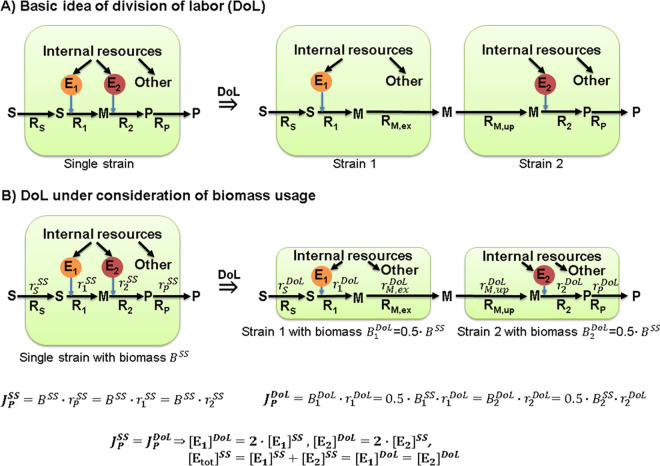
Fig 1
Fig 1. An example illustrating that DoL does not reduce the overall metabolic burden.
(A) Basic idea of DoL: a two-step pathway converting a substrate S to a product P via the two reactions R1 (catalyzed by enzyme E1) and R2 (catalyzed by enzyme E2) in a single strain is split into two parts each being performed by one dedicated strain. (B) Assuming an identical total amount of biomass, the metabolic burden (enzyme cost per biomass) is identical for the single strain and the DoL solution.
Fig 2
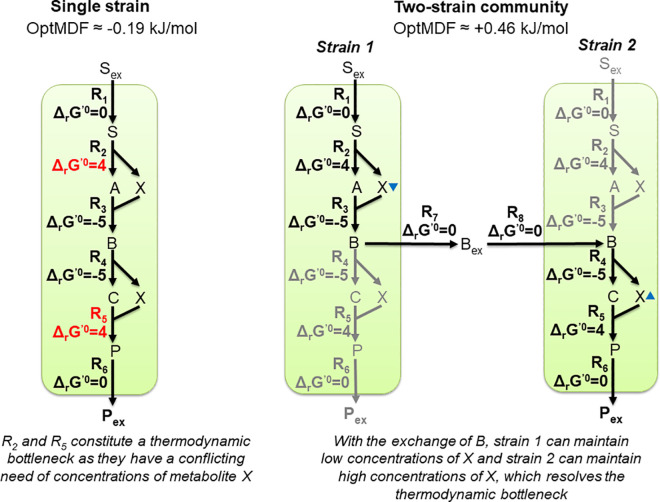
Fig 2. Example illustrating how division of labor may lead to a thermodynamic advantage in the production of a target metabolite.
In the left, a metabolic pathway in a cell is considered that synthesizes the target product P. The red values indicate positive values for the standard Gibbs free energy change (ΔrG0 [in kJ/mol]) and thus potential thermodynamic bottlenecks. With an allowed concentration range from 1 M to 10 M for all metabolites except for Pex, where a minimum concentration of 5 M was assumed to consider product synthesis under high external product concentrations, a negative optimal MDF (OptMDF) value would follow, indicating thermodynamic infeasibility of product synthesis in the single strain. In the two-strain community (right), the pathway is divided and an exchange of metabolite B introduced. With this, individual concentrations of metabolite X can be adjusted in the two strains by which thermodynamic feasibility (a positive OptMDF) of the overall transformation is achieved (the blue triangles indicate the direction of the concentrations of X (high/low) when maximizing the driving force). Black arrows in the two-strain solution indicate active and grey arrows inactive reactions.
Fig 3
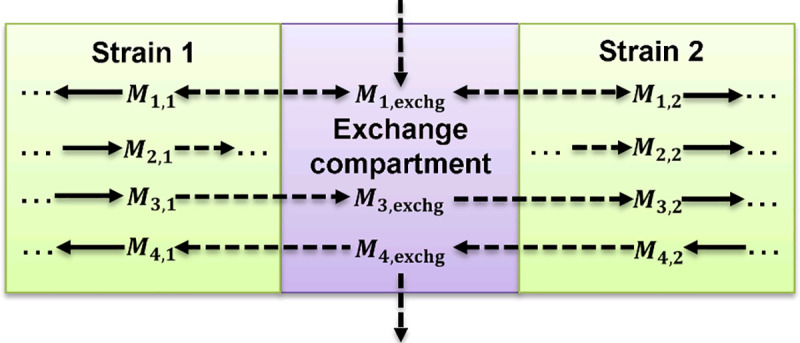
Fig 3. Community model structure used in this study and possible exchange directions of metabolites.
Dashed arrows indicate exchange reactions, all other arrows biochemical conversions.
Fig 4
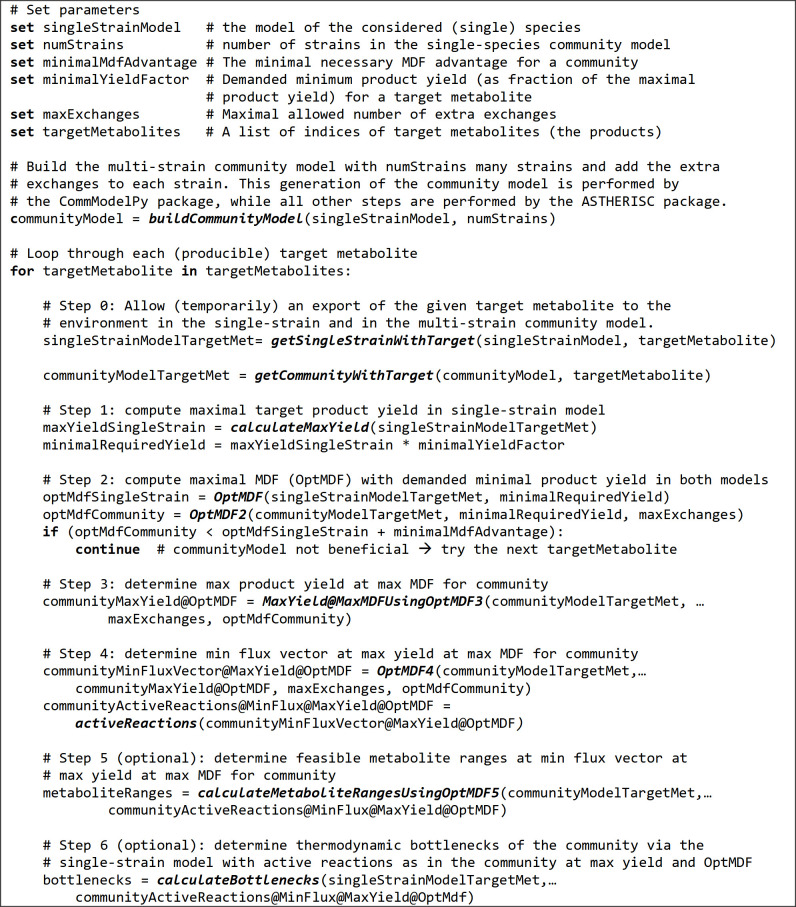
Fig 4. Pseudo-code of the ASTHERISC algorithm.
For detailed explanations see text.
Fig 5
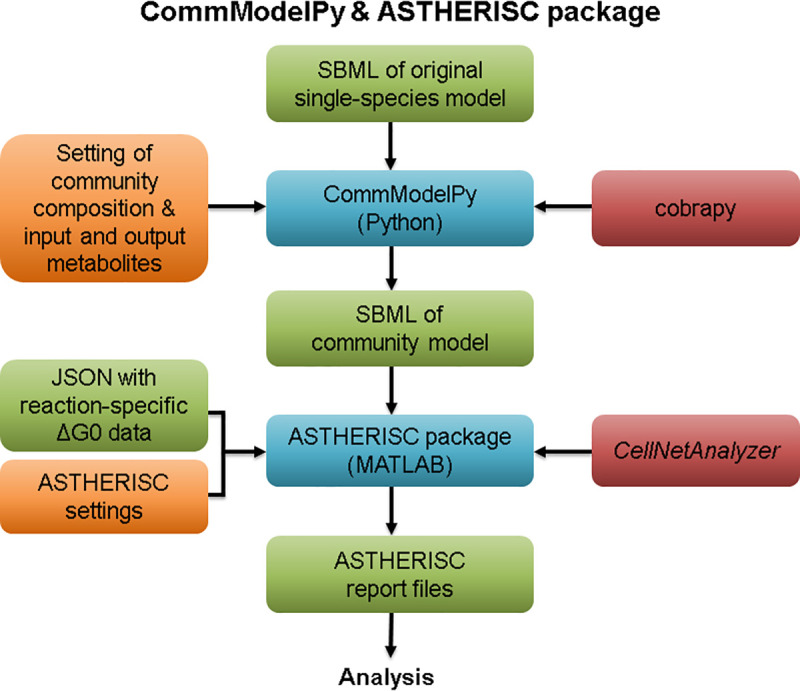
Fig 5. Schematic overview of the combined usage of CommModelPy and the ASTHERISC package.
Orange boxes stand for user settings, green boxes for generated or given data files, red boxes for primary program package dependencies, and blue boxes for the programs themselves.
Fig 6
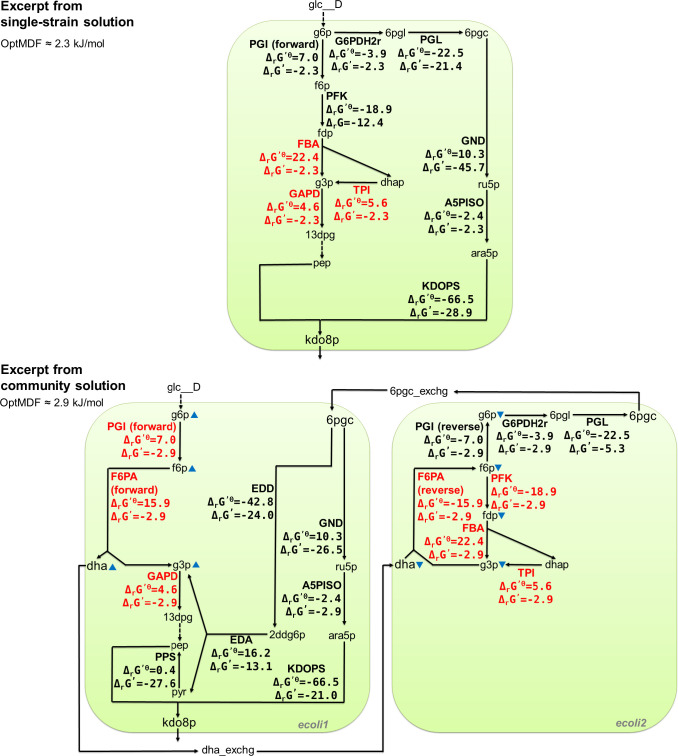
Fig 6. Excerpt of selected central reactions of the MDF-optimal single-species and community solution for kdo8p synthesis.
Black arrows indicate active reactions, dashed arrows indicate a sequence of active reactions, and the blue triangles indicate increased or decreased metabolite concentrations of a strain in the community relative to the other strain. The shown ΔrG′ and ΔrG0 values have all unit kJ/mol. The ΔrG′ values are taken from the specific MDF-optimal solution delivered by ASTHERISC. The red ΔrG′ values indicate thermodynamic bottlenecks, i.e., reactions whose ΔrG′ is fixed under the optimal MDF (and corresponds to the negative value of the OptMDF) All black ΔrG′ values are variable under the given OptMDF. All reaction and metabolite identifiers are based on the definitions in the BiGG database [49].

References

    1. Smith JM, Szathmary E. The major transitions in evolution: OUP Oxford; 1997. 1997-10-30. 361 p.
    1. Pande S, Merker H, Bohl K, Reichelt M, Schuster S, de Figueiredo LF, et al. Fitness and stability of obligate cross-feeding interactions that emerge upon gene loss in bacteria. The ISME Journal. 2014;8(5):953–62. doi: 10.1038/ismej.2013.211 - DOI - PMC - PubMed
    1. Song H-S, Cannon WR, Beliaev AS, Konopka A. Mathematical modeling of microbial community dynamics: a methodological review. Processes. 2014;2(4):711–52. doi: 10.3390/pr2040711 - DOI
    1. Succurro A, Ebenhöh O. Review and perspective on mathematical modeling of microbial ecosystems. Biochemical Society Transactions. 2018;46(2):403–12. doi: 10.1042/BST20170265 - DOI - PMC - PubMed
    1. García-Jiménez B, Torres-Bacete J, Nogales J. Metabolic modelling approaches for describing and engineering microbial communities. Computational and Structural Biotechnology Journal. 2021;19:226–46. doi: 10.1016/j.csbj.2020.12.003 - DOI - PMC - PubMed

Publication types

Substances