


Long-term cardiac reverse remodeling after cardiac resynchronization therapy
- PMID: 34141018
- PMCID: PMC8207409
- DOI: 10.1002/joa3.12527
Long-term cardiac reverse remodeling after cardiac resynchronization therapy
Abstract
Introduction: The benefit of cardiac resynchronization therapy (CRT) in heart failure (HF) patients with reduced left ventricular ejection fraction (LVEF) have been observed in the first year. However, there are few data on long-term follow-up and the effect of changes of LVEF on mortality. This study aimed to assess the LV remodeling after CRT implantation and the probable effect of changes in LVEF with repeated measures on mortality over time in a real-world registry.
Methods: Among our cohort of 328 consecutive CRT patients, mixed model effect analysis have been made to describe the temporal evolution of LVEF and LVESV changes over time up with several explanatory variables. Besides, the effect of LVEF along time on the probability of mortality was evaluated using joint modeling for longitudinal and survival data.
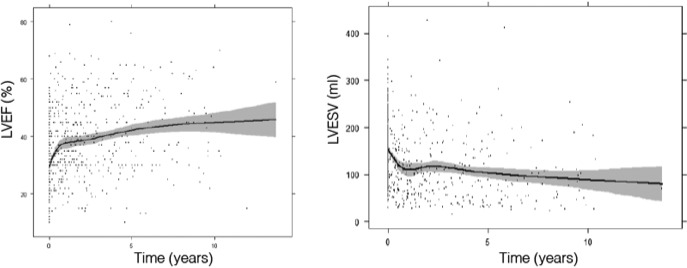
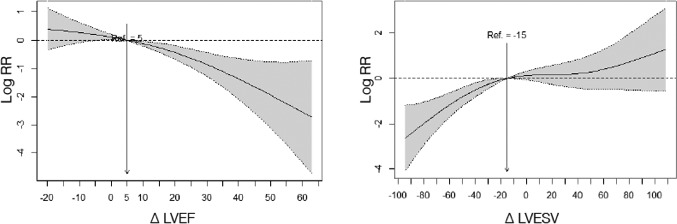
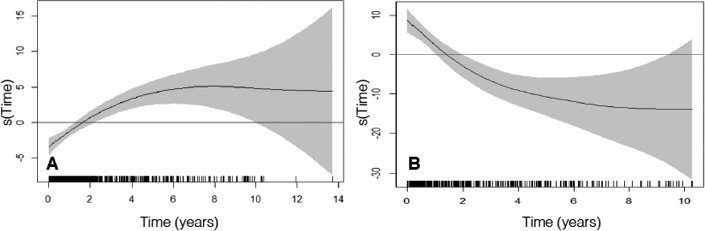
Results: The study population included 328 patients (253 men; 70.2 ± 9.5 years) in 4.2 (2.9) years follow-up. There was an increase in LVEF of 11% and a reduction in LVESV of 42 mL during the first year. These changes are more important during the first year, but slight changes remain during the follow-up. The largest reduction in LVESV occurred in patients with left bundle branch block (LBBB) and the smallest reduction in patients with NYHA IV. The smallest increase in LVEF was an ischemic etiology, longer QRS, and LV electrode in a nonlateral vein. Besides, the results showed that the LVEF profiles taken during follow-up after CRT were associated with changes in the risk of death.
Conclusion: Reverse remodeling of the left ventricle is observed especially during the first year, but it seems to be maintained later after CRT implantation in a contemporary cohort of patients. Longitudinal measurements could give us additional information at predicting the individual mortality risk after adjusting by age and sex compared to a single LVEF measurement after CRT.
Keywords: cardiac resynchronization therapy; heart failure; long‐term follow‐up; ventricular remodeling.
© 2021 The Authors. Journal of Arrhythmia published by John Wiley & Sons Australia, Ltd on behalf of Japanese Heart Rhythm Society.
Conflict of interest statement
The authors declare no conflict of interests for this article.
Figures
References
-
- Braunwald E. The war against heart failure: the Lancet lecture. Lancet. 2015;385:812–24. - PubMed
-
- Bhatt AS, Ambrosy AP, Velazquez EJ. Adverse remodeling and reverse remodeling after myocardial infarction. Curr Cardiol Rep. 2017;19:71. - PubMed
-
- Abraham WT, Fisher WG, Smith AL, Delurgio DB, Leon AR, Loh E, et al. for the MIRACLE Study Group . Multicenter InSync Randomized Clinical Evaluation. Cardiac Resynchronization in chronic heart failure. N Engl J Med. 2002;346:1845–53. - PubMed
-
- Bristow MR, Saxon LA, Boehmer J, et al. for the Comparison of Medical Therapy, Pacing and Defibrillation in Heart Failure (COMPANION) Investigators . Cardiac resynchronization therapy with or without an implantable defibrillator in advanced heart failure. N Engl J Med. 2004;350:2140–50. - PubMed
-
- Cleland J, Daubert J, Eerdmann E, et al. The effect of cardiac resynchronization therapy on morbidity and mortality in heart failure. N Engl J Med. 2005;352:1539–49. - PubMed
LinkOut - more resources
Full Text Sources
Research Materials
Miscellaneous
