


A One Health approach to study the circulation of tick-borne pathogens: A preliminary study
- PMID: 34141849
- PMCID: PMC8188046
- DOI: 10.1016/j.onehlt.2021.100270
A One Health approach to study the circulation of tick-borne pathogens: A preliminary study
Abstract
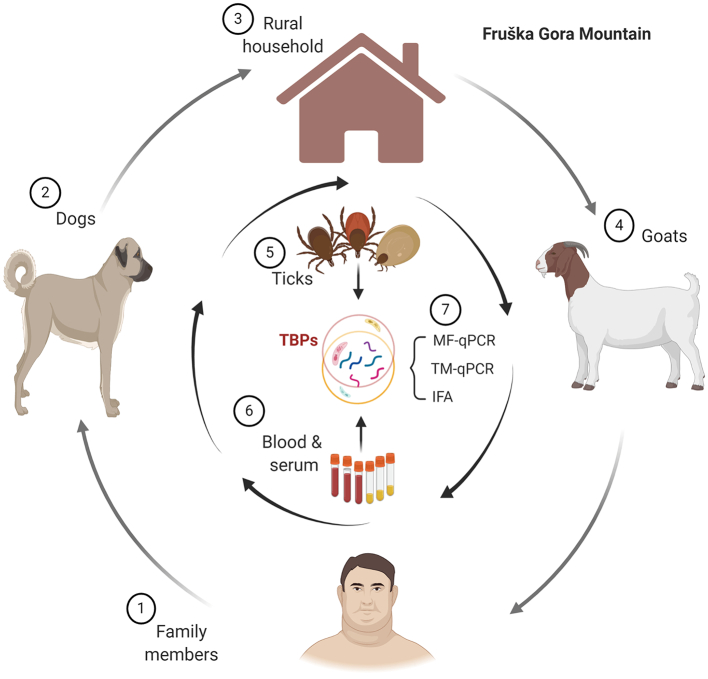
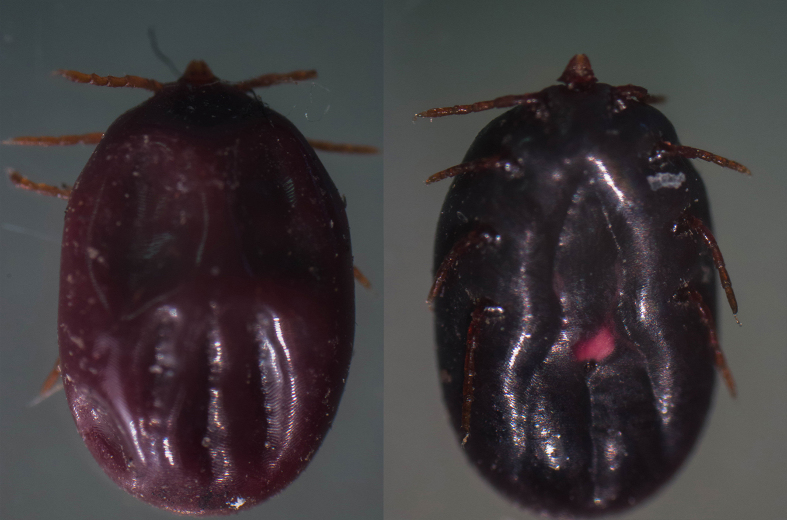
Tick-borne pathogens (TBPs) have complex life cycles involving tick vectors and vertebrate hosts. However, there is limited empirical evidence on the zoonotic circulation of TBPs. In this study, we used a One Health approach to study the possible circulation of TBPs in ticks, animals and humans within a rural household in the foothills of the Fruška Gora mountain, northern Serbia. The presence of TBP DNA was assessed using microfluidic PCR (25 bacterial species, 7 parasite species, 5 bacterial genera, 3 parasite genera) in animal, human and tick samples and the presence of tick-borne encephalitis virus (TBEV) RNA was screened for using RT-qPCR on tick samples. In addition, Lyme borreliosis serology was assessed in patients sera. Rhipicephalus sanguineus and Ixodes ricinus ticks were identified on dogs and Haemaphysalis punctata was identified on house walls. Rickettsia helvetica was the most common pathogen detected in pooled R. sanguineus and I. ricinus tick samples, followed by Hepatozoon canis. None of the H. punctata tick samples tested positive for the presence of TBPs. Anaplasma phagocytophilum and Rickettsia monacensis were the most frequent pathogens detected in dogs, followed by Rickettsia felis, whereas Anaplasma bovis was the only pathogen found in one of the goats tested. None of the human blood samples collected from family members tested positive for the presence of TBPs. Although microfluidic PCR did not detect Borrelia sp. in any of the tested tick or blood samples, a family member with a history of Lyme disease was seropositive for Borrelia burgdorferi sensu lato (s.l.). We conclude that, despite the presence of TBPs in tick and vertebrate reservoirs, there is no evidence of infection with TBPs across various components of the epidemiological chain in a rural Fruška Gora household.
Keywords: Anaplasma bovis; One Health; Rickettsia helvetica; Tick-borne-pathogens; Ticks.
© 2021 Published by Elsevier B.V.
Figures
References
-
- Pavlović I., Milanović V., Radović B., Ivanović S., Petrović M.P., Caro-Petrović V., Bojkovski J. Tick fauna of small ruminants in south part of Serbia, with emphasis to North Kosovo. Bull. Univ. Agric. Sci. Vet. Med. Cluj-Napoca Vet. Med. 2020;77:38–42. doi: 15835/buasvmcn-vm:2019.0034.
-
- Paddock C.D., Telford S.R. Inst. Med. Crit. Needs Gaps Underst. Prev. Amelior. Resolut. Lyme Tick-Borne Dis. Short-Term Long-Term Outcomes-Workshop Rep. Wash. DC Natl. Acad. Pr. 2011. Through a glass, darkly: the global incidence of tick-borne diseases; pp. 1–41.
LinkOut - more resources
Full Text Sources
