


Prevalence, incidence and bothersomeness of urinary incontinence between 6 weeks and 1 year post-partum: a systematic review and meta-analysis
- PMID: 34142179
- PMCID: PMC8295150
- DOI: 10.1007/s00192-021-04877-w
Prevalence, incidence and bothersomeness of urinary incontinence between 6 weeks and 1 year post-partum: a systematic review and meta-analysis
Abstract
Introduction and hypothesis: Urinary incontinence (UI) is a common complaint for post-partum women. Reported prevalence and incidence figures show a large range due to varying study methodology. The crude prevalence of post-partum UI may differ when accounting for bother. Precise prevalence and incidence figures on (bothersome) UI are of relevance for health care providers, research planning, and policy makers. Therefore, we conducted a systematic review and meta-analysis to investigate the prevalence and incidence of UI in post-partum women in the Western world for relevant subgroups and assessed experienced bother in relation to UI.
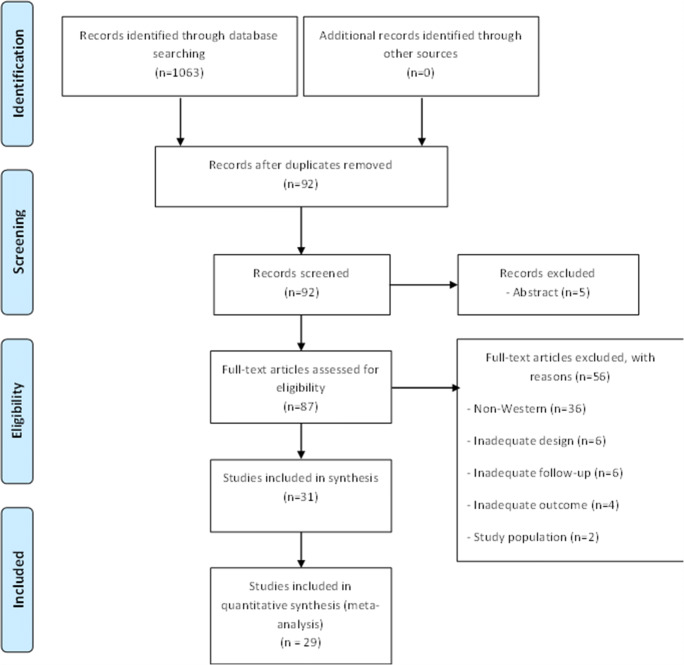
Methods: Observational studies, published between January 1998 and March 2020 and reporting on prevalence and incidence between 6 weeks and 1 year post-partum, were included, regardless of type of UI or setting. We used a random effects model with subgroup analyses for post-partum period, parity and subtype of UI.
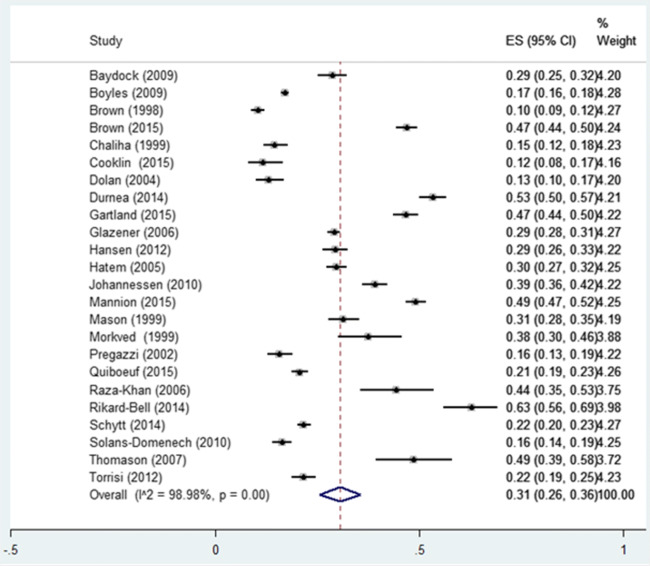
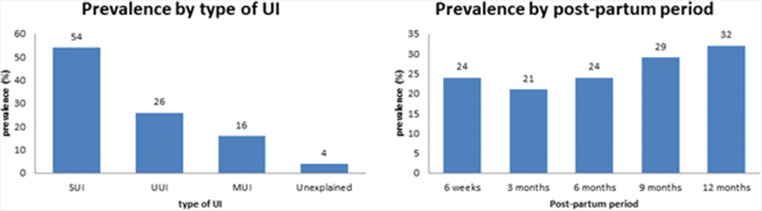
Results: The mean (weighted) prevalence based on 24 included studies, containing a total of 35.064 women, was 31.0%. After an initial drop in prevalence at 3 months post-partum, prevalence rises up to nearly the same level as in the third trimester of pregnancy at 1 year post-partum (32%). Stress UI (54%) is the most prevalent type. UI prevalence is equal among primi- and multiparous women. Experienced bother of UI is heterogeneously assessed and reported to be mild to moderate.
Conclusions: Post-partum UI is highly prevalent in women in the Western world. After an initial drop it rises again at 1 year post-partum. Experienced bother is mild to moderate.
Keywords: Bother; Incidence; Post-partum; Prevalence; Systematic review; Urinary incontinence.
© 2021. The Author(s).
Conflict of interest statement
None.
Figures
References
-
- Haylen BT, de Ridder D, Freeman RM, Swift SE, Berghmans B, Lee J, Monga A, Petri E, Rizk DE, Sand PK, Schaer GN. An International Urogynecological Association (IUGA)/International Continence Society (ICS) joint report on the terminology for female pelvic floor dysfunction. Int Urogynecol J. 2010;21(1):5–26. doi: 10.1007/s00192-009-0976-9. - DOI - PubMed
-
- Botlero R, Davis SR, Urquhart DM, Shortreed S, Bell RJ. Age-specific prevalence of, and factors associated with, different types of urinary incontinence in community-dwelling Australian women assessed with a validated questionnaire. Maturitas. 2009;62(2):134–139. doi: 10.1016/j.maturitas.2008.12.017. - DOI - PubMed
Publication types
MeSH terms
LinkOut - more resources
Full Text Sources
Medical
