


Growth in children on kidney replacement therapy: a review of data from patient registries
- PMID: 34143298
- PMCID: PMC8260545
- DOI: 10.1007/s00467-021-05099-4
Growth in children on kidney replacement therapy: a review of data from patient registries
Abstract
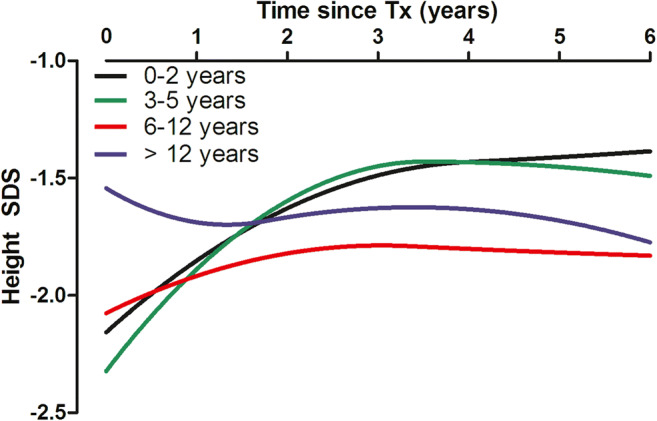
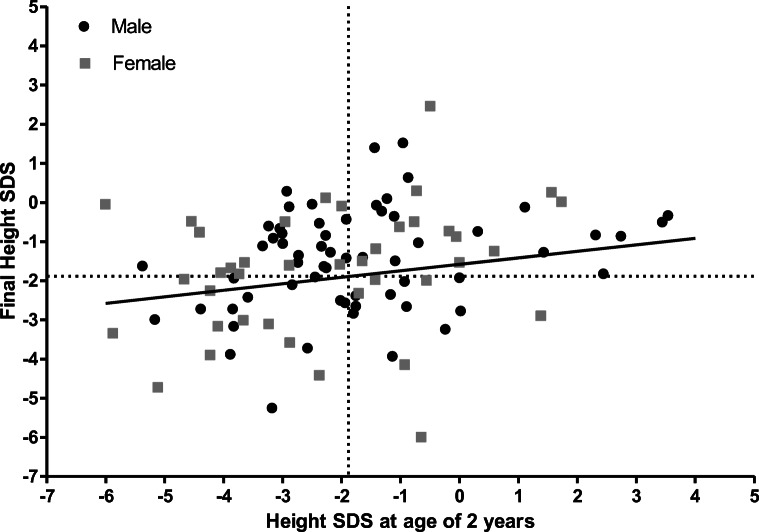
Growth retardation is a major complication in children with chronic kidney disease (CKD) and on kidney replacement therapy (KRT). Conversely, better growth in childhood CKD is associated with an improvement in several hard morbidity-mortality endpoints. Data from pediatric international registries has demonstrated that improvements in the overall conservative management of CKD, the search for optimal dialysis, and advances in immunosuppression and kidney transplant techniques have led to a significant improvement of final height over time. Infancy still remains a critical period for adequate linear growth, and the loss of stature during the first years of life influences final height. Preliminary new original data from the European Society for Paediatric Nephrology/European Renal Association-European Dialysis and Transplant Association (ESPN/ERA-EDTA) Registry confirm an association between the final height and the height attained at 2 years in children on KRT.
Keywords: Children; Chronic kidney disease; Dialysis; Final height; Growth; Kidney replacement therapy; Transplant.
Conflict of interest statement
The authors declare no competing interests.
Figures
References
-
- Feld S, Hirschberg R. Growth hormone, the insulin-like growth factor system, and the kidney. Endocr Rev. 1996;17:423–480. - PubMed
-
- Drube J, Wan M, Bonthuis M, Wühl E, Bacchetta J, Santos F, Grenda R, Edefonti A, Harambat J, Shroff R, Tönshoff B, Haffner D, European Society for Paediatric Nephrology Chronic Kidney Disease Mineral and Bone Disorders, Dialysis, and Transplantation Working Groups (2019) Clinical practice recommendations for growth hormone treatment in children with chronic kidney disease. Nat Rev Nephrol 15:577–589 - PMC - PubMed
Publication types
MeSH terms
LinkOut - more resources
Full Text Sources
Medical
Research Materials
