


COVID-19-related personal product shortages are associated with psychological distress in people living with gastrointestinal disorders: A cross-sectional survey
- PMID: 34145689
- PMCID: PMC8420452
- DOI: 10.1111/nmo.14198
COVID-19-related personal product shortages are associated with psychological distress in people living with gastrointestinal disorders: A cross-sectional survey
Abstract
Background: The mental health response to the coronavirus (COVID-19) pandemic-related product shortages in those living with chronic gastrointestinal (GI) disorders has received little attention. We aimed to explore the association between the pandemic-related product shortages and psychological distress in people with GI disorders.
Methods: This online cross-sectional survey was nested within an ongoing, international, prospective study of well-being in people with GI disorders. The study was advertised in multiple countries in May-September 2020 via patient organizations and social media. The primary outcome measure was distress, evaluated by the Depression Anxiety Stress Scale. We utilized linear regressions, adjusting for covariates and testing individual moderation effects.
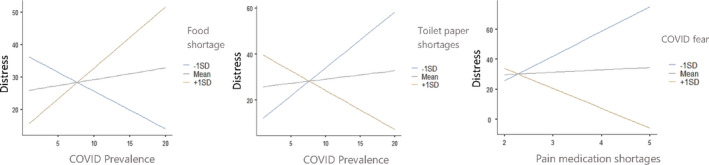
Key results: Overall, 831 people completed the survey from 27 countries, of whom 82% were female (mean age = 49 years). The most common disorders included inflammatory bowel disease (n = 322), celiac disease (n = 273), and irritable bowel syndrome (n = 260). Significant problems accessing food were reported by 19.8%, non-medical therapies by 16%, toilet paper by 10.8%, and essential medication by 8.9% of the sample (>5% pain medication). There was a positive association between toilet paper and pain medication shortages and distress, and a negative association between food shortages and distress. Significant moderation effects were identified for COVID-19 prevalence and toilet paper and food shortages, and between COVID-19 fear and pain medication shortages.
Conclusions and inferences: The study documented a significant relationship between product shortages and psychological distress, which were associated with COVID-19 prevalence and fear. Strategies addressing COVID-19 fear could potentially modify the relationship between shortages and distress.
Keywords: COVID-19; distress; gastrointestinal disorders; product shortages; psychological distress.
© 2021 John Wiley & Sons Ltd.
Conflict of interest statement
The authors have no conflict of interests in relation to this study.
The other authors have nothing to report.
Figures
References
-
- ECDC . Download today’s data on the geographic distribution of COVID‐19 cases worldwide Stockholm European centre for disease prevention and control. 2020. https://www.ecdc.europa.eu/en/publications‐data/download‐todays‐data‐geo...
-
- Davis J, Jasper C, McCarthy M. Shoppers urged to be patient as Victorian coronavirus restrictions impact food supply. ABC Rural. 2020.
-
- Truu M. Half of Australian women were impacted by period product shortages during coronavirus. SBS News. 2020.
-
- Wright P. Coronavirus COVID‐19: why is everyone buying toilet paper? ABC Life. 2020.
-
- Article No. 8383: Over two‐thirds of working Australians have had their employment impacted by the ‘Coronavirus Crisis’ [press release]. 2020.
Publication types
MeSH terms
LinkOut - more resources
Full Text Sources
Medical
