


RIG-I, a novel DAMPs sensor for myoglobin activates NF-κB/caspase-3 signaling in CS-AKI model
- PMID: 34148549
- PMCID: PMC8215750
- DOI: 10.1186/s40779-021-00333-4
RIG-I, a novel DAMPs sensor for myoglobin activates NF-κB/caspase-3 signaling in CS-AKI model
Abstract
Background: Acute kidney injury (AKI) is the main life-threatening complication of crush syndrome (CS), and myoglobin is accepted as the main pathogenic factor. The pattern recognition receptor retinoicacid-inducible gene I (RIG-I) has been reported to exert anti-viral effects function in the innate immune response. However, it is not clear whether RIG-I plays a role in CS-AKI. The present research was carried out to explore the role of RIG-I in CS-AKI.
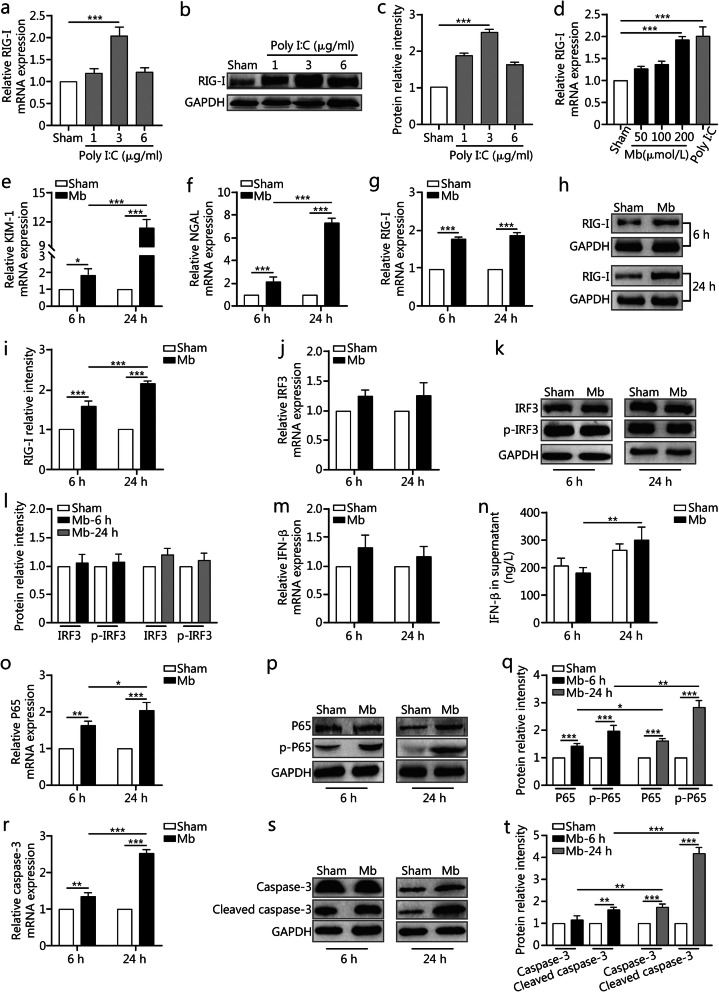
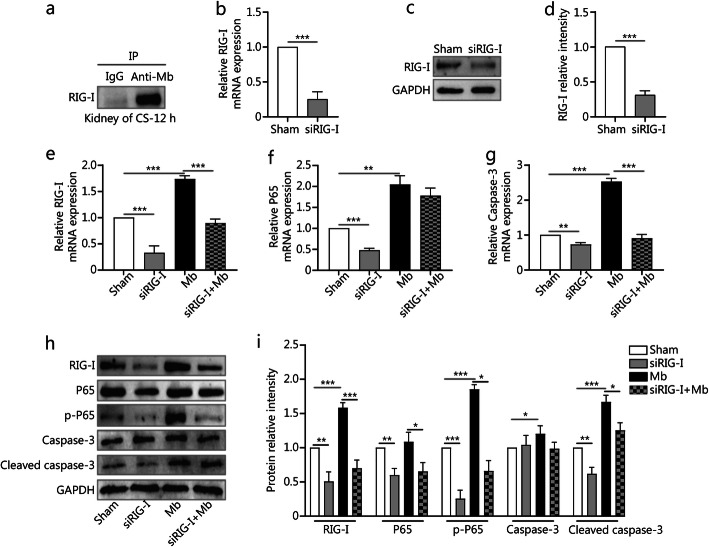
Methods: Sprague-Dawley rats were randomly divided into two groups: the sham and CS groups (n = 12). After administration of anesthesia, the double hind limbs of rats in the CS group were put under a pressure of 3 kg for 16 h to mimic crush conditions. The rats in both groups were denied access to food and water. Rats were sacrificed at 12 h or 36 h after pressure was relieved. The successful establishment of the CS-AKI model was confirmed by serum biochemical analysis and renal histological examination. In addition, RNA sequencing was performed on rat kidney tissue to identify molecular pathways involved in CS-AKI. Furthermore, NRK-52E cells were treated with 200 μmol/L ferrous myoglobin to mimic CS-AKI at the cellular level. The cells and cell supernatant samples were collected at 6 h or 24 h. Small interfering RNAs (siRNA) was used to knock down RIG-I expression. The relative expression levels of molecules involved in the RIG-I pathway in rat kidney or cells samples were measured by quantitative Real-time PCR (qPCR), Western blotting analysis, and immunohistochemistry (IHC) staining. Tumor necrosis factor-α (TNF-α) was detected by ELISA. Co-Immunoprecipitation (Co-IP) assays were used to detect the interaction between RIG-I and myoglobin.
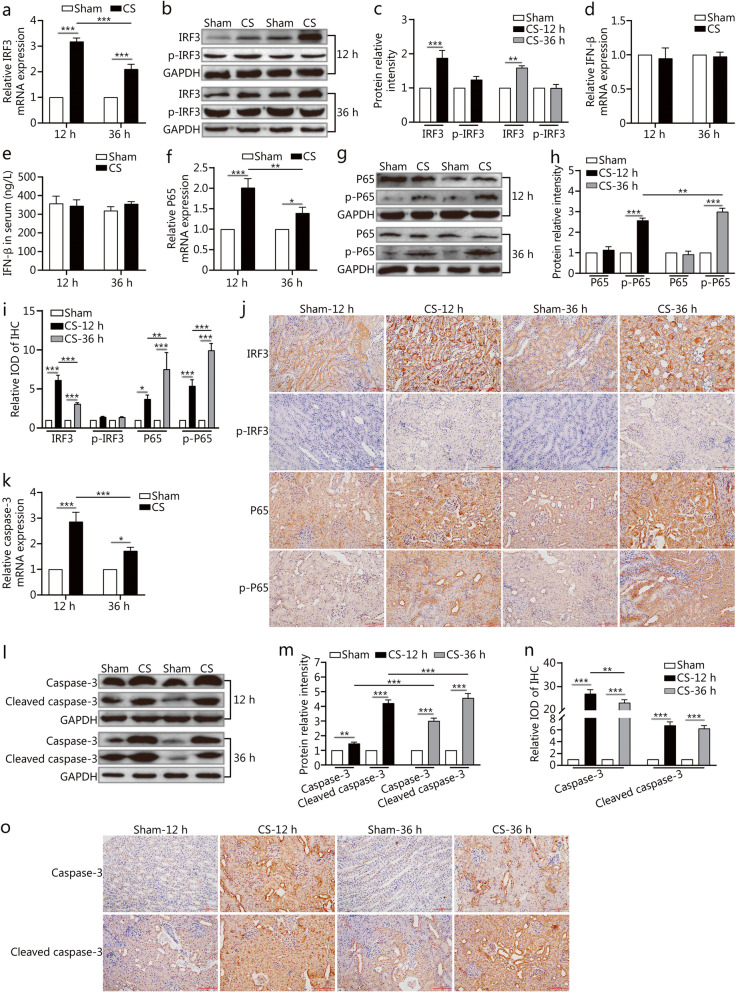
Results: RNA sequencing of CS-AKI rat kidney tissue revealed that the different expression of RIG-I signaling pathway. qPCR, Western blotting, and IHC assays showed that RIG-I, nuclear factor kappa-B (NF-κB) P65, p-P65, and the apoptotic marker caspase-3 and cleaved caspase-3 were up-regulated in the CS group (P < 0.05). However, the levels of interferon regulatory factor 3 (IRF3), p-IRF3 and the antiviral factor interferon-beta (IFN-β) showed no significant changes between the sham and CS groups. Co-IP assays showed the interaction between RIG-I and myoglobin in the kidneys of the CS group. Depletion of RIG-I could alleviate the myoglobin induced expression of apoptosis-associated molecules via the NF-κB/caspase-3 axis.
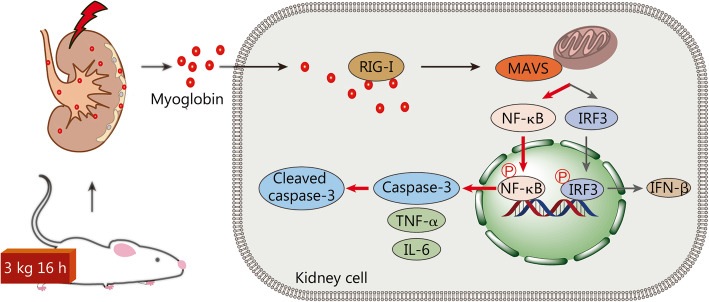
Conclusion: RIG-I is a novel damage-associated molecular patterns (DAMPs) sensor for myoglobin and participates in the NF-κB/caspase-3 signaling pathway in CS-AKI. In the development of CS-AKI, specific intervention in the RIG-I pathway might be a potential therapeutic strategy for CS-AKI.
Keywords: Acute kidney injury; Crush syndrome; Damage-associated molecular patterns; Myoglobin; Nuclear factor kappa-B/caspase-3; Retinoic acid-inducible gene I.
Conflict of interest statement
The authors declare that there are no competing interests.
Figures

References
-
- Scapellato S, Maria S, Castorina G, Sciuto G. Crush syndrome. Minerva Chir. 2007;62(4):285–292. - PubMed
Publication types
MeSH terms
Substances
LinkOut - more resources
Full Text Sources
Research Materials
