Spatial distribution of Culex mosquito abundance and associated risk factors in Hanoi, Vietnam
- PMID: 34153065
- PMCID: PMC8248591
- DOI: 10.1371/journal.pntd.0009497
Spatial distribution of Culex mosquito abundance and associated risk factors in Hanoi, Vietnam
Abstract
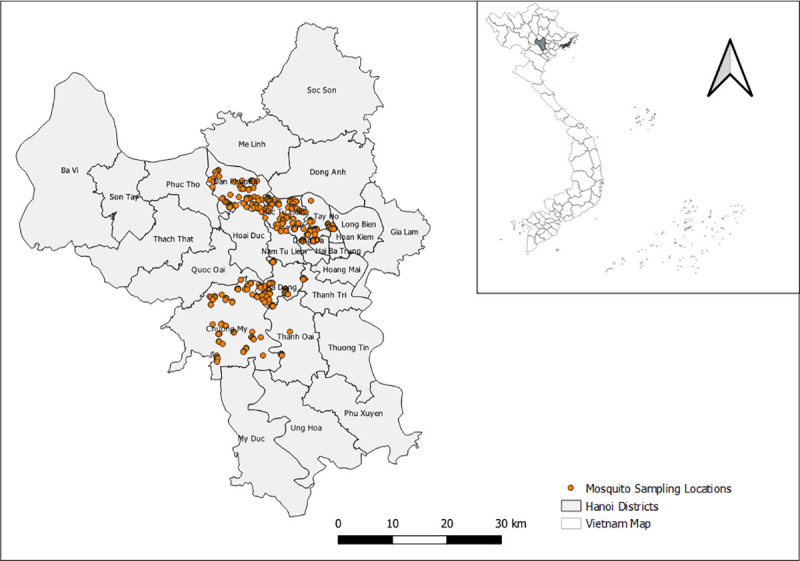
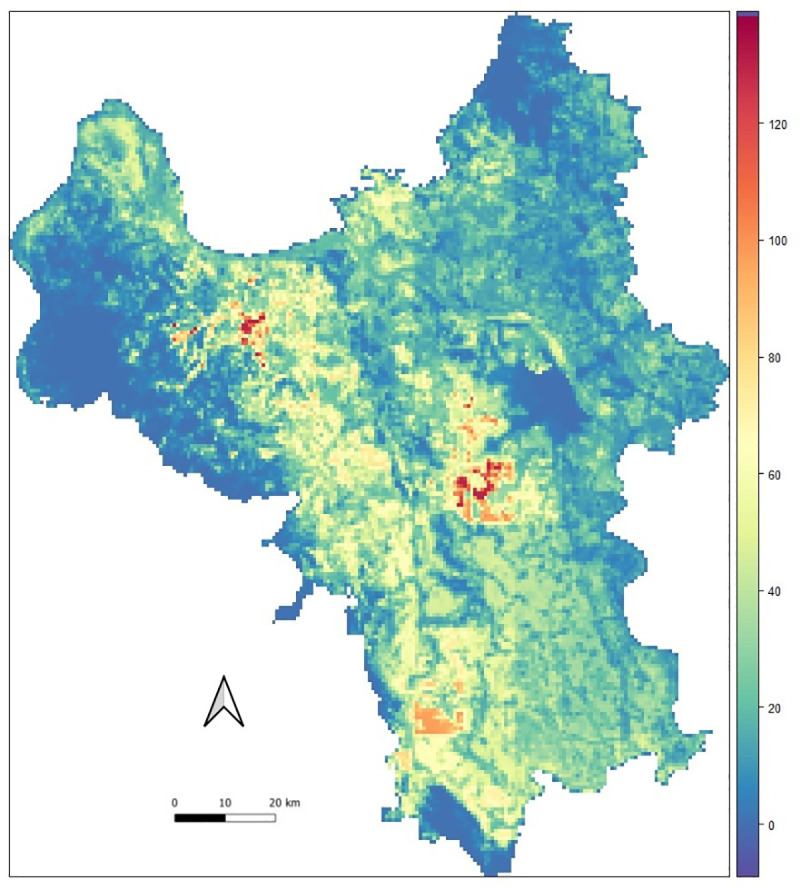
Japanese encephalitis (JE) is the major cause of viral encephalitis (VE) in most Asian-Pacific countries. In Vietnam, there is no nationwide surveillance system for JE due to lack of medical facilities and diagnoses. Culex tritaeniorhynchus, Culex vishnui, and Culex quinquefasciatus have been identified as the major JE vectors in Vietnam. The main objective of this study was to forecast a risk map of Culex mosquitoes in Hanoi, which is one of the most densely populated cities in Vietnam. A total of 10,775 female adult Culex mosquitoes were collected from 513 trapping locations. We collected temperature and precipitation information during the study period and its preceding month. In addition, the other predictor variables (e.g., normalized difference vegetation index [NDVI], land use/land cover and human population density), were collected for our analysis. The final model selected for estimating the Culex mosquito abundance included centered rainfall, quadratic term rainfall, rice cover ratio, forest cover ratio, and human population density variables. The estimated spatial distribution of Culex mosquito abundance ranged from 0 to more than 150 mosquitoes per 900m2. Our model estimated that 87% of the Hanoi area had an abundance of mosquitoes from 0 to 50, whereas approximately 1.2% of the area showed more than 100 mosquitoes, which was mostly in the rural/peri-urban districts. Our findings provide better insight into understanding the spatial distribution of Culex mosquitoes and its associated environmental risk factors. Such information can assist local clinicians and public health policymakers to identify potential areas of risk for JE virus. Risk maps can be an efficient way of raising public awareness about the virus and further preventive measures need to be considered in order to prevent outbreaks and onwards transmission of JE virus.
Conflict of interest statement
The authors have declared that no competing interests exist.
Figures

References
-
- Japanese encephalitis [Internet]. WHO. 2019 [cited 15/12/2020].
Publication types
MeSH terms
LinkOut - more resources
Full Text Sources