


A review of sleep disturbance in adults prescribed medications for opioid use disorder: potential treatment targets for a highly prevalent, chronic problem
- PMID: 34153796
- PMCID: PMC8503844
- DOI: 10.1016/j.sleep.2021.05.021
A review of sleep disturbance in adults prescribed medications for opioid use disorder: potential treatment targets for a highly prevalent, chronic problem
Abstract
Background: Sleep disturbance in individuals prescribed medications for opioid use disorder (MOUD) is common, though the nature and progression of such concerns are difficult to discern due to differing terminology and assessment type between studies. Accurately identifying and treating sleep problems in this growing population has the potential to improve comorbidity and other MOUD outcomes.
Objective: The aim of the present review is to provide an overview of sleep in individuals stabilized on MOUD. Specifically, the following aspects of sleep were reviewed: 1) prevalence of clinically significant sleep disturbance; 2) sleep disturbance compared to findings in those not prescribed MOUD; 3) correlates of sleep disturbance; 4) self-reported sleep compared to objective measures.
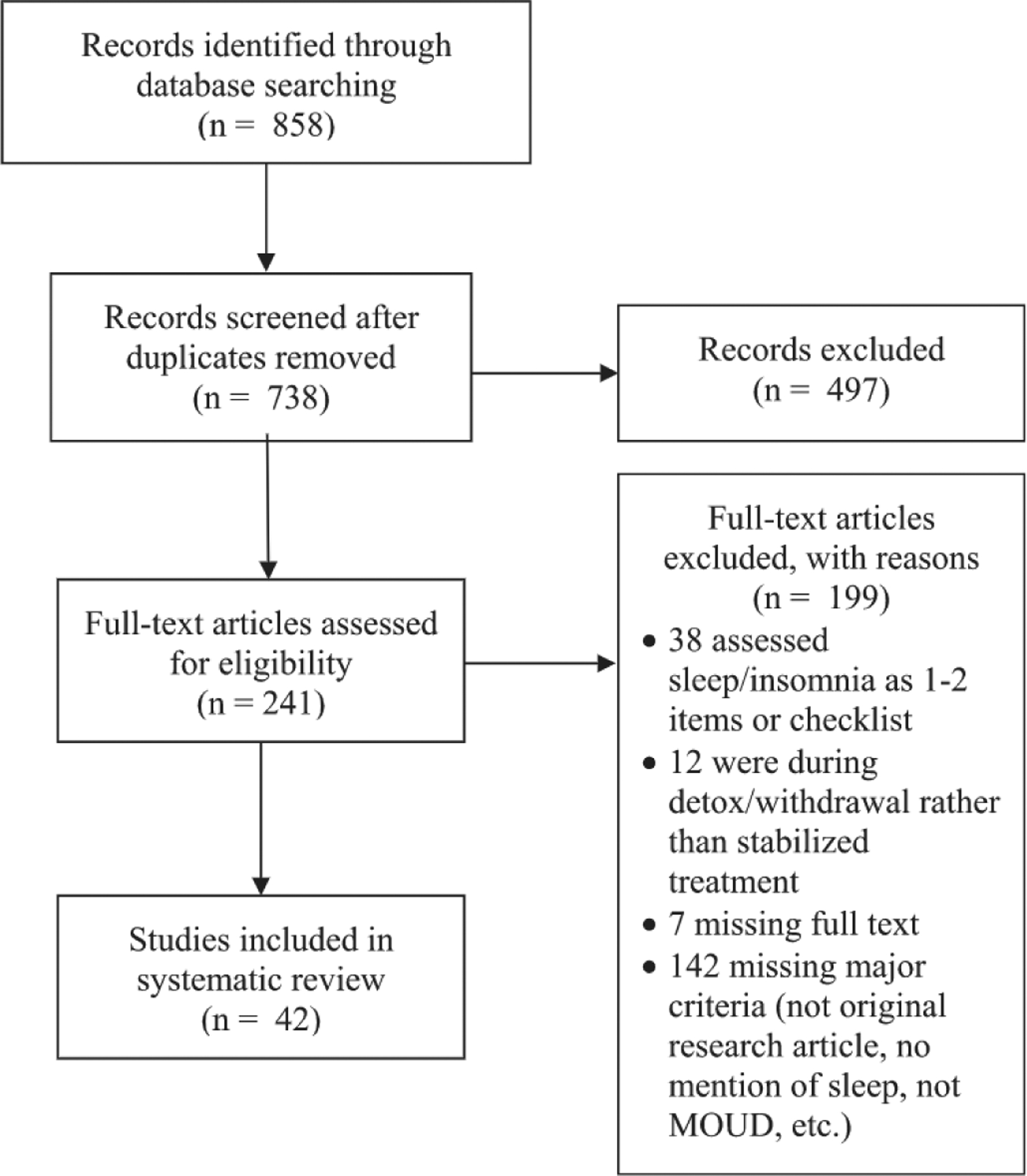
Method: Studies were identified using 6 large databases and included if they contained at least one measure of sleep during MOUD treatment as usual. Studies were excluded if they were case studies, not available in English, or participants were in withdrawal or detoxification.
Results: Forty-two studies were included and categorized by type of sleep assessment: validated self-report questionnaire; provider-assessed; polysomnography; multi-method. Correlates were included if they were statistically significant (generally p < 0.05).
Conclusions: This review indicates there is a high prevalence of chronic self-reported sleep disturbance (eg, insomnia symptoms) in this population and suggests quantitative sleep parameters (eg, total sleep time) and respiratory problems during sleep are worse than in the general population. These sleep problems are correlated with psychiatric comorbidity and other substance use. Other correlates (eg, sociodemographic factors) require further study to draw definitive conclusions.
Keywords: Addiction; Assessment; Medication assisted treatment; Opioid use disorder; Sleep.
Copyright © 2021 Elsevier B.V. All rights reserved.
Conflict of interest statement
Conflict of interest
None declared.
The ICMJE Uniform Disclosure Form for Potential Conflicts of Interest associated with this article can be viewed by clicking on the following link:
Figures
References
-
- Bell J, Strang J. Medication treatment of opioid use disorder. Biol Psychiatry 2020;87(1):82–8. - PubMed
-
- Blanco C, Volkow ND. Management of opioid use disorder in the USA: present status and future directions. Lancet 2019;393(10182):1760–72. - PubMed
-
- National Academies of Sciences E, Medicine. Medications for opioid use disorder save lives. National Academies Press; 2019. - PubMed
Publication types
MeSH terms
Grants and funding
LinkOut - more resources
Full Text Sources
Medical
