


Genetic Causes of Hearing Loss in a Large Cohort of Cochlear Implant Recipients
- PMID: 34154485
- PMCID: PMC9128025
- DOI: 10.1177/01945998211021308
Genetic Causes of Hearing Loss in a Large Cohort of Cochlear Implant Recipients
Abstract
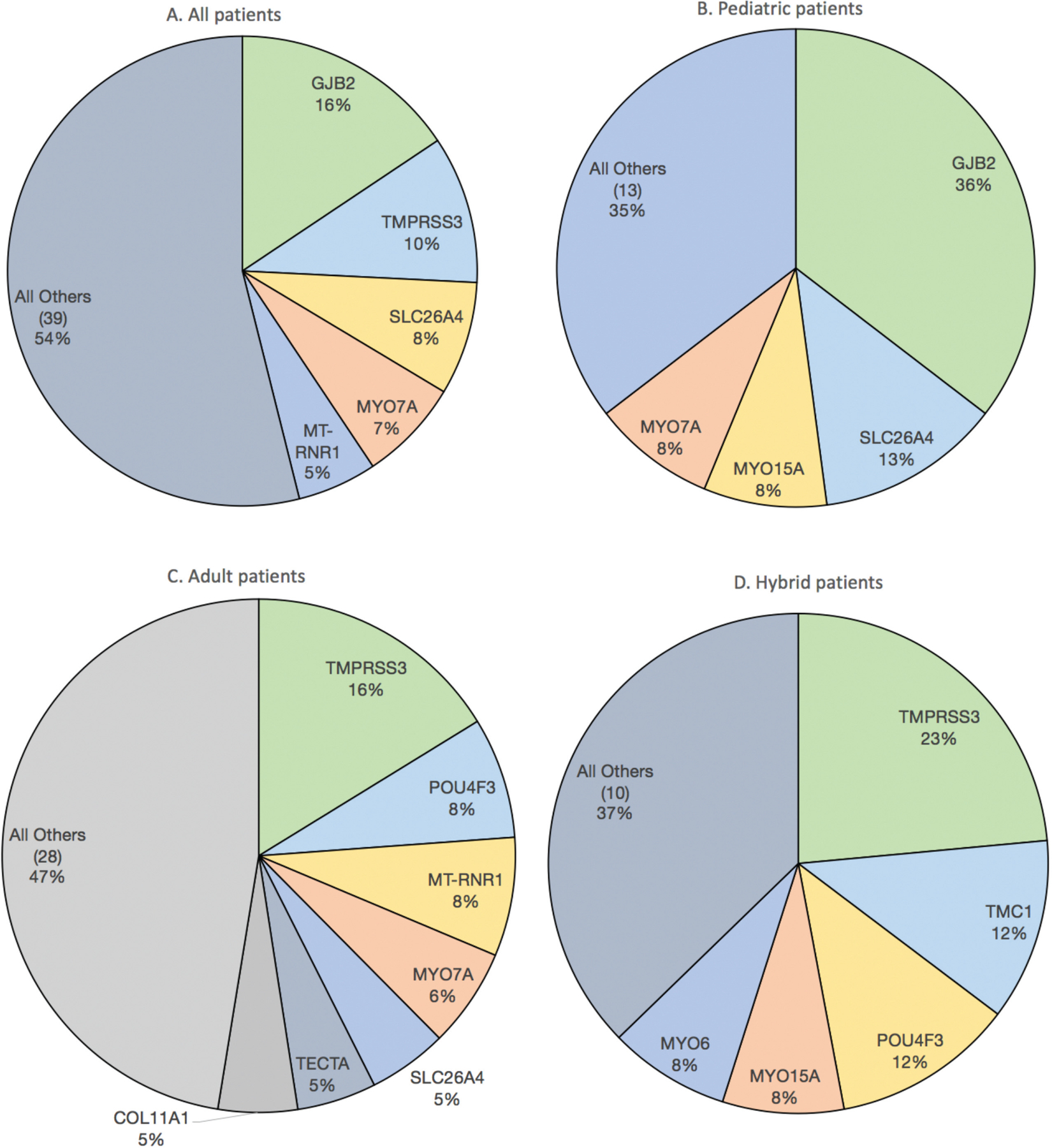
Understanding genetic causes of hearing loss can determine the pattern and course of a patient's hearing loss and may also predict outcomes after cochlear implantation. Our goal in this study was to evaluate genetic causes of hearing loss in a large cohort of adults and children with cochlear implants. We performed comprehensive genetic testing on all patients undergoing cochlear implantation. Of the 459 patients included in the study, 128 (28%) had positive genetic testing. In total, 44 genes were identified as causative. The top 5 genes implicated were GJB2 (20, 16%), TMPRSS3 (13, 10%), SLC26A4 (10, 8%), MYO7A (9, 7%), and MT-RNR1 (7, 5%). Pediatric patients had a higher diagnostic rate. This study lays the groundwork for future studies evaluating the relationship between genetic variation and cochlear implant performance.
Keywords: cochlear implants; genetic epidemiology; genetic hearing loss.
Conflict of interest statement
Disclosures
Figures
References
-
- Monteiro E, Shipp D, Chen J, Nedzelski J, Lin V. Cochlear implantation: a personal and societal economic perspective examining the effects of cochlear implantation on personal income. J Otolaryngol Head Neck Surg 2012;41(suppl 1):S43–S48. - PubMed
-
- Ray J, Wright T, Fielden C, Cooper H, Donaldson I, Proops DW. Non-users and limited users of cochlear implants. Cochlear Implants Int 2006;7(1):49–58. - PubMed
-
- Wu CC, Liu TC, Wang SH, Hsu CJ, Wu CM. Genetic characteristics in children with cochlear implants and the corresponding auditory performance. Laryngoscope 2011;121(6):1287–1293. - PubMed
Publication types
MeSH terms
Substances
Grants and funding
LinkOut - more resources
Full Text Sources
Medical
