


Recombinant human luteinizing hormone co-treatment in ovarian stimulation for assisted reproductive technology in women of advanced reproductive age: a systematic review and meta-analysis of randomized controlled trials
- PMID: 34154604
- PMCID: PMC8215738
- DOI: 10.1186/s12958-021-00759-4
Recombinant human luteinizing hormone co-treatment in ovarian stimulation for assisted reproductive technology in women of advanced reproductive age: a systematic review and meta-analysis of randomized controlled trials
Abstract
Introduction: Several studies suggest that luteinizing hormone (LH) could improve IVF outcome in women of advanced reproductive age by optimizing androgen production. In this review, we assessed the role of recombinant-human LH (r-hLH) and recombinant human follicle stimulating hormone (r-hFSH) co-treatment in ovarian stimulation for assisted reproductive technology in women of advanced reproductive age candidates for assisted reproduction.
Material and methods: Using a preregistered protocol we systematically searched Medline/PubMed, Scopus and the ISI Web of Science databases to identify randomized controlled trials in which r-hFSH monotherapy protocols were compared with r-hFSH/r-hLH co-treatment in women ≥35 years undergoing fresh IVF cycles. We calculated the pooled odds ratio (OR) for dichotomous data and the weight mean difference (WMD) for continuous data with an associated 95% confidence interval (CI). The meta-analyses were conducted using the random-effect model. P values < 0.05 were considered statistically significant. Subgroup analyses of all primary and secondary outcomes were performed only in women aged 35-40 years.
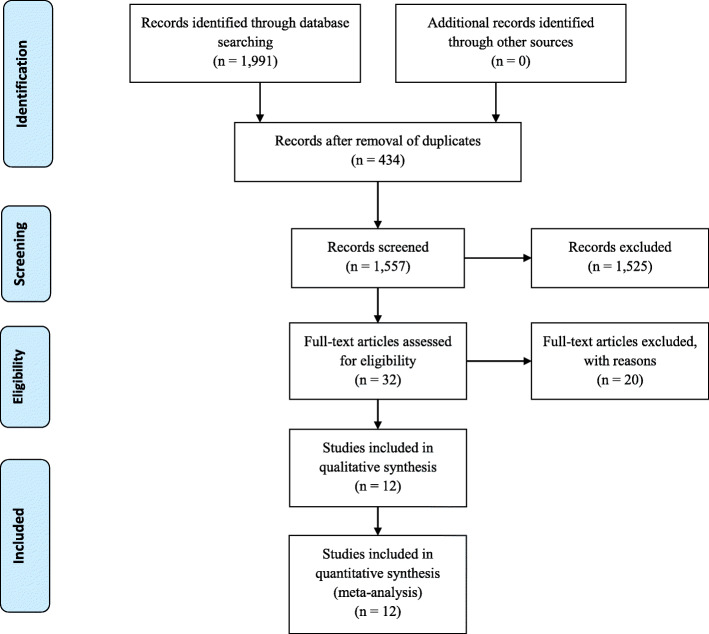
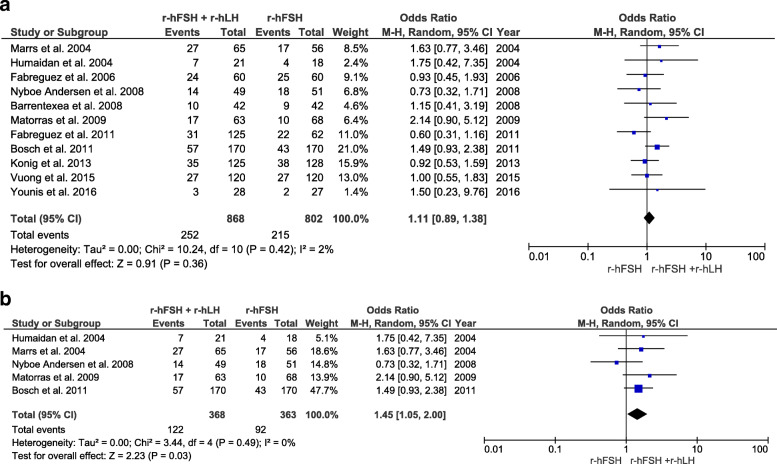
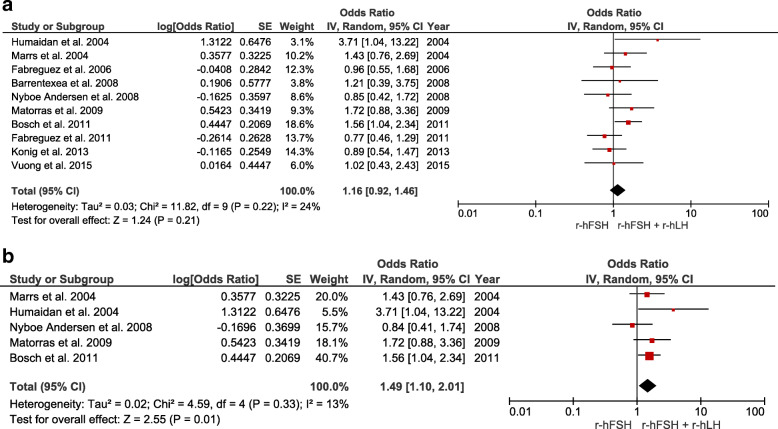
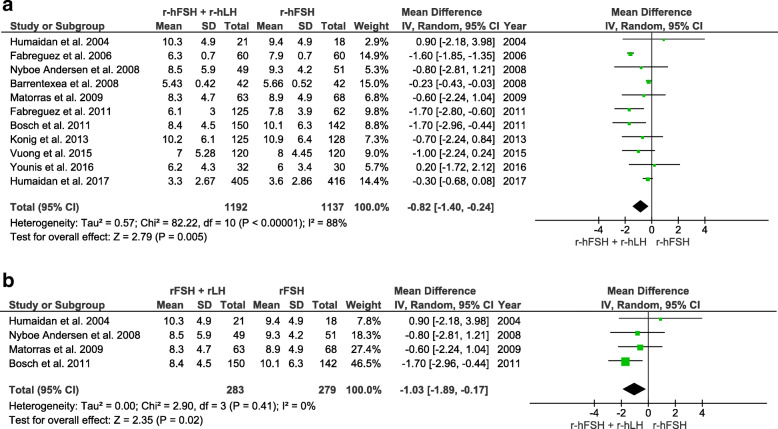
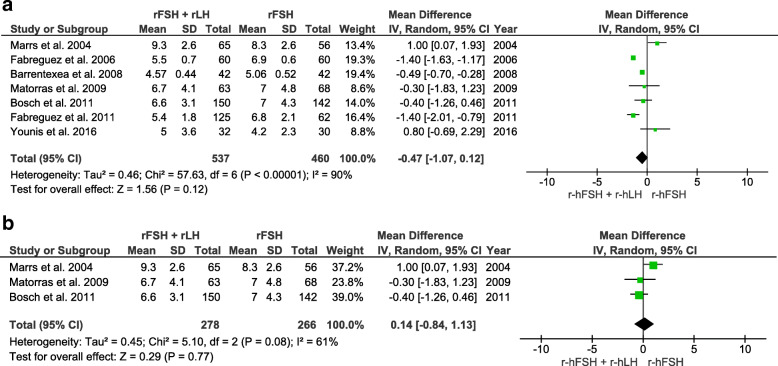
Results: Twelve studies were identified. In women aged between 35 and 40 years, r-hFSH/r-hLH co-treatment was associated with higher clinical pregnancy rates (OR 1.45, CI 95% 1.05-2.00, I2 = 0%, P = 0.03) and implantation rates (OR 1.49, CI 95% 1.10-2.01, I2 = 13%, P = 0.01) versus r-hFSH monotherapy. Fewer oocytes were retrieved in r-hFSH/r-hLH-treated patients than in r-hFSH-treated patients both in women aged ≥35 years (WMD -0.82 CI 95% -1.40 to - 0.24, I2 = 88%, P = 0.005) and in those aged between 35 and 40 years (WMD -1.03, CI - 1.89 to - 0.17, I2 = 0%, P = 0.02). The number of metaphase II oocytes, miscarriage rates and live birth rates did not differ between the two groups of women overall or in subgroup analysis.
Conclusion: Although more oocytes were retrieved in patients who underwent r-hFSH monotherapy, this meta-analysis suggests that r-hFSH/r-hLH co-treatment improves clinical pregnancy and implantation rates in women between 35 and 40 years of age undergoing ovarian stimulation for assisted reproduction technology. However, more RCTs using narrower age ranges in advanced age women are warranted to corroborate these findings.
Keywords: Advanced reproductive age; Assisted reproductive technology; In vitro fertilization; Luteinizing hormone; Recombinant luteinizing hormone.
Conflict of interest statement
Dr. Conforti and Prof Alviggi and Prof. Orvieto report personal fees and honoraria outside the submitted work. Prof. Esteves declares receipt of speaker’s fees from Merck, Lilly, and Besins outside the present study. Prof. Humaidan declares honoraria for lectures from Merck, MSD, IBSA, Gedeon Richter and Theramex as well as unrestricted research grants from Merck, Ferring, IBSA and Gedeon Richter. Dr. Filippo Maria Ubaldi and Dr. Alberto Vaiarelli declare receipt of speaker’s fees from Merck and MSD. Dr. Danilo Cimadomo and Prof. Zullo have nothing to disclose. Dr. Longobardi is Senior Medical Director Fertility, Clinical Development, Merck KGaA, Darmstadt, Germany. Prof. D’Hooghe is Vice President and Head of Global Medical Affairs Fertility, Research and Development, Merck KGaA, Darmstadt, Germany. Thomas D’Hooghe is Professor in Reproductive Medicine and Biology at the Department of Development and Regeneration, Group Biomedical Sciences, KU Leuven (University of Leuven), Belgium, and Adjunct Professor at the Department of Obstetrics and Gynecology in the University of Yale, New Haven, USA.
Figures
References
-
- Baird DT, Collins J, Egozcue J, Evers LH, Gianaroli L, Leridon H, Sunde A, Templeton A, van Steirteghem A, Cohen J, Crosignani PG, Devroey P, Diedrich K, Fauser BC, Fraser L, Glasier A, Liebaers I, Mautone G, Penney G, Tarlatzis B, ESHRE Capri Workshop Group Fertility and ageing. Hum Reprod Update. 2005;11(3):261–276. doi: 10.1093/humupd/dmi006. - DOI - PubMed
-
- Esteves SC, Carvalho JF, Martinhago CD, Melo AA, Bento FC, Humaidan P, Alviggi C, POSEIDON (Patient-Oriented Strategies Encompassing IndividualizeD Oocyte Number) Group Estimation of age-dependent decrease in blastocyst euploidy by next generation sequencing: development of a novel prediction model. Panminerva Med. 2019;61(1):3–10. doi: 10.23736/S0031-0808.18.03507-3. - DOI - PubMed
Publication types
MeSH terms
Substances
LinkOut - more resources
Full Text Sources
Medical
