


Current approach and novel perspectives in nasopharyngeal carcinoma: the role of targeting proteasome dysregulation as a molecular landmark in nasopharyngeal cancer
- PMID: 34154654
- PMCID: PMC8215824
- DOI: 10.1186/s13046-021-02010-9
Current approach and novel perspectives in nasopharyngeal carcinoma: the role of targeting proteasome dysregulation as a molecular landmark in nasopharyngeal cancer
Abstract
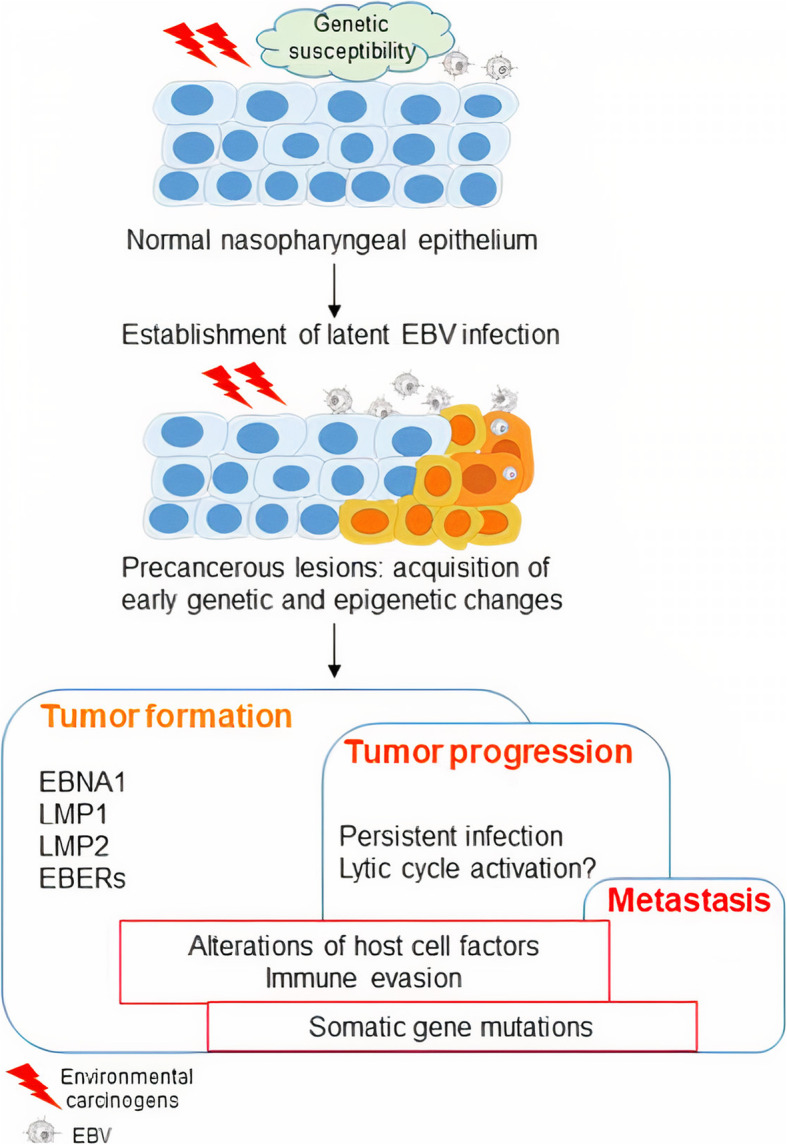
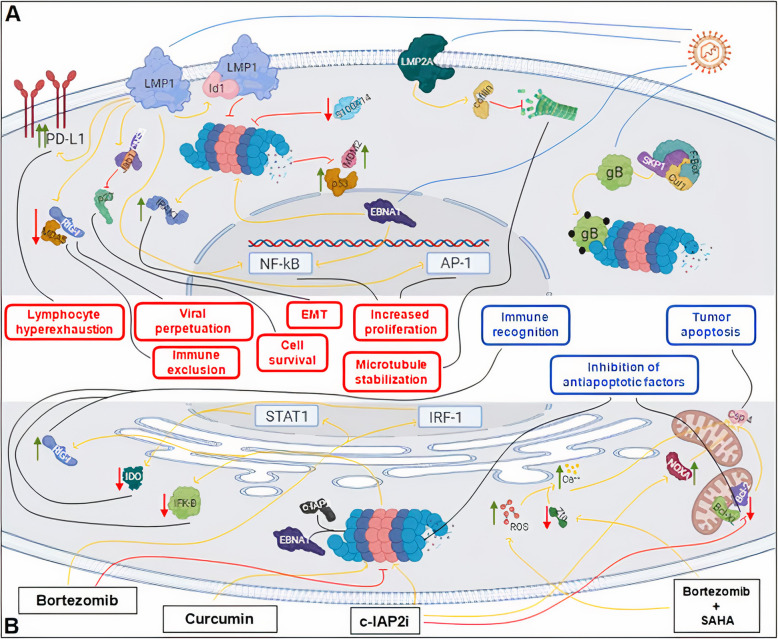
Nasopharyngeal carcinoma (NPC) represents a molecularly paradigmatic tumor given the complex diversity of environmental as well as host dependent factors that are closely implicated in tissue transformation and carcinogenesis. Epstein Barr Virus (EBV) plays a key role in tissue invasion, hyperplasia and malignant transformation. Therefore, EBV related oncoviral proteins such as Latent Membrane Protein family (LMP1, LMP2), Epstein Barr Nuclear Antigen 1 (EBNA1) and EBV related glycoprotein B (gB) are responsible for inducing intracellular signalling aberrations leading to sustained proliferation and further acquisition of NPC related invasive nature and metastatic potential.Dysregulation of proteasome signaling seems to be centrally implicated in oncoviral protein stabilization as well as in modulating tumor microenvironment. Different studies in vitro and in vivo suggest a potential role of proteasome inhibitors in the therapeutic setting of NPC. Furthermore, alterations affecting proteasome signalling in NPC have been associated to tumor growth and invasion, distant metastasis, immune exclusion and resistance as well as to clinical poor prognosis. So on, recent studies have shown the efficacy of immunotherapy as a suitable therapeutic approach to NPC. Nevertheless, novel strategies seem to look for combinatorial regimens aiming to potentiate immune recognition as well as to restore both primary and acquired immune resistance.In this work, our goal is to thoroughly review the molecular implications of proteasome dysregulation in the molecular pathogenesis of NPC, together with their direct relationship with EBV related oncoviral proteins and their role in promoting immune evasion and resistance. We also aim to hypothesize about the feasibility of the use of proteasome inhibitors as part of immunotherapy-including combinatorial regimens for their potential role in reversing immune resistance and favouring tumor recognition and eventual tumor death.
Keywords: Bortezomib; Epstein Barr virus; Immunotherapy; Nasopharyngeal carcinoma; Proteasome.
Conflict of interest statement
The authors declare no potential conflict of interest.
Figures
References
-
- Nakanishi Y, Wakisaka N, Kondo S, Endo K, Sugimoto H, Hatano M, Ueno T, Ishikawa K, Yoshizaki T. Progression of understanding for the role of Epstein-Barr virus and management of nasopharyngeal carcinoma. Cancer Metastasis Rev. 2017;36(3):435–447. doi: 10.1007/s10555-017-9693-x. - DOI - PMC - PubMed
-
- Natasya Naili MN, Hasnita CH, Shamim AK, Hasnan J, Fauziah MI, Narazah MY, James A, Zulkiflee S, Nidzam MMT, Zilfalil BA. Chromosomal alterations in Malaysian patients with nasopharyngeal carcinoma analyzed by comparative genomic hybridization. Cancer Genet Cytogenet. 2010;203(2):309–312. doi: 10.1016/j.cancergencyto.2010.07.136. - DOI - PubMed
Publication types
MeSH terms
Substances
LinkOut - more resources
Full Text Sources
