


Female (Under) Representation in Exercise Thermoregulation Research
- PMID: 34156570
- PMCID: PMC8219822
- DOI: 10.1186/s40798-021-00334-6
Female (Under) Representation in Exercise Thermoregulation Research
Abstract
Background: Despite an increasing rate of women participating in professional sports, emergency services, and military settings where they are exposed to exertional heat stress, our understanding of female thermoregulation and the detrimental effects of heat on women's performance, especially regarding the menstrual cycle, is limited. This review aimed to quantify the representation of women in exercise thermoregulation research between 2010 and 2019 and the frequency that these articles reported details pertaining to female participants' menstrual cycle to determine the volume of novel research that is directly relevant to this growing population.
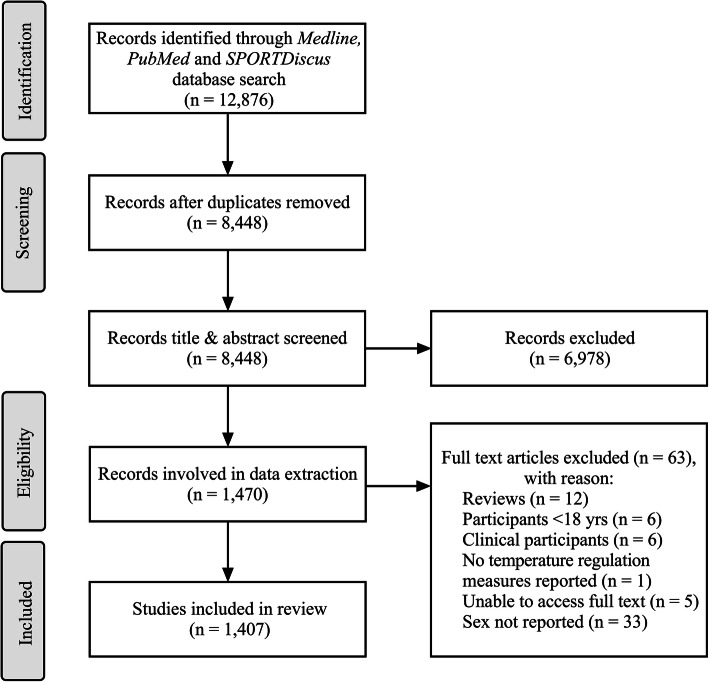
Methods: Original exercise thermoregulatory studies published in three major sports medicine databases (PubMed, MEDLINE, and SPORTDiscus) between 2010 and 2019 were surveyed. Articles were screened to determine the number of female and male participants in the study and whether studies involving women reported menstrual orientation or phase. Research involving healthy adult participants and an exercise protocol with a thermoregulatory outcome measure were included in the review.
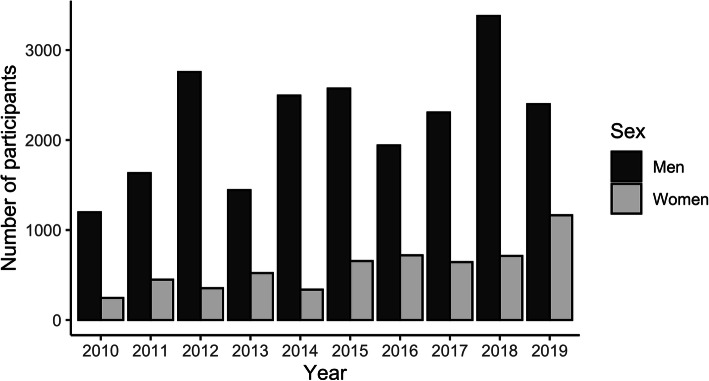
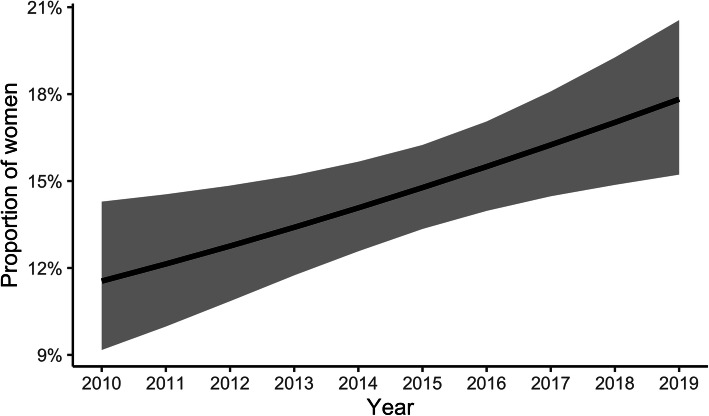
Results: A total of 1407 articles were included in the review, involving 28,030 participants. The annual representation of women ranged from a mean of 11.6% [95% credible interval (CI); 9.2, 14.3] to 17.8% [95% CI; 15.2, 20.6] across the 10 years, indicating studies predominantly included men. Nonetheless, there was a small statistical increase in the overall proportion of women, with a mean overall proportion change of 0.7% [95% CI; 0.2, 1.2] per year. The increase appeared to be driven by a reduction in the number of studies including only men, rather than studies including more women alongside men, or increased women-only studies. Less than one third of articles involving women reported the menstrual orientation of participants and less than one quarter reported both menstrual orientation and phase. This study shows that women were proportionally underrepresented in exercise thermoregulation research during the past decade and the majority of studies did not report menstrual cycle details of female participants. Researchers should consider including women in future work where their inclusion could contribute meaningful data that enhance the evidence-based and ultimately improves our comprehension of women's thermal physiology.
Keywords: Exertional heat stress; Menstrual cycle; Performance; Sex differences; Temperature.
Conflict of interest statement
The authors, Kate Hutchins, David Borg, Aaron Bach, Joshua Bon, Geoffrey Minett, and Ian Stewart, declare that they have no competing interests.
Figures
References
-
- Nakamura Y, Aizawa K. Sex hormones, menstrual cycle and resistance exercise. In: Hackney AC, editor. Sex hormones, exercise and women: scientific and clinical aspects. Cham: Springer; 2017. p. 243–56. 10.1007/978-3-319-44558-8_14.
Publication types
LinkOut - more resources
Full Text Sources
Miscellaneous
