Review
. 2021 Nov 5;118(44):741-748.
doi: 10.3238/arztebl.m2021.0251.

Mitochondrial Disorders

Affiliations
Review

Mitochondrial Disorders

Thomas Klopstock et al. Dtsch Arztebl Int. .

Abstract

Background: Mitochondrial disorders are among the most common heritable diseases, with an overall lifetime risk of approximately one in 1500. Nonetheless, their diagnosis is often missed because of their extreme phenotypic and genotypic heterogeneity.

Methods: This review is based on publications retrieved by a selective literature search on the clinical features, genetics, pathogenesis, diagnosis, and treatment of mitochondrial diseases.

Results: Pathogenic defects of energy metabolism have been described to date in over 400 genes. Only a small number of these genes lie in the mitochondrial DNA; the corresponding diseases are either maternally inherited or of sporadic distribution. The remaining disease-associated genes are coded in nuclear DNA and cause diseases that are inherited according to Mendelian rules, mostly autosomal recessive. The most severely involved organs are generally those with the highest energy requirements, including the brain, the sensory epithelia, and the extraocular, cardiac, and skeletal musculature. Typical manifestations include epileptic seizures, stroke-like episodes, hearing loss, retinopathy, external ophthalmoparesis, exercise intolerance, and diabetes mellitus. More than two manifestations of these types should arouse suspicion of a disease of energy metabolism. The severity of mitochondrial disorders ranges from very severe disease, already evident in childhood, to relatively mild disease arising in late adulthood. The diagnosis is usually confirmed with molecular-genetic methods. Symptomatic treatment can improve patients' quality of life. The only disease-modifying treatment that has been approved to date is idebenone for the treatment of Leber hereditary optic neuropathy. Intravitreal gene therapy has also been developed for the treatment of this disease; its approval by the European Medicines Agency is pending.

Conclusion: Patients with mitochondrial diseases have highly varied manifestations and can thus present to physicians in practically any branch of medicine. A correct diagnosis is the prerequisite for genetic counseling and for the initiation of personalized treatment.


Figures
Figure
Figure
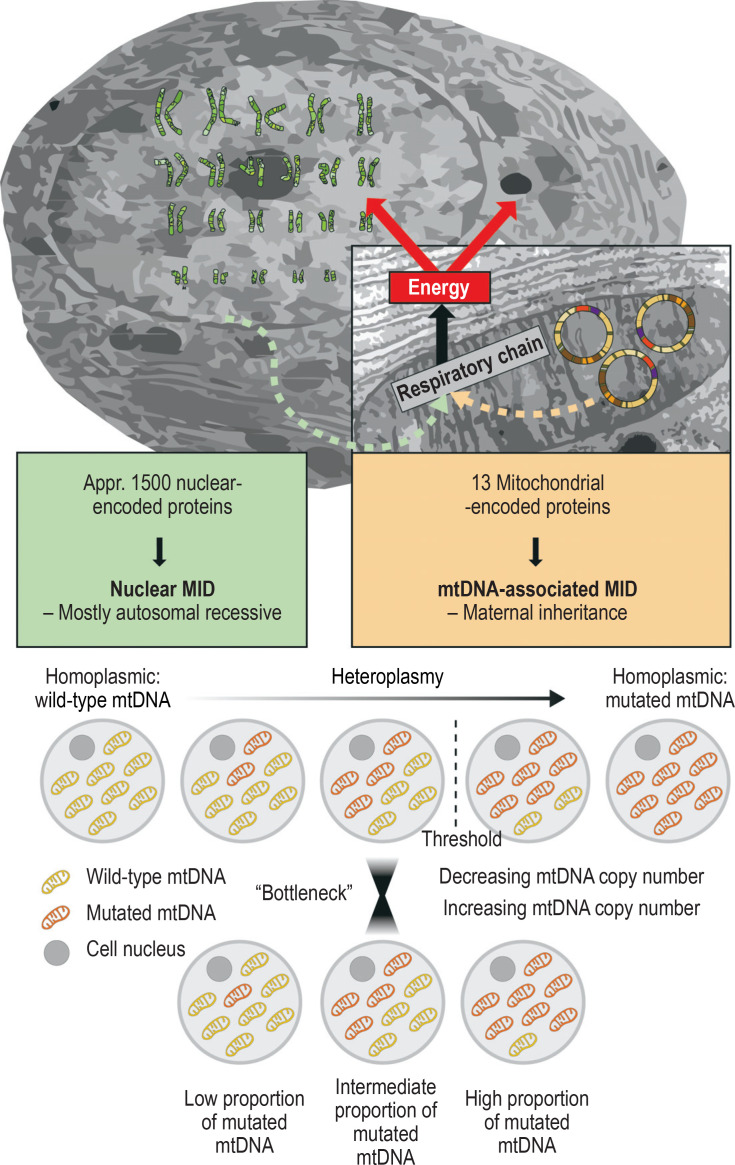
Mitochondrial DNA (mtDNA) encodes for only 13 proteins in the mitochondrial respiratory chain. A total of around 1500 proteins, which are primarily encoded in the cell nucleus on the chromosomes, are needed for the structure and function of mitochondria. Accordingly, disorders that are attributed to mutations of nuclear-encoded genes are inherited according to Mendelian rules, mostly in an autosomal recessive pattern. In contrast, disorders caused by mtDNA mutations are maternally inherited. In most cases, not all mtDNA molecules carry the mutation, and a mixture of mutated and wild-type mtDNA is present (heteroplasmy). Cellular dysfunction mostly develops above a threshold of approximately 60% mutated mtDNA. The degree of heteroplasmy can vary from generation to generation due to the decline and subsequent increase in mtDNA copy number in embryogenesis (mitochondrial bottleneck), as well as from tissue to tissue, and plays a major role in determining symptom severity. MID, mitochondrial disorder
Figure 1
Figure 1
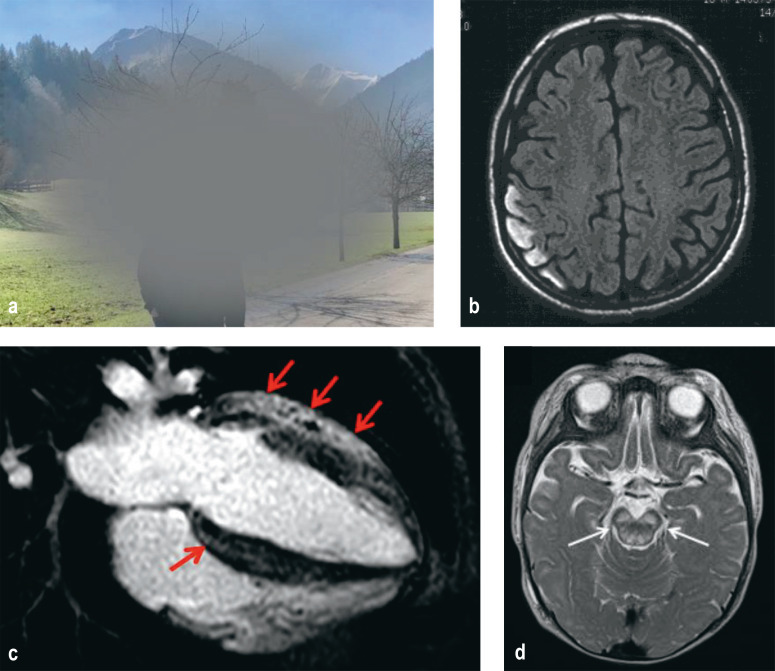
Pathognomic findings in mitochondrial disorders a) LHON: central scotoma from the patient’s perspective b) MELAS: cortical T2 hyperintensity on cMRT in the case of fresh stroke-like episode c) MELAS: cardiac involvement; the four-chamber view shows marked concentric left ventricular hypertrophy with contrast uptake (red arrows) consistent with myocardial fibrosis d) Leigh syndrome: symmetrical signal changes in the brainstem cMRT, cranial magnetic resonance imaging; LHON, Leber hereditary optic neuropathy; MELAS, mitochondrial encephalomyopathy, lactic acidosis, and stroke-like episodes
eFigure 1
eFigure 1
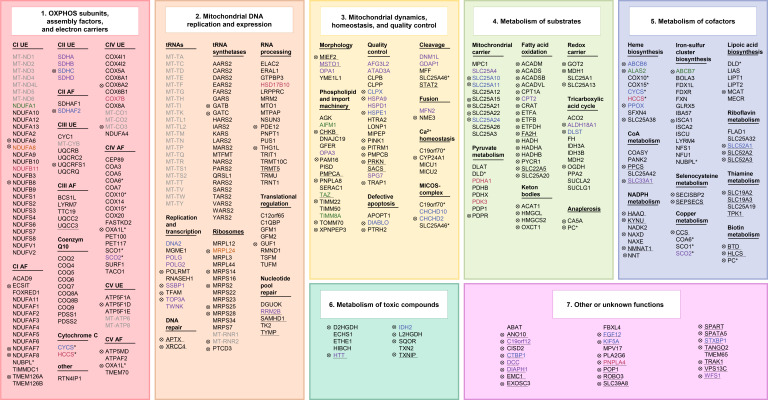
Gene defects in mitochondrial disorders (legend see eBox1)
eFigure 2
eFigure 2
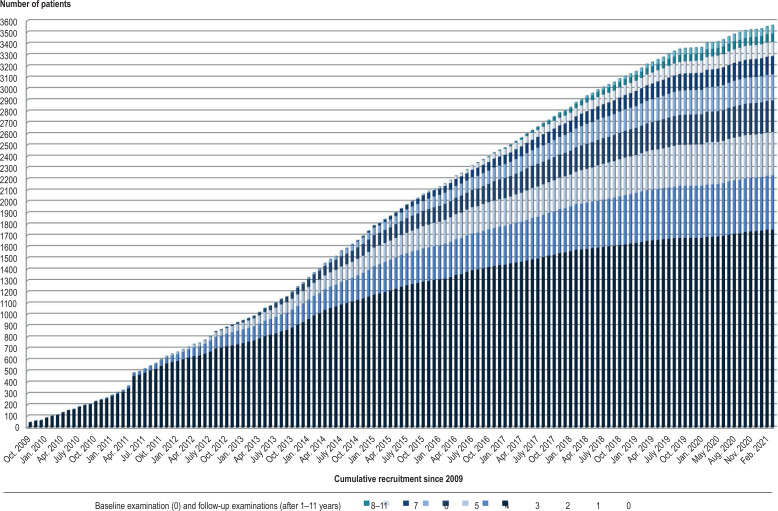
History of recruitment in the mitoNET registry. Between October 2009 and February 2021, 1753 patients with mitochondrial disorders (confirmed or highly suspected) were included in the mitoNET registry (0 = baseline examination). In addition, follow-up examinations (at 1 year, 2 years, etc. up to 11-year follow-up) are shown, from which it is possible to reconstruct the natural history of disorders.

Comment in

  • Mitochondrial Disorders: Endocrine Aspects.
    Koch CA. Koch CA. Dtsch Arztebl Int. 2022 Apr 22;119(16):296. doi: 10.3238/arztebl.m2022.0102. Dtsch Arztebl Int. 2022. PMID: 35836344 Free PMC article. No abstract available.
  • In Reply.
    Klopstock T. Klopstock T. Dtsch Arztebl Int. 2022 Apr 22;119(16):296. doi: 10.3238/arztebl.m2022.0103. Dtsch Arztebl Int. 2022. PMID: 35836345 Free PMC article. No abstract available.

References

    1. Tan J, Wagner M, Stenton SL, et al. Lifetime risk of autosomal recessive mitochondrial disorders calculated from genetic databases. EBioMedicine. 2020;54 102730. - PMC - PubMed
    1. Gorman GS, Schaefer AM, Ng Y, et al. Prevalence of nuclear and mitochondrial DNA mutations related to adult mitochondrial disease. Ann Neurol. 2015;77:753–759. - PMC - PubMed
    1. Stenton SL, Prokisch H. Genetics of mitochondrial diseases: Identifying mutations to help diagnosis. EBioMedicine. 2020;56 102784. - PMC - PubMed
    1. Cummings BB, Marshall JL, Tukiainen T, et al. Improving genetic diagnosis in Mendelian disease with transcriptome sequencing. Sci Transl Med. 2017;9 eaal5209. - PMC - PubMed
    1. Kremer LS, Bader DM, Mertes C, et al. Genetic diagnosis of Mendelian disorders via RNA sequencing. Nat Commun. 2017;8 15824. - PMC - PubMed

Substances