


Facial analysis technology for the detection of Down syndrome in the Democratic Republic of the Congo
- PMID: 34161860
- PMCID: PMC8363515
- DOI: 10.1016/j.ejmg.2021.104267
Facial analysis technology for the detection of Down syndrome in the Democratic Republic of the Congo
Abstract
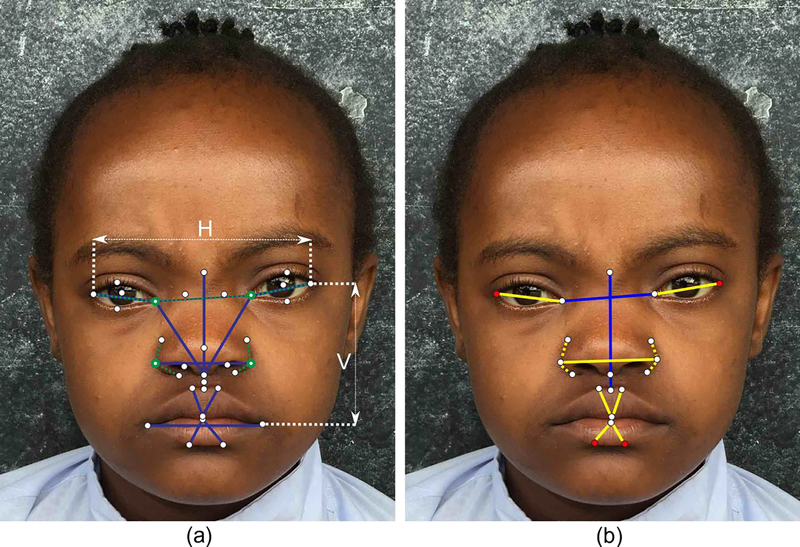
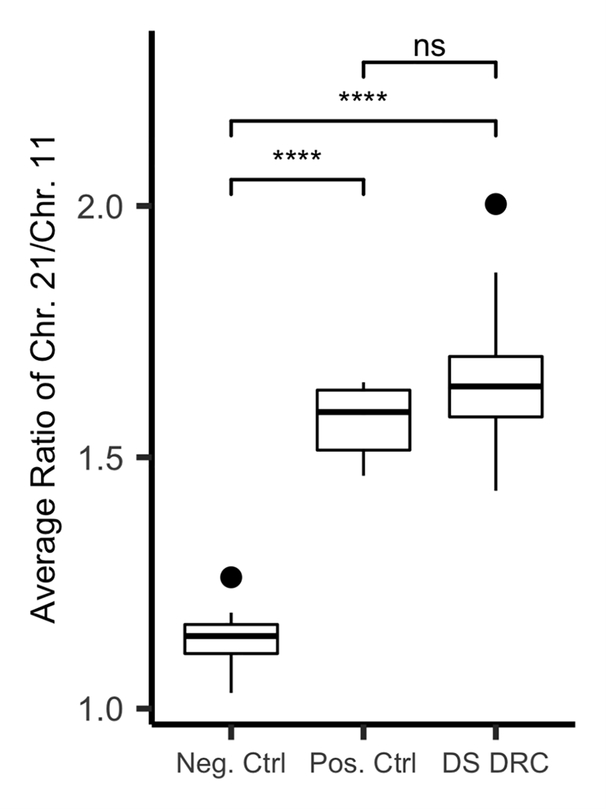
Down syndrome is one of the most common chromosomal anomalies affecting the world's population, with an estimated frequency of 1 in 700 live births. Despite its relatively high prevalence, diagnostic rates based on clinical features have remained under 70% for most of the developed world and even lower in countries with limited resources. While genetic and cytogenetic confirmation greatly increases the diagnostic rate, such resources are often non-existent in many low- and middle-income countries, particularly in Sub-Saharan Africa. To address the needs of countries with limited resources, the implementation of mobile, user-friendly and affordable technologies that aid in diagnosis would greatly increase the odds of success for a child born with a genetic condition. Given that the Democratic Republic of the Congo is estimated to have one of the highest rates of birth defects in the world, our team sought to determine if smartphone-based facial analysis technology could accurately detect Down syndrome in individuals of Congolese descent. Prior to technology training, we confirmed the presence of trisomy 21 using low-cost genomic applications that do not need advanced expertise to utilize and are available in many low-resourced countries. Our software technology trained on 132 Congolese subjects had a significantly improved performance (91.67% accuracy, 95.45% sensitivity, 87.88% specificity) when compared to previous technology trained on individuals who are not of Congolese origin (p < 5%). In addition, we provide the list of most discriminative facial features of Down syndrome and their ranges in the Congolese population. Collectively, our technology provides low-cost and accurate diagnosis of Down syndrome in the local population.
Keywords: Congo; DRC; Down syndrome; Facial analysis; Machine learning; Screening.
Copyright © 2021 The Authors. Published by Elsevier Masson SAS.. All rights reserved.
Figures
References
-
- Park AH, Wilson MA, Stevens PT, Harward R, Hohler N, Identification of Hearing Loss in Pediatric Patients with Down Syndrome, Otolaryngol. Neck Surg. 146, 135–140 (2012). - PubMed
