


Effects of Exercise on Sleep Quality and Insomnia in Adults: A Systematic Review and Meta-Analysis of Randomized Controlled Trials
- PMID: 34163383
- PMCID: PMC8215288
- DOI: 10.3389/fpsyt.2021.664499
Effects of Exercise on Sleep Quality and Insomnia in Adults: A Systematic Review and Meta-Analysis of Randomized Controlled Trials
Abstract
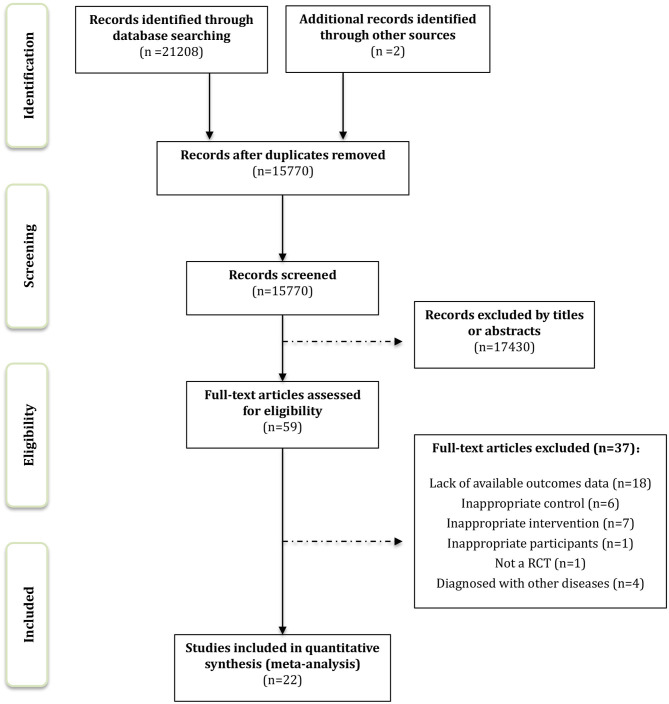
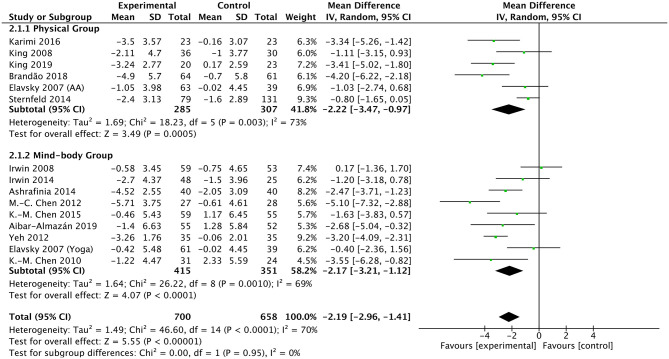
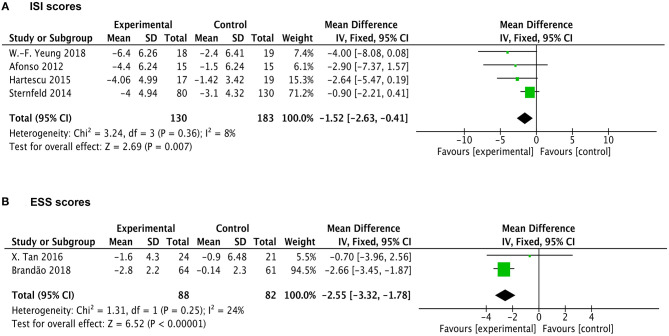
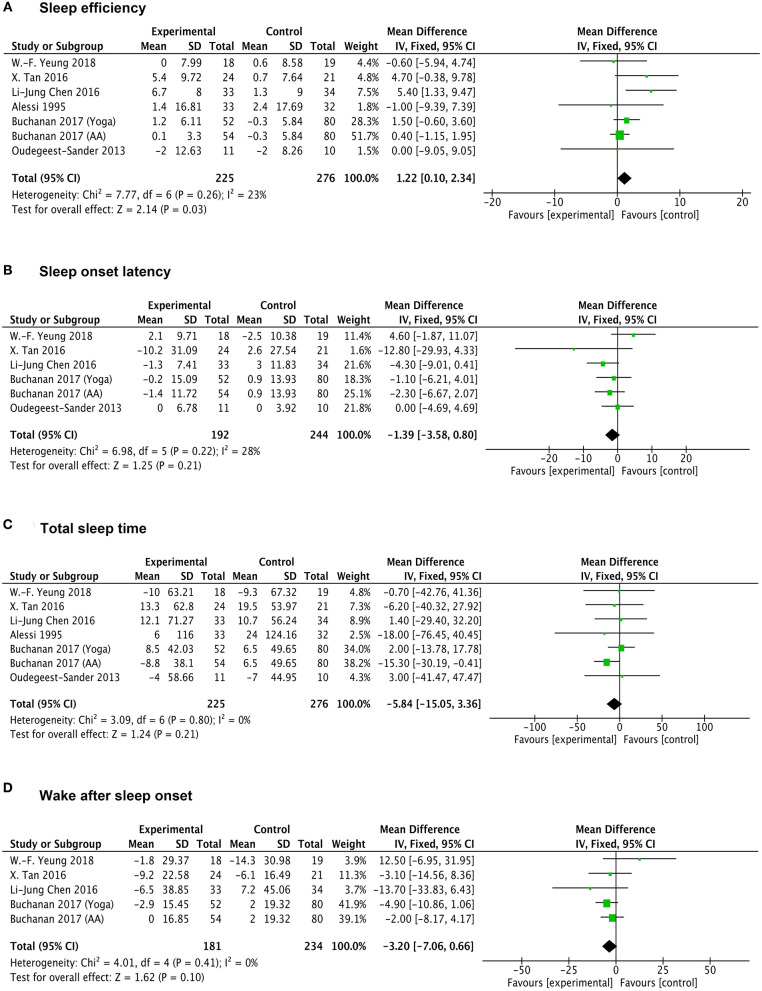
Study Objectives: We conducted a meta-analysis to assess the effects of different regular exercise (lasting at least 2 months on a regular basis) on self-reported and physiological sleep quality in adults. Varied exercise interventions contained traditional physical exercise (e.g., walking, cycling) and mind-body exercise characterized by gentle exercise with coordination of the body (e.g., yoga). Methods: Procedures followed the Preferred Reporting Items for Systematic Reviews and Meta-Analyses (PRISMA) guidelines. Systematical searches were conducted in three electronic databases (PubMed, Embase, and Web of Science) for relevant research that involved adult participants without pathological diseases receiving exercise intervention. The search strategy was based on the population, intervention, comparison, and outcome study design (PICOS) framework. The self-reported outcomes included varied rating scales of Pittsburgh Sleep Quality Index (PSQI), Insomnia Severity Index (ISI), and Epworth Sleepiness Scale (ESS). Subgroup meta-analyses of PSQI scores were conducted based on type of exercise, duration of intervention, and participants' age and gender. The physiological outcomes were measured by Actigraph. All meta-analyses were performed in a fixed or random statistic model using Revman software. Results: Twenty-two randomized controlled trials were included in the analysis. The overall analysis on subjective outcomes suggests that exercise interventions significantly improved sleep quality in adults compared with control interventions with lower PSQI (MD -2.19; 95% CI -2.96 to -1.41), ISI (MD -1.52; 95% CI -2.63 to -0.41), and ESS (MD -2.55; 95% CI -3.32 to -1.78) scores. Subgroup analyses of PSQI scores showed both physical and mind-body exercise interventions resulted in improvements of subjective sleep to the same extent. Interestingly, short-term interventions (≤3 months) had a significantly greater reduction in sleep disturbance vs. long-term interventions (>3 months). Regarding physiological sleep, few significant effects were found in various sleep parameters except the increased sleep efficiency in the exercise group vs. control group. Conclusions: Results of this systematic review suggest that regular physical as well as mind-body exercise primarily improved subjective sleep quality rather than physiological sleep quality in adults. Specifically, self-reported sleep quality, insomnia severity, and daytime sleepiness could be improved or ameliorated with treatment of exercise, respectively, evaluated by PSQI, ISI, and ESS sleep rating scales.
Keywords: Insomnia Severity Index; Pittsburgh Sleep Quality Index; RCT; actigraph; exercise interventions; insomnia; meta-analysis; sleep quality.
Copyright © 2021 Xie, Liu, Chen, Yu, Yang and Wang.
Conflict of interest statement
The authors declare that the research was conducted in the absence of any commercial or financial relationships that could be construed as a potential conflict of interest.
Figures
References
Publication types
LinkOut - more resources
Full Text Sources
