


Purely organic light-harvesting phosphorescence energy transfer by β-cyclodextrin pseudorotaxane for mitochondria targeted imaging
- PMID: 34163949
- PMCID: PMC8179139
- DOI: 10.1039/d0sc05343k
Purely organic light-harvesting phosphorescence energy transfer by β-cyclodextrin pseudorotaxane for mitochondria targeted imaging
Abstract
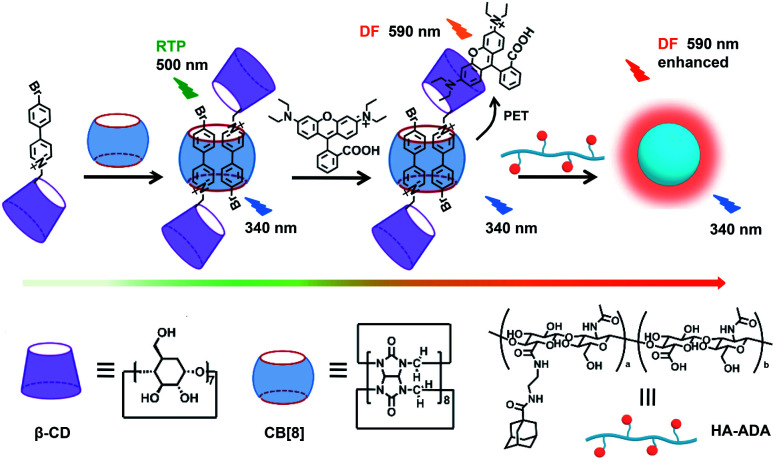
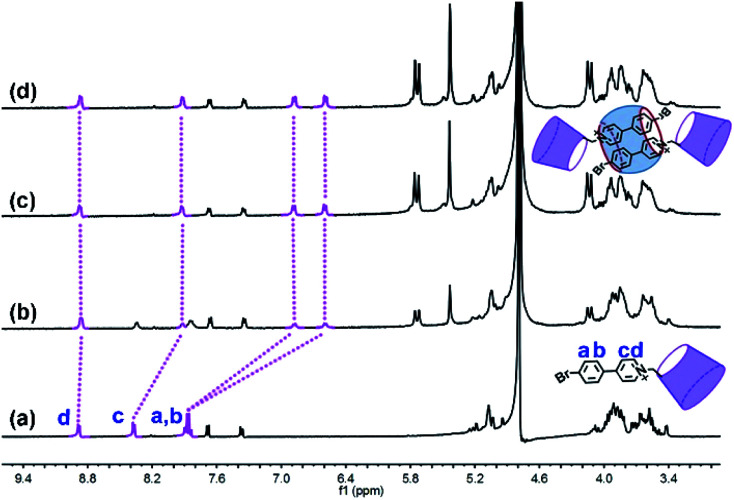
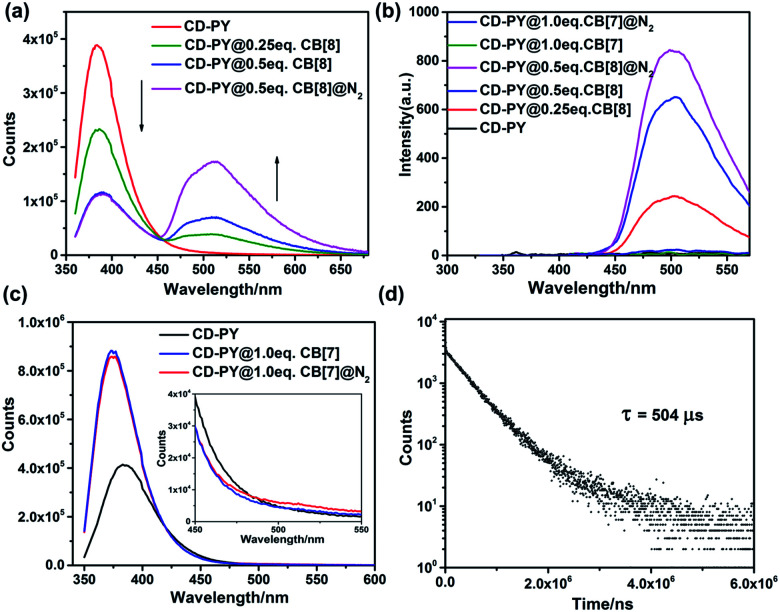
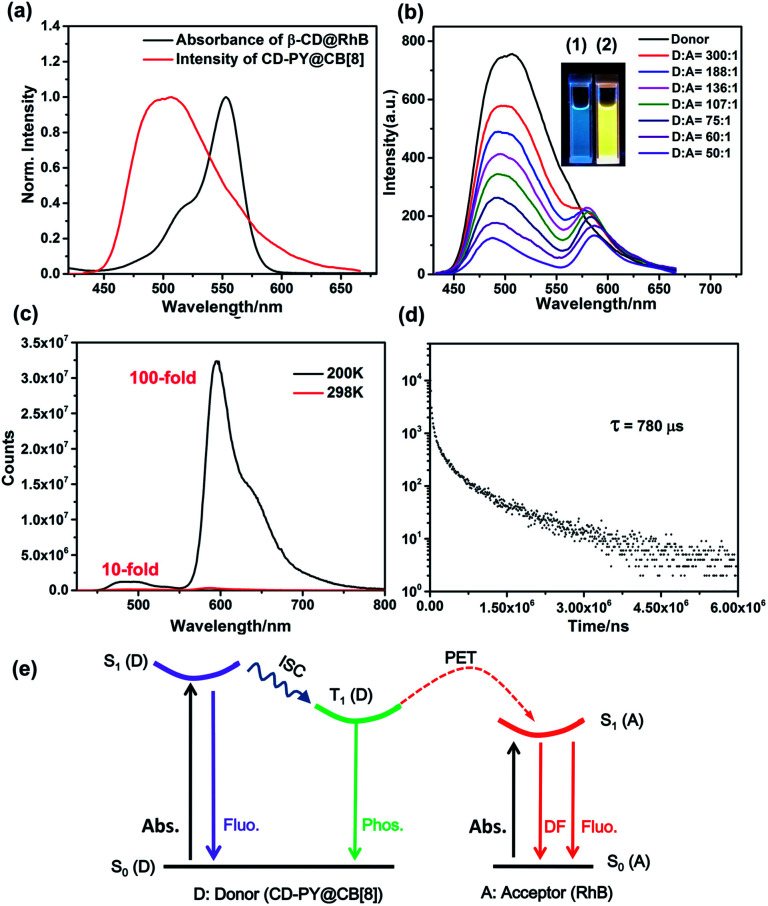
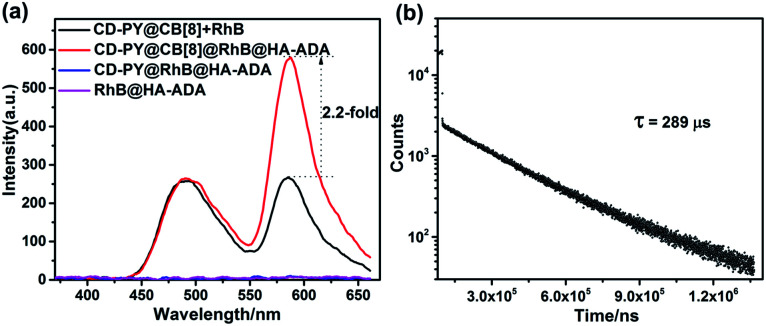
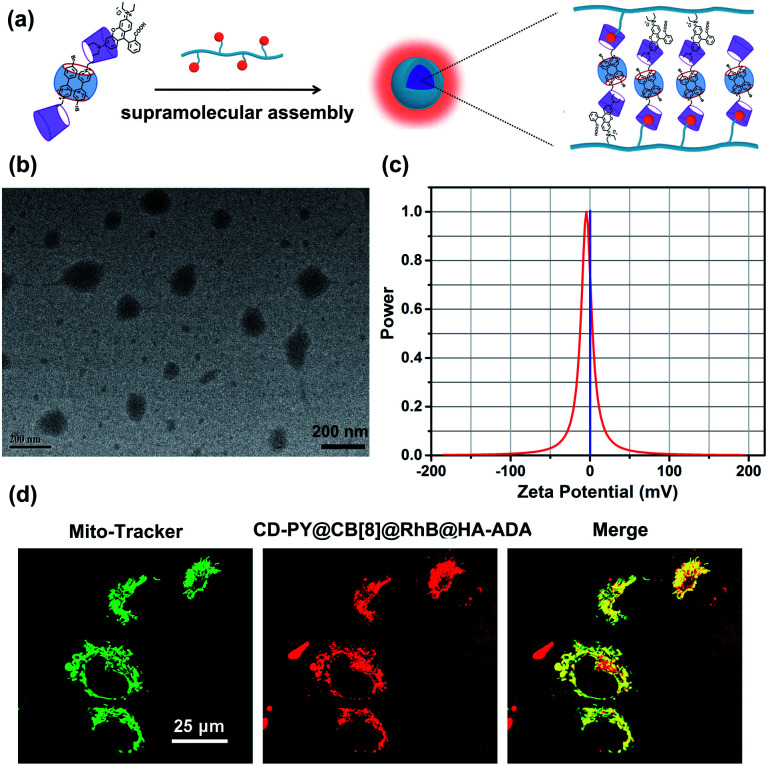
A new type of purely organic light-harvesting phosphorescence energy transfer (PET) supramolecular assembly is constructed from 4-(4-bromophenyl)-pyridine modified β-cyclodextrin (CD-PY) as a donor, cucurbit[8]uril (CB[8]) as a mediator, rhodamine B (RhB) as an acceptor, and adamantane modified hyaluronic acid (HA-ADA) as a cancer cell targeting agent. Interestingly, the complexation of free CD-PY, which has no RTP emission in aqueous solution, with CB[8] results in the formation of CD-PY@CB[8] pseudorotaxane with an RTP emission at 510 nm. Then the addition of RhB leads to an efficient light-harvesting PET process with highly efficient energy transfer and an ultrahigh antenna effect (36.42) between CD-PY@CB[8] pseudorotaxane and RhB. Importantly, CD-PY@CB[8]@RhB assembles with HA-ADA into nanoparticles with further enhanced delayed emission at 590 nm. The nanoparticles could be successfully used for mitochondria targeted imaging in A549 cancer cells. This aqueous-state PET based on a supramolecular assembly strategy has potential application in delayed fluorescence cell imaging.
This journal is © The Royal Society of Chemistry.
Conflict of interest statement
There are no conflicts to declare.
Figures
References
LinkOut - more resources
Full Text Sources
Research Materials
