


A Comprehensive Approach to Assuring Quality of Laboratory Testing in HIV Surveys: Lessons Learned From the Population-Based HIV Impact Assessment Project
- PMID: 34166309
- PMCID: PMC10966620
- DOI: 10.1097/QAI.0000000000002702
A Comprehensive Approach to Assuring Quality of Laboratory Testing in HIV Surveys: Lessons Learned From the Population-Based HIV Impact Assessment Project
Abstract
Background: Conducting HIV surveys in resource-limited settings is challenging because of logistics, limited availability of trained personnel, and complexity of testing. We described the procedures and systems deemed critical to ensure high-quality laboratory data in the population-based HIV impact assessments and large-scale household surveys.
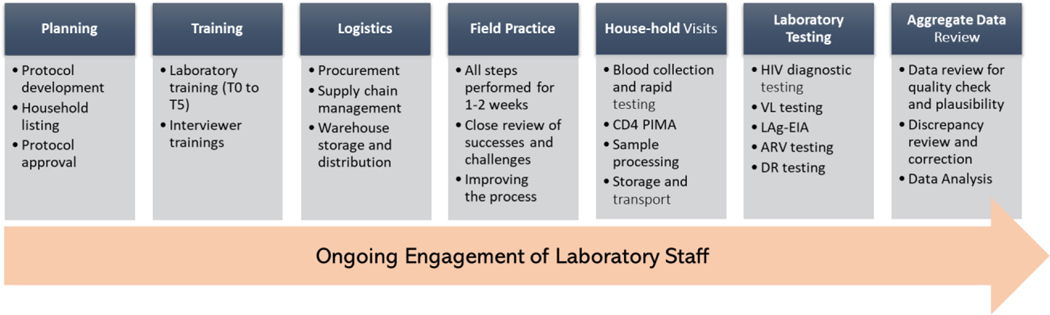
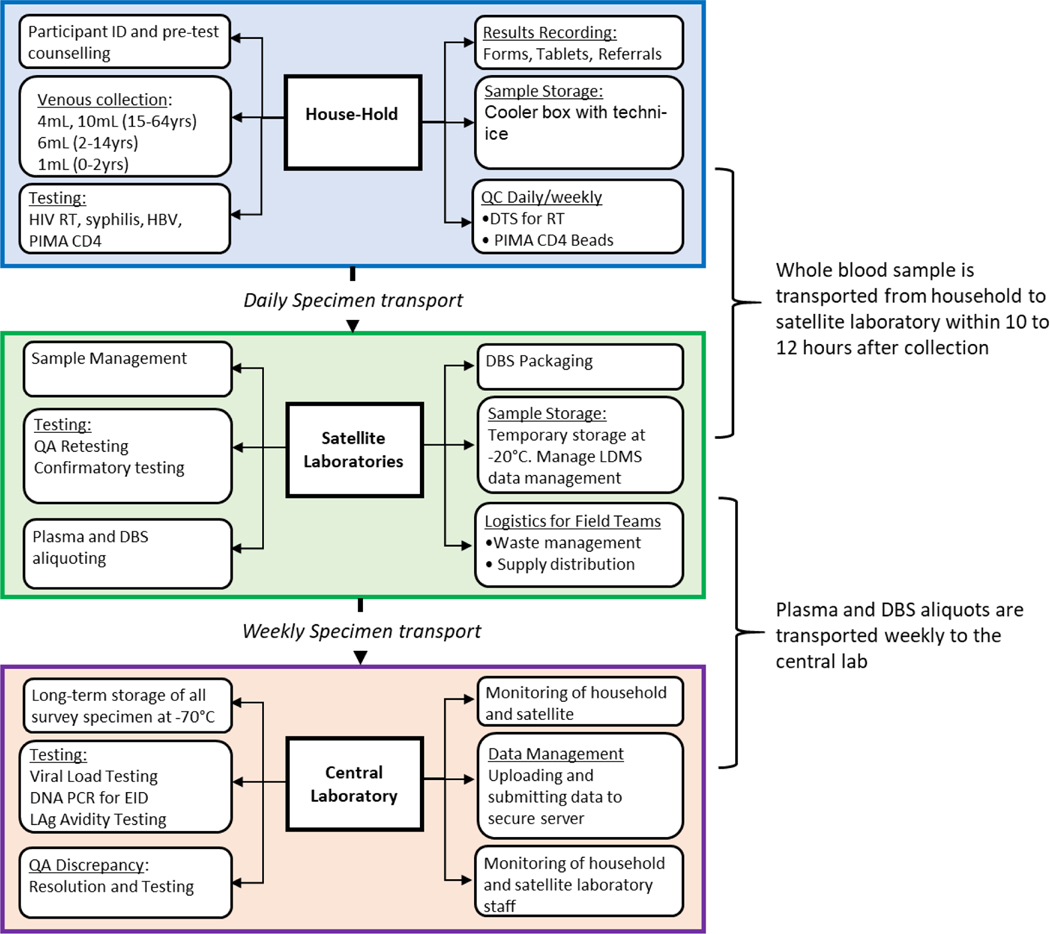
Methods: Laboratory professionals were engaged in every stage of the surveys, including protocol development, site assessments, procurement, training, quality assurance, monitoring, analysis, and reporting writing. A tiered network of household, satellite laboratories, and central laboratories, accompanied with trainings, optimized process for blood specimen collection, storage, transport, and real-time monitoring of specimen quality, and test results at each level proved critical in maintaining specimen integrity and high-quality testing. A plausibility review of aggregate merged data was conducted to confirm associations between key variables as a final quality check for quality of laboratory results.
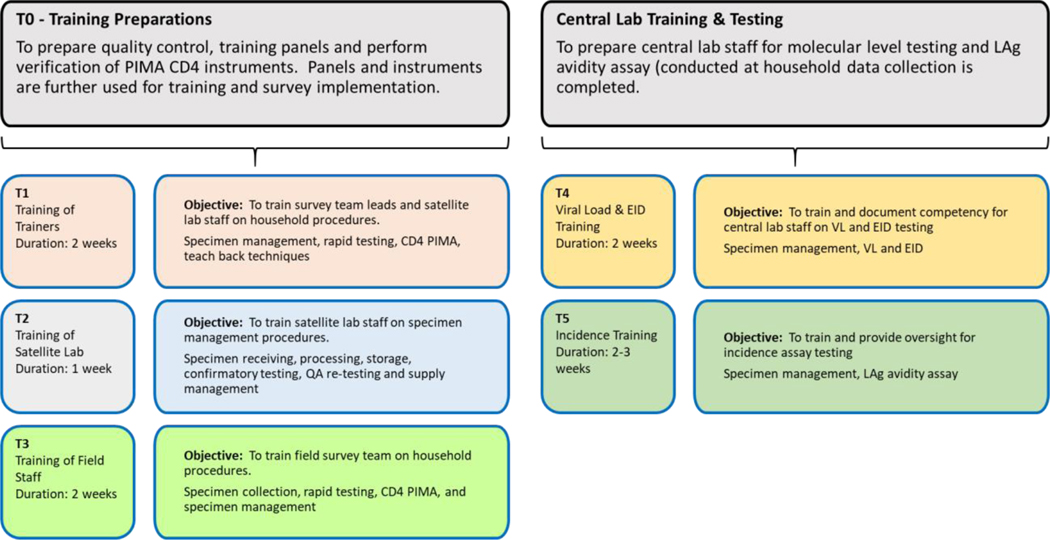
Results: Overall, we conducted a hands-on training for 3355 survey staff across 13 surveys, with 160-387 personnel trained per survey on biomarker processes. Extensive training and monitoring demonstrated that overall, 99% of specimens had adequate volume and 99.8% had no hemolysis, indicating high quality. We implemented quality control and proficiency testing for testing, resolved discrepancies, verified >300 Pima CD4 instruments, and monitored user errors. Aggregate data review for plausibility further confirmed the high quality of testing.
Conclusions: Ongoing engagement of laboratory personnel to oversee processes at all levels of the surveys is critical for successful national surveys. High-quality population-based HIV impact assessments laboratory data ensured reliable results and demonstrated the impact of HIV programs in 13 countries.
Copyright © 2021 Wolters Kluwer Health, Inc. All rights reserved.
Conflict of interest statement
The authors have no conflicts of interest to disclose.
Figures
References
-
- De Gruttola V. and Fineberg HV, Estimating prevalence of HIV infection: considerations in the design and analysis of a national seroprevalence survey. J Acquir Immune Defic Syndr (1988), 1989. 2(5): p. 472–80. - PubMed
Publication types
MeSH terms
Grants and funding
LinkOut - more resources
Full Text Sources
Medical
Research Materials
