


Unawareness of HIV Infection Among Men Aged 15-59 Years in 13 Sub-Saharan African Countries: Findings From the Population-Based HIV Impact Assessments, 2015-2019
- PMID: 34166316
- PMCID: PMC8711576
- DOI: 10.1097/QAI.0000000000002708
Unawareness of HIV Infection Among Men Aged 15-59 Years in 13 Sub-Saharan African Countries: Findings From the Population-Based HIV Impact Assessments, 2015-2019
Abstract
Background: Identifying men living with HIV in sub-Saharan Africa (SSA) is critical to end the epidemic. We describe the underlying factors of unawareness among men aged 15-59 years who ever tested for HIV in 13 SSA countries.
Methods: Using pooled data from the nationally representative Population-based HIV Impact Assessments, we fit a log-binomial regression model to identify characteristics related to HIV positivity among HIV-positive unaware and HIV-negative men ever tested for HIV.
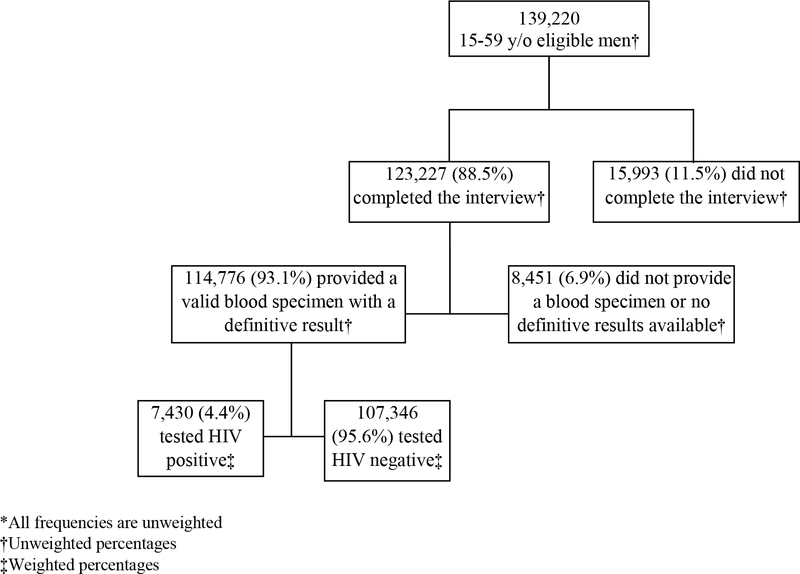
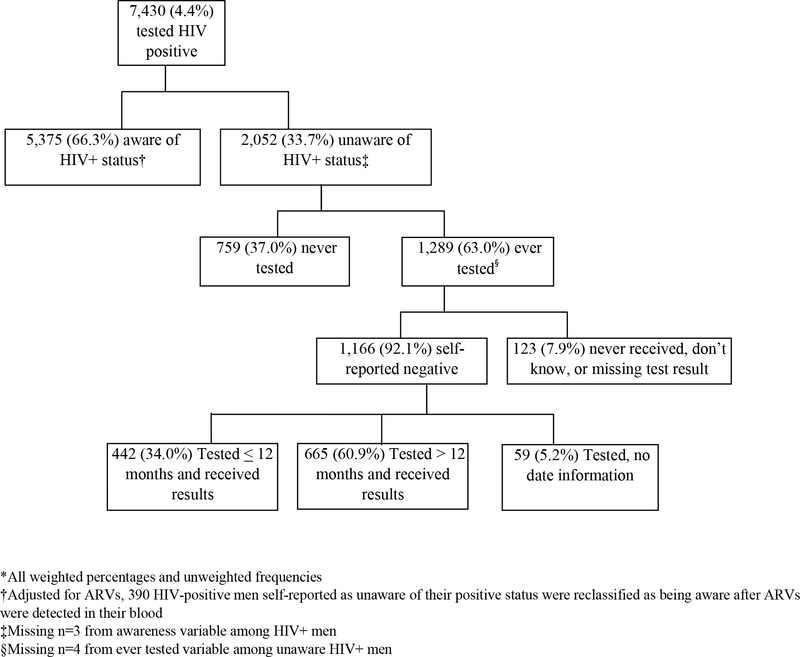
Results: A total of 114,776 men were interviewed and tested for HIV; 4.4% were HIV-positive. Of those, 33.7% were unaware of their HIV-positive status, (range: 20.2%-58.7%, in Rwanda and Cote d'Ivoire). Most unaware men reported they had ever received an HIV test (63.0%). Age, region, marital status, and education were significantly associated with HIV positivity. Men who had HIV-positive sexual partners (adjusted prevalence ratio [aPR]: 5.73; confidence interval [95% CI]: 4.13 to 7.95) or sexual partners with unknown HIV status (aPR: 2.32; 95% CI: 1.89 to 2.84) were more likely to be HIV-positive unaware, as were men who tested more than 12 months compared with HIV-negative men who tested within 12 months before the interview (aPR: 1.58; 95% CI: 1.31 to 1.91). Tuberculosis diagnosis and not being circumcised were also associated with HIV positivity.
Conclusion: Targeting subgroups of men at risk for infection who once tested negative could improve yield of testing programs. Interventions include improving partner testing, frequency of testing, outreach and educational strategies, and availability of HIV testing where men are accessing routine health services.
Copyright © 2021 Wolters Kluwer Health, Inc. All rights reserved.
Conflict of interest statement
The authors have no funding or conflicts of interest to disclose.
Figures
References
-
- UNAIDS. Blind spot: Reaching out to men and boys. Addressing a blind spot in the response to HIV. Geneva, Switzerland: UNAIDS; 2017. https://www.unaids.org/sites/default/files/media_asset/blind_spot_en.pdf.
-
- UNAIDS. Global AIDS Update, 2020. https://www.unaids.org/en/resources/documents/2020/unaids-data.
-
- UNAIDS. Global AIDS Update, 2018. https://www.unaids.org/sites/default/files/media_asset/unaids-data-2018_...
-
- Auld AF, Shiraishi RW, Mbofonah F, et al. Lower Levels of Antiretroviral Therapy Enrollment Among Men with HIV Compared with Women—12 Countries, 2002–2013.MMWR. November 27, 2015 / 64(46);1281–1286. https://www.cdc.gov/mmwr/preview/mmwrhtml/mm6446a2.htm?s_cid=mm6446a2_w. - PubMed
MeSH terms
Grants and funding
LinkOut - more resources
Full Text Sources
Medical
Research Materials
Miscellaneous
