


Differences in 5-year weight change between younger and older US firefighters
- PMID: 34167503
- PMCID: PMC8228907
- DOI: 10.1186/s12889-021-11266-x
Differences in 5-year weight change between younger and older US firefighters
Abstract
Background: Research consistently finds that, on average, firefighters gain weight over time and some data indicate that younger firefighters are more likely to gain weight than older firefighters. The purpose of this study was to estimate the 5-year weight change among younger and older US firefighters.
Methods: Data from two occupational medical exams separated by 5 years (2009-2016) were examined from a cohort of US career firefighters in Virginia (males, n = 589; females, n = 67). The cohort was grouped into two age categories (< 45 years and ≥ 45 years). Weight change subgroups were Loss (decrease of > 3% body weight), Stable (within ±3% body weight) and Gain (increase of > 3% body weight). Multinomial logistic regression models and linear regression models were conducted to examine differences in the probability of being in a particular weight change category, weight change overall and by weight change category between younger and older firefighters.
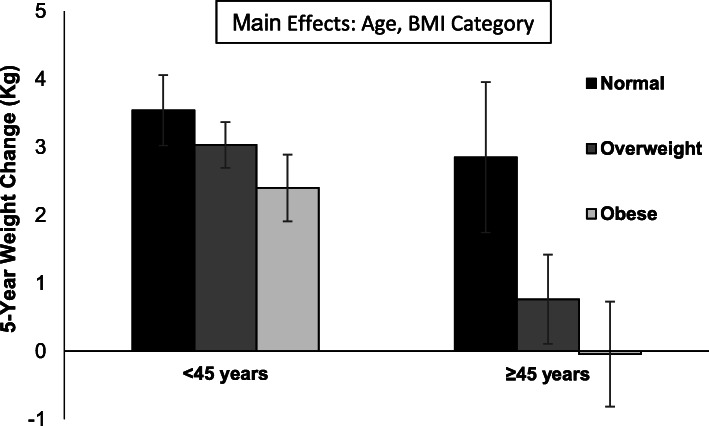
Results: At baseline, 25 and 35% of younger (< 45 years) and older (≥ 45 years) were obese, respectively. Younger firefighters gained significantly (P < 0.05) more weight (3.0 ± 0.2 kg) than older firefighters (0.8 ± 0.5 kg). Younger firefighters were more likely to gain weight (53% versus 39%) and less likely (10% versus 20%) to lose weight as compared to older firefighters. Smaller weight gains were associated with age and BMI with the smallest increases observed in overweight and obese firefighters ≥45 years of age.
Conclusions: Health care providers should be attentive to weight gain, even among young non-obese firefighters, and counsel firefighters to avoid the additive risks of being older and heavier. In addition, weight loss/management programs should be promoted in the fire service to encourage healthy body weight and to prevent unhealthy weight gain among both young and old firefighters alike.
Keywords: BMI; Fat mass; Obesity; Weight gain; Weight loss.
Conflict of interest statement
The authors declare that they have no competing interests.
Figures
References
-
- Choi B, Steiss D, Garcia-Rivas J, Kojaku S, Schnall P, Dobson M, Baker D. Comparison of body mass index with waist circumference and skinfold-based percent body fat in firefighters: adiposity classification and associations with cardiovascular disease risk factors. Int Arch Occup Environ Health. 2016;89(3):435–448. doi: 10.1007/s00420-015-1082-6. - DOI - PubMed
Publication types
MeSH terms
LinkOut - more resources
Full Text Sources
