


How do serotonergic psychedelics treat depression: The potential role of neuroplasticity
- PMID: 34168967
- PMCID: PMC8209538
- DOI: 10.5498/wjp.v11.i6.201
How do serotonergic psychedelics treat depression: The potential role of neuroplasticity
Abstract
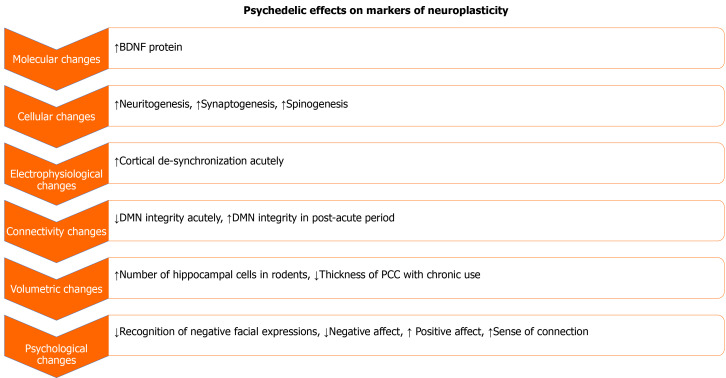
Depression is a common mental disorder and one of the leading causes of disability around the world. Monoaminergic antidepressants often take weeks to months to work and are not effective for all patients. This has led to a search for a better understanding of the pathogenesis of depression as well as to the development of novel antidepressants. One such novel antidepressant is ketamine, which has demonstrated both clinically promising results and contributed to new explanatory models of depression, including the potential role of neuroplasticity in depression. Early clinical trials are now showing promising results of serotonergic psychedelics for depression; however, their mechanism of action remains poorly understood. This paper seeks to review the effect of depression, classic antidepressants, ketamine, and serotonergic psychedelics on markers of neuroplasticity at a cellular, molecular, electrophysiological, functional, structural, and psychological level to explore the potential role that neuroplasticity plays in the treatment response of serotonergic psychedelics.
Keywords: Antidepressants; Depression; Hallucinogens; Ketamine; Neuroplasticity; Psychedelics; Serotonergic psychedelics.
©The Author(s) 2021. Published by Baishideng Publishing Group Inc. All rights reserved.
Conflict of interest statement
Conflict-of-interest statement: Dr. Zisook S receives grant support from COMPASS Pathways.
Figures
References
-
- Herrman H, Kieling C, McGorry P, Horton R, Sargent J, Patel V. Reducing the global burden of depression: a Lancet-World Psychiatric Association Commission. Lancet. 2019;393:e42–e43. - PubMed
-
- Cahn C. Roland Kuhn, 1912-2005. Neuropsychopharmacology. 2006;31:1096–1096.
Publication types
LinkOut - more resources
Full Text Sources
