HIV/HBV coinfection: temporal trends and patient characteristics, Spain, 2002 to 2018
- PMID: 34169818
- PMCID: PMC8229377
- DOI: 10.2807/1560-7917.ES.2021.26.25.2000236
HIV/HBV coinfection: temporal trends and patient characteristics, Spain, 2002 to 2018
Abstract
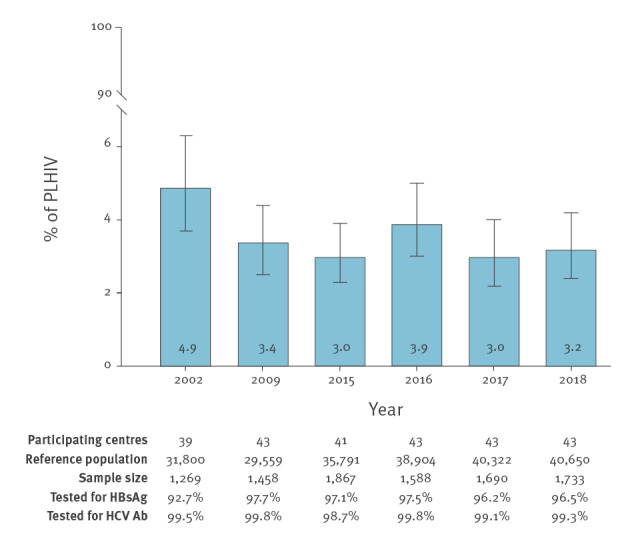
BackgroundRecent and reliable estimates on the prevalence of coinfection with human immunodeficiency virus (HIV) and hepatitis B virus (HBV) in Europe are lacking.AimLeveraged on a study designed to assess HIV/HCV coinfection prevalence, we assessed the prevalence of HIV/HBV coinfection in Spain in 2018 and compared the results with five similar studies performed since 2002.MethodsThis cross-sectional prevalence study was carried out in 43 centres, and patients were selected using simple random sampling. The reference population comprised 40,322 patients and the sample size were 1,690 patients.ResultsThe prevalence of HIV/HBV coinfection in Spain at the end of 2018 was 3.2%. The prevalence in 2002, 2009, 2015, 2016 and 2017 was 4.9%, 3.4%, 3%, 3.9% and 3%, respectively. Among the HIV/HBV-coinfected patients identified in 2018, 16.7% had cirrhosis according to transient elastography and 26.3% tested positive for antibodies against hepatitis D virus. All HIV/HBV-coinfected patients were receiving drugs with activity against HBV, and 97% of those tested for HBV DNA had an HBV DNA load < 80 IU/mL.ConclusionsThe prevalence of HIV/HBV coinfection in Spain remained stable at around 3% for a decade. Our data could facilitate the design of national programmes to control HBV infection and help identify areas of patient management that need improvement.
Keywords: HBV therapy; HIV/HBV coinfection; hepatitis delta virus.
Conflict of interest statement
Figures