


Values and preferences for hepatitis C self-testing among people who inject drugs in Kyrgyzstan
- PMID: 34171990
- PMCID: PMC8233180
- DOI: 10.1186/s12879-021-06332-z
Values and preferences for hepatitis C self-testing among people who inject drugs in Kyrgyzstan
Abstract
Background: The prevalence of hepatitis C virus (HCV) among people who inject drugs (PWID) continues to be a major public-health burden in this highly stigmatised population. To halt transmission of HCV, rapid HCV self-testing kits represent an innovative approach that could enable PWID to know their HCV status and seek treatment. As no HCV test has yet been licenced for self-administration, it is crucial to obtain knowledge around the factors that may deter or foster delivery of HCV self-testing among PWID in resource-constrained countries.
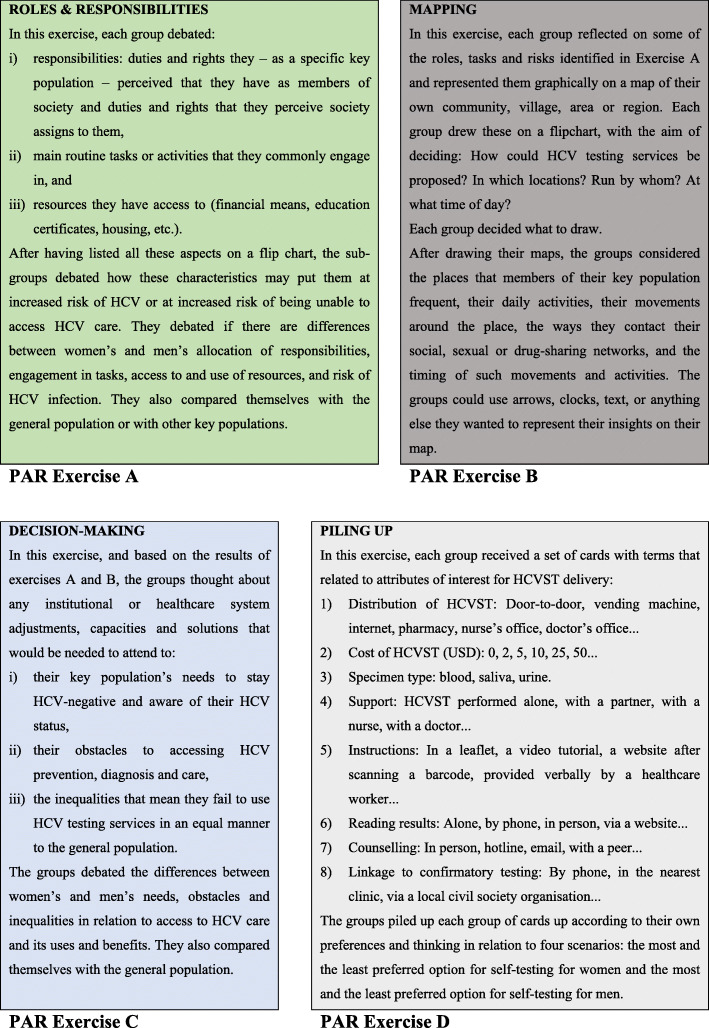
Methods: A qualitative study to assess values and preferences relating to HCV self-testing was conducted in mid-2020 among PWID in the Bishkek and Chui regions of Kyrgyzstan. Forty-seven PWID participated in 15 individual interviews, two group interviews (n = 12) and one participatory action-research session (n = 20). Responses were analysed using a thematic analysis approach with 4 predefined themes: awareness of HCV and current HCV testing experiences, and acceptability and service delivery preferences for HCV self-testing. Informants' insights were analysed using a thematic analysis approach. This research received local ethics approval.
Results: Awareness of HCV is low and currently PWID prefer community-based HCV testing due to stigma encountered in other healthcare settings. HCV self-testing would be accepted and appreciated by PWID. Acceptability may increase if HCV self-testing: was delivered in pharmacies or by harm reduction associations; was free of charge; was oral rather than blood-based; included instructions with images and clear information on the test's accuracy; and was distributed alongside pre- and post-testing counselling with linkage to confirmatory testing support.
Conclusions: HCV self-testing could increase awareness of and more frequent testing for HCV infection among PWID in Kyrgyzstan. It is recommended that peer-driven associations are involved in the delivery of any HCV self-testing. Furthermore, efforts should be maximised to end discrimination against PWID at the healthcare institutions responsible for confirmatory HCV testing and treatment provision.
Keywords: Diagnostics; Formative research; Hepatitis C; Hepatitis C self-testing; Values and preferences.
Conflict of interest statement
The authors have no conflicting or competing interests to declare.
Figures
References
-
- WHO . Global hepatitis report, 2017. Geneva: WHO; 2017.
-
- WHO . Global health sector strategy on viral hepatitis 2016-2021. Geneva: WHO; 2016.
-
- Oru E, Trickey A, Shirali R, Kanters S, Easterbrook P. Decentralisation, integration, and task-shifting in hepatitis C virus infection testing and treatment: a global systematic review and meta-analysis. Lancet Glob Health. 2021;9(4):e431–ee45. doi: 10.1016/S2214-109X(20)30505-2. - DOI - PMC - PubMed
-
- WHO . Progress report on access to hepatitis C treatment; Focus on overcoming barriers in low- and middle-income countries. Geneva: WHO; 2018.
MeSH terms
LinkOut - more resources
Full Text Sources
Medical
Research Materials
