Prognostic factors for adverse outcomes in patients with COVID-19: a field-wide systematic review and meta-analysis
- PMID: 34172467
- PMCID: PMC8576809
- DOI: 10.1183/13993003.02964-2020
Prognostic factors for adverse outcomes in patients with COVID-19: a field-wide systematic review and meta-analysis
Abstract
Introduction: The individual prognostic factors for coronavirus disease 2019 (COVID-19) are unclear. For this reason, we aimed to present a state-of-the-art systematic review and meta-analysis on the prognostic factors for adverse outcomes in COVID-19 patients.
Methods: We systematically reviewed PubMed from 1 January 2020 to 26 July 2020 to identify non-overlapping studies examining the association of any prognostic factor with any adverse outcome in patients with COVID-19. Random-effects meta-analysis was performed, and between-study heterogeneity was quantified using I2 statistic. Presence of small-study effects was assessed by applying the Egger's regression test.
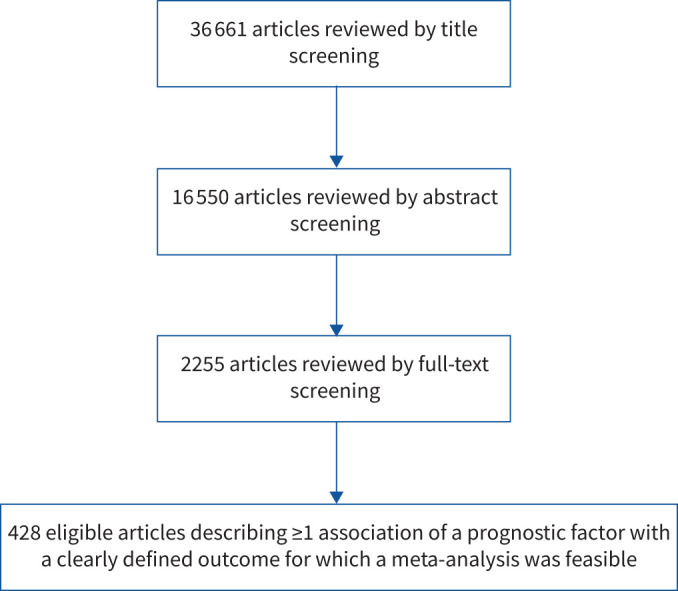
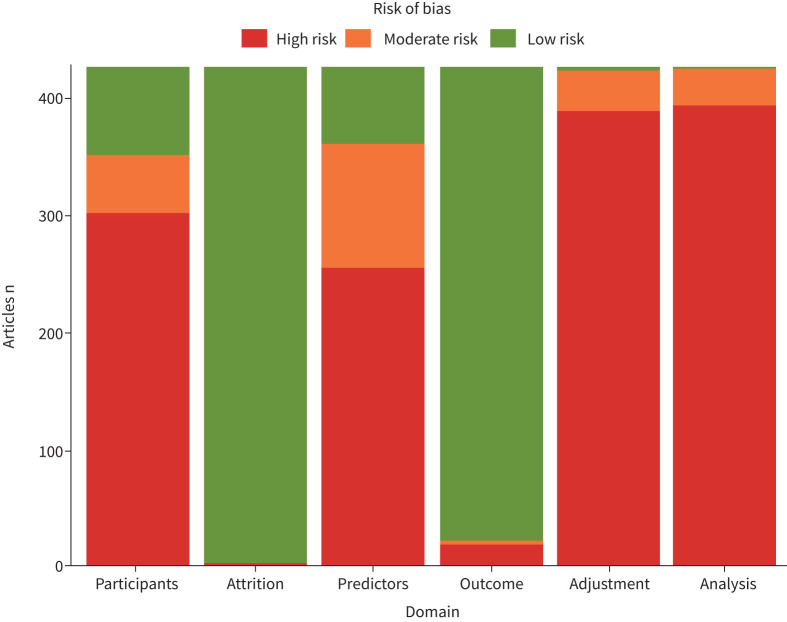
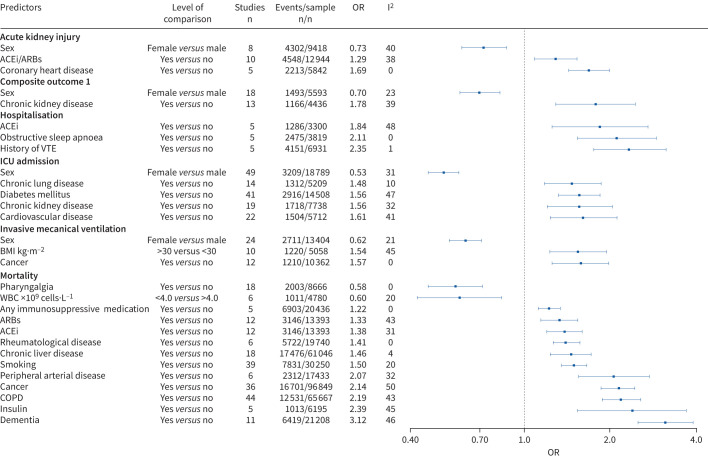
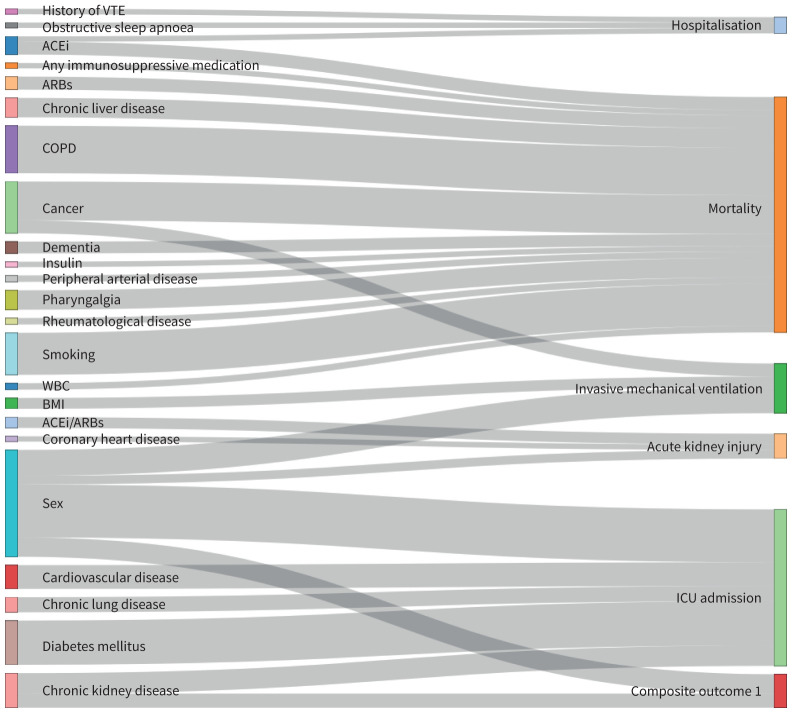
Results: We identified 428 eligible articles, which were used in a total of 263 meta-analyses examining the association of 91 unique prognostic factors with 11 outcomes. Angiotensin-converting enzyme inhibitors, obstructive sleep apnoea, pharyngalgia, history of venous thromboembolism, sex, coronary heart disease, cancer, chronic liver disease, COPD, dementia, any immunosuppressive medication, peripheral arterial disease, rheumatological disease and smoking were associated with at least one outcome and had >1000 events, p<0.005, I2<50%, 95% prediction interval excluding the null value, and absence of small-study effects in the respective meta-analysis. The risk of bias assessment using the Quality in Prognosis Studies tool indicated high risk of bias in 302 out of 428 articles for study participation, 389 articles for adjustment for other prognostic factors and 396 articles for statistical analysis and reporting.
Conclusions: Our findings could be used for prognostic model building and guide patient selection for randomised clinical trials.
Copyright ©The authors 2022.
Conflict of interest statement
Conflict of interest: V. Bellou has nothing to disclose. Conflict of interest: I. Tzoulaki has nothing to disclose. Conflict of interest: M. van Smeden has nothing to disclose. Conflict of interest: K.G.M. Moons has nothing to disclose. Conflict of interest: E. Evangelou has nothing to disclose. Conflict of interest: L. Belbasis has nothing to disclose.
Figures
References
-
- World Health Organization . COVID-19 weekly epidemiological update, 16 February 2021. https://apps.who.int/iris/handle/10665/339778
Publication types
MeSH terms
LinkOut - more resources
Full Text Sources
Medical