. 2022 Jan 5;30(1):209-222.
doi: 10.1016/j.ymthe.2021.06.016. Epub 2021 Jun 24.

Prediction and validation of hematopoietic stem and progenitor cell off-target editing in transplanted rhesus macaques

Affiliations

Prediction and validation of hematopoietic stem and progenitor cell off-target editing in transplanted rhesus macaques

Aisha A AlJanahi et al. Mol Ther. .

Abstract

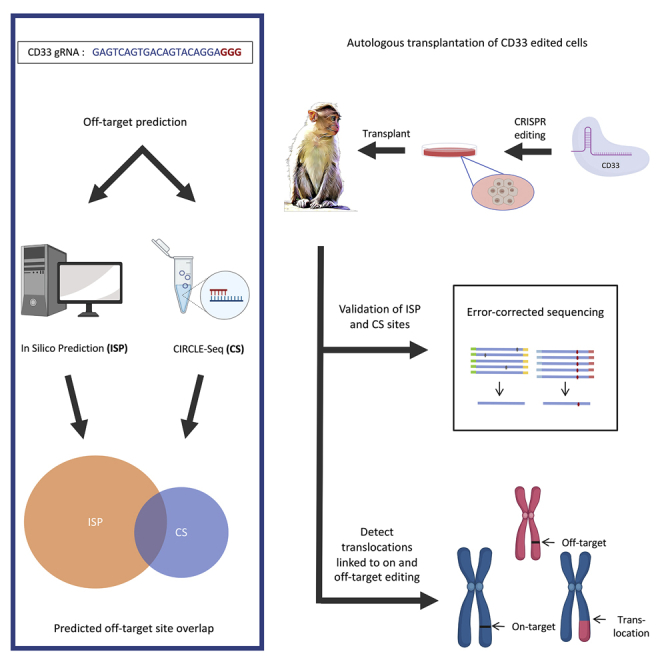
The programmable nuclease technology CRISPR-Cas9 has revolutionized gene editing in the last decade. Due to the risk of off-target editing, accurate and sensitive methods for off-target characterization are crucial prior to applying CRISPR-Cas9 therapeutically. Here, we utilized a rhesus macaque model to compare the predictive values of CIRCLE-seq, an in vitro off-target prediction method, with in silico prediction (ISP) based solely on genomic sequence comparisons. We use AmpliSeq HD error-corrected sequencing to validate off-target sites predicted by CIRCLE-seq and ISP for a CD33 guide RNA (gRNA) with thousands of off-target sites predicted by ISP and CIRCLE-seq. We found poor correlation between the sites predicted by the two methods. When almost 500 sites predicted by each method were analyzed by error-corrected sequencing of hematopoietic cells following transplantation, 19 off-target sites revealed insertion or deletion mutations. Of these sites, 8 were predicted by both methods, 8 by CIRCLE-seq only, and 3 by ISP only. The levels of cells with these off-target edits exhibited no expansion or abnormal behavior in vivo in animals followed for up to 2 years. In addition, we utilized an unbiased method termed CAST-seq to search for translocations between the on-target site and off-target sites present in animals following transplantation, detecting one specific translocation that persisted in blood cells for at least 1 year following transplantation. In conclusion, neither CIRCLE-seq or ISP predicted all sites, and a combination of careful gRNA design, followed by screening for predicted off-target sites in target cells by multiple methods, may be required for optimizing safety of clinical development.

Keywords: CRISPR; Ca9; Macaque; error-corrected sequencing; gene editing; gene therapy; off-target; translocation.


Conflict of interest statement

Declaration of interests The authors have no conflicts of interest.

Figures
None
Graphical abstract
Figure 1
Figure 1
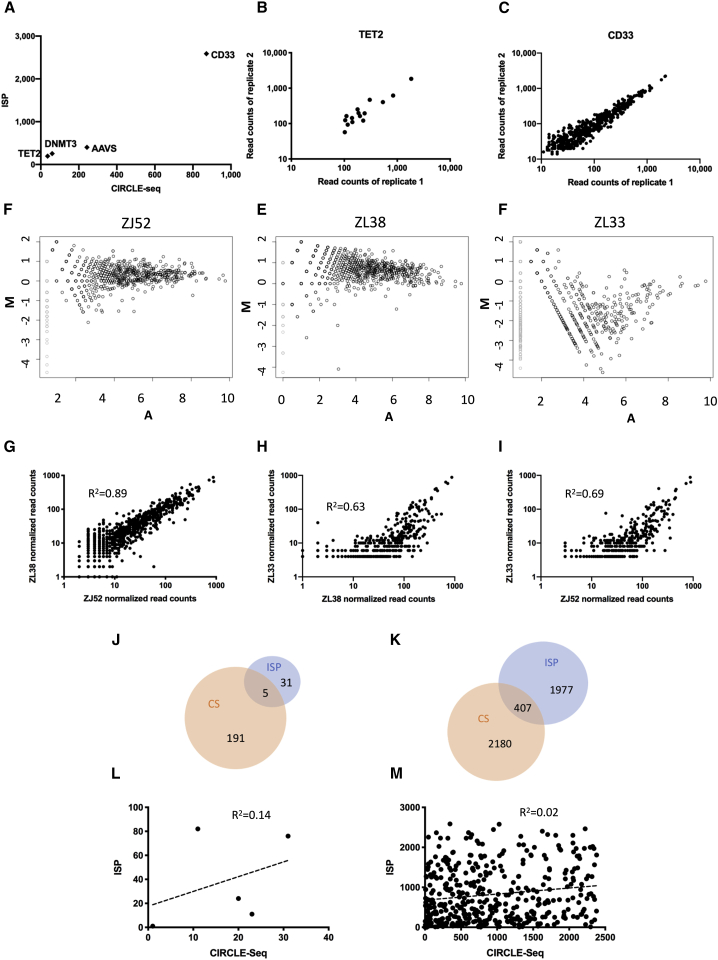
CIRCLE-seq reproducibility and comparison of retrieved sites to ISP (A) Number of sites predicted by CIRCLE-seq versus ISP for 4 different gRNAs on a log scale. (B) Normalized read counts retrieved via TET2 gRNA CIRCLE-seq technical replicates performed on the same RM blood DNA sample are shown. (C) Normalized read counts retrieved via CD33 gRNA CIRCLE-seq technical replicates performed on the same RM blood DNA sample are shown. Pearson correlation R2 values are shown. (D–F) Visualization of differences between the sites predicted by CIRCLE-seq for the CD33 gRNA performed on blood DNA samples from animals ZJ52, ZL38, and ZL33, respectively, with an MA plot, where M is the log ratio scale and A is the mean average scale is shown (average read count for each predicted site calculated using all 3 sets of data). (G–I) Normalized read count plots (log scale) show the correlation between the reads for the CD33 gRNA off-target sites detected by CIRCLE-seq, 2 animals at a time, with pairwise Pearson correlations shown for each comparison. (J) Overlap between TET2 sites predicted with CIRCLE-seq on ZL26 DNA and by ISP is shown. (K) Overlap between CD33 sites predicted by CIRCLE-seq on DNA from ZL33, ZL38, and ZJ52 and by ISP is shown. (L and M) Plot of the ranks for off-target sites predicted by CIRCLE-seq versus ISP and Spearman correlations between the two rankings for the TET2 gRNA (L) and the CD33 gRNA (M) are shown.
Figure 2
Figure 2
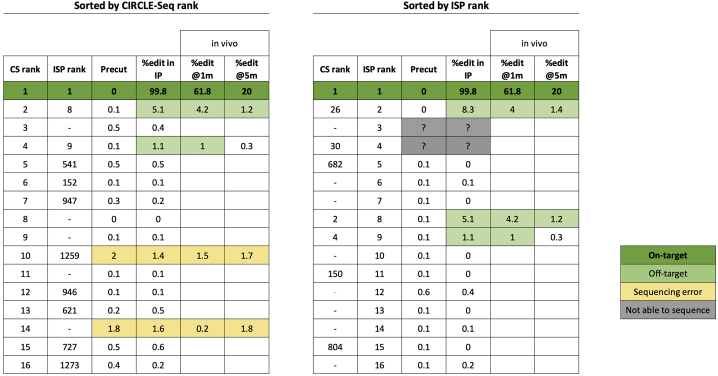
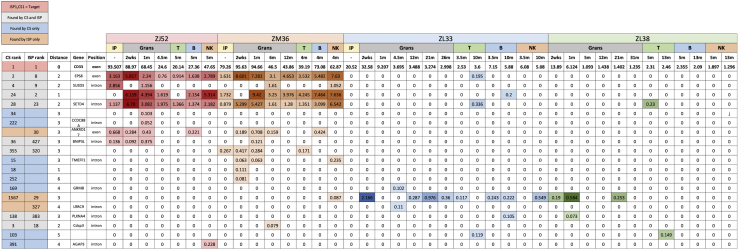
Preliminary Illumina sequencing of ZJ52 Results from DAN Illumina sequencing of ZJ52 infusion product and post-transplantation granulocyte for the top 15 ZJ52 CIRCLE-seq sites (left) and top 15 in silico predicted sites (right) for the CD33 guide RNA. m, month post-transplantation.
Figure 3
Figure 3
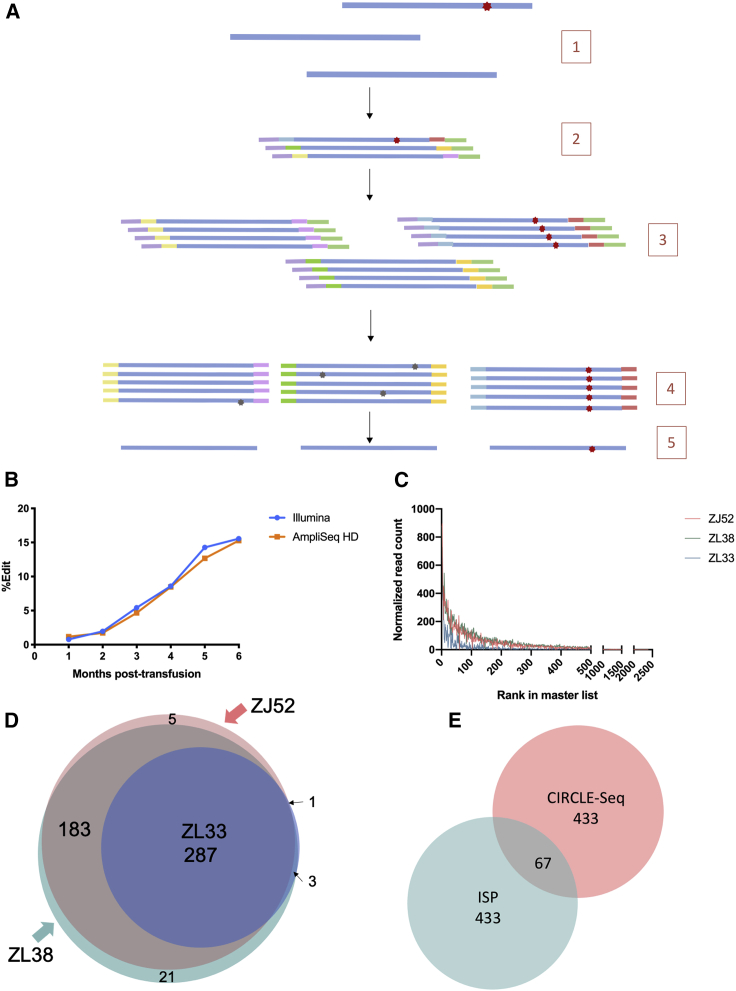
AmpliSeq HD error-corrected sequencing panels (A) AmpliSeq HD schematic. (1) Genomic DNA (blue) is extracted from cells, some with CRISPR mutations (red star). (2) The region of interest (on or off target) is amplified using the primer panel, adding UMIs to each end (different colors) and 5′ and 3′ universal adaptors (purple and green, respectively). (3) Each UMI-labeled molecule is amplified redundantly. (4) The molecules are sequenced and computationally sorted into molecular families based on the UMI. (5) A consensus sequence for each molecular family is computed. (B) Quantitation of on-target editing in TET2-edited RM ZL26 with Illumina targeted sequencing versus AmpliSeq HD is shown. (C) Read counts of each CD33 CIRCLE-seq site for the three animals individually are shown. (D) The source and overlap of the 500 CIRCLE-seq sites selected for AmpliSeq HD are shown. (E) Source (ISP and/or CIRCLE-seq) for the 1,000 sites selected for AmpliSeq HD is shown.
Figure 4
Figure 4
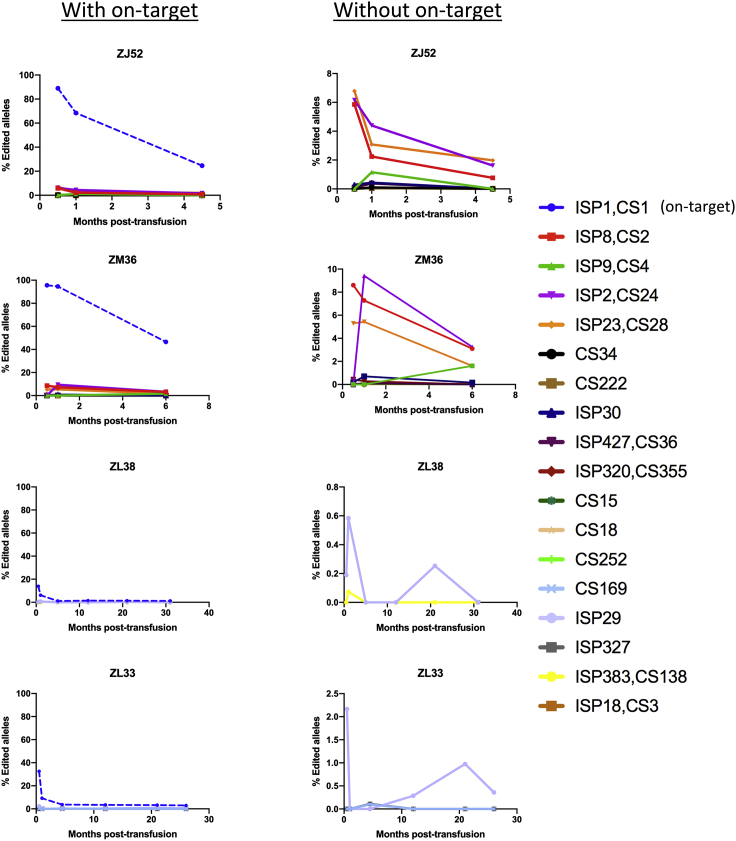
Tracking of CD33 off-target editing in granulocytes over time The left graph for each animal has a y axis fixed at 100%. The y axis shows fraction of edited alleles at each off-target site in relation to the on-target site ISP1,CS1 (blue dashed line). The right graph for each animal only shows the off-target sites with the y axis adjusted to allow visualization of the editing levels for each site. The sites are designated in the legend by their CS and/or ISP ranking.
Figure 5
Figure 5
Summary of the sequencing results of the 19 bona fide off-target sites The shown mutation rates were obtained from sequencing granulocytes and T, B, and NK cells in all 4 CD33 animals. ZJ52 sites are in red, ZM36 in orange, ZL33 in blue, and ZL38 in green.
Figure 6
Figure 6
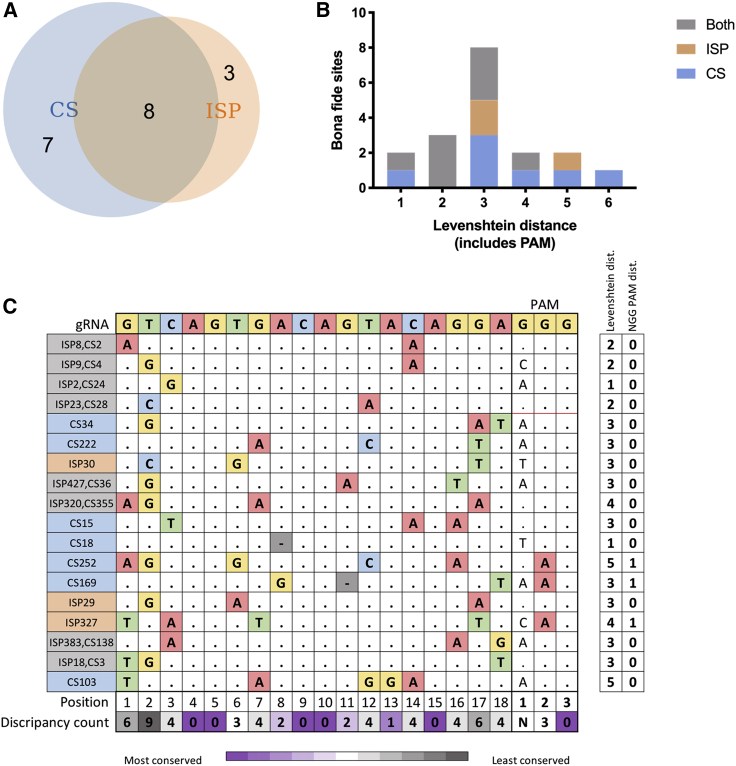
Off-target predictive power of CIRCLE-seq versus ISP (A) In vivo detected bona fide sites predicted by ISP versus CS or both. (B) The Levenshtein distance between the bona fide off-target sites and the gRNA is shown. (C) Mapping of discrepancies between the gRNA and the bona fide off-target sites retrieved in vivo is shown.
Figure 7
Figure 7
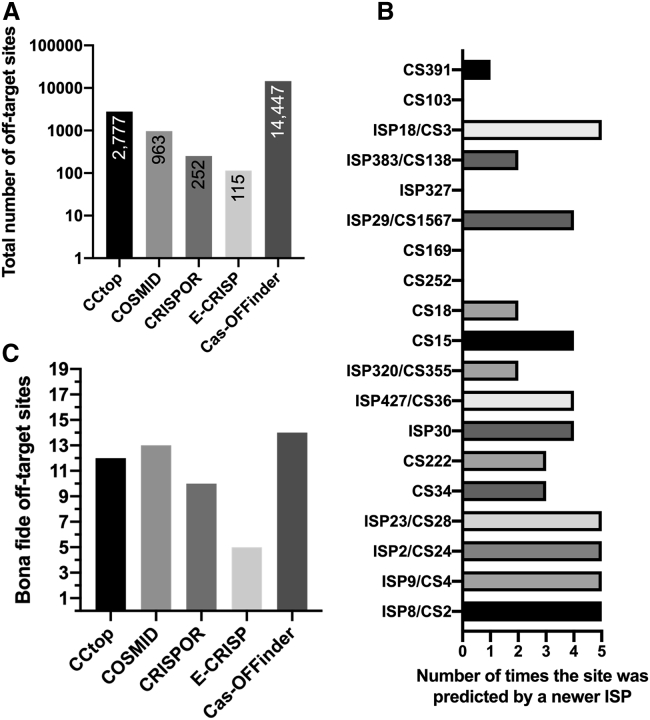
Investigating the predictive power of newer ISP algorithms (A) Number of unique off-target sites predicted via 5 newer ISP algorithms. (B) The number of verified off-target sites predicted by the newer ISP algorithms is shown. (C) The number of times each verified off-target site was predicted by the 5 newer ISP algorithms is shown.
Figure 8
Figure 8
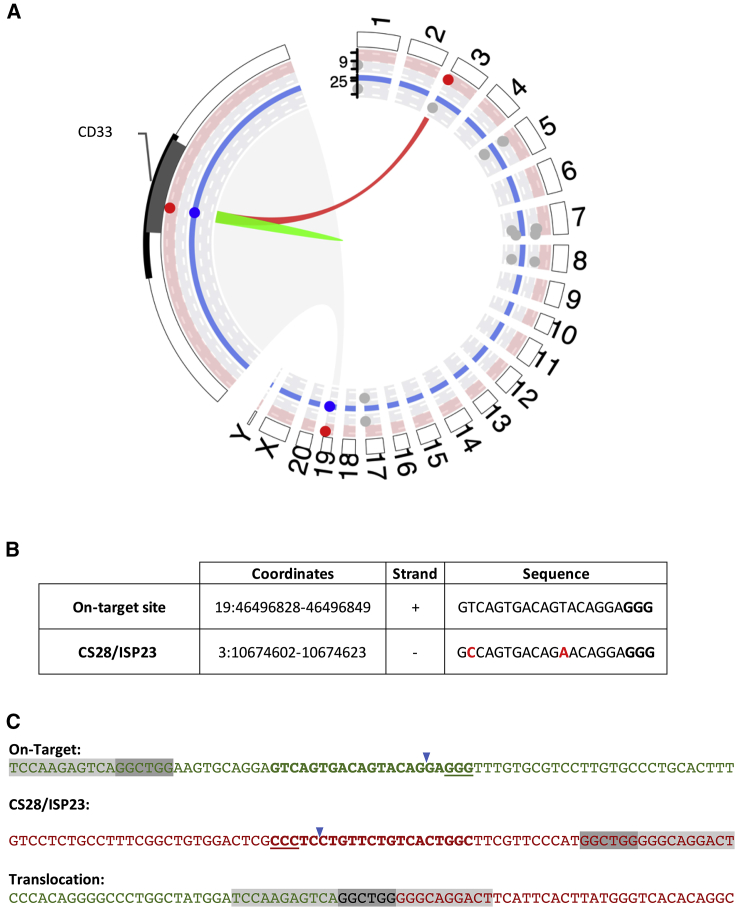
Detection of chromosomal translocation in engineered HSPCs after CRISPR-Cas9 gene editing (A) Visualization of chromosomal rearrangements found by CAST-seq. Circos plot shows CD33 target region enlarged on the left. On-target site cluster is shown in green. Significant scores are accentuated by red dots (on-target-mediated translocations) or blue dots (homology-mediated translocation). Gray dots represent natural break sites. (B) Details of the sites involved in the CAST-seq-detected translocation are shown, with the mismatches between the off-target site and the gRNA highlighted in red text. (C) Sequence of the on-target and off-target translocation is shown. On-target sequences are shown in green. Off-target sequences are shown in red. The shared base pairs between the two sequences are highlighted in dark gray, and the surrounding sequences are in light gray. The gRNA is in bold, and the PAM sequence is underlined. The expected cut site is marked with a blue arrow.

References

    1. Jinek M., Chylinski K., Fonfara I., Hauer M., Doudna J.A., Charpentier E. A programmable dual-RNA–guided DNA endonuclease in adaptive bacterial immunity. Science. 2012;337:816–821. - PMC - PubMed
    1. Ran F.A., Hsu P.D., Wright J., Agarwala V., Scott D.A., Zhang F. Genome engineering using the CRISPR-Cas9 system. Nat. Protoc. 2013;8:2281–2308. - PMC - PubMed
    1. Akcakaya P., Bobbin M.L., Guo J.A., Malagon-Lopez J., Clement K., Garcia S.P., Fellows M.D., Porritt M.J., Firth M.A., Carreras A., et al. In vivo CRISPR editing with no detectable genome-wide off-target mutations. Nature. 2018;561:416–419. - PMC - PubMed
    1. Koo T., Kim J.-S. Therapeutic applications of CRISPR RNA-guided genome editing. Brief. Funct. Genomics. 2017;16:38–45. - PubMed
    1. Kim M.Y., Yu K.-R., Kenderian S.S., Ruella M., Chen S., Shin T.-H., Aljanahi A.A., Schreeder D., Klichinsky M., Shestova O., et al. Genetic inactivation of CD33 in hematopoietic stem cells to enable CAR T cell immunotherapy for acute myeloid leukemia. Cell. 2018;173:1439–1453.e19. - PMC - PubMed

Publication types

MeSH terms

Substances