


The Development of a Video Intervention to Improve Senior Medical Students' Performance on Outpatient Telephone Encounters: a Delphi Analysis and Randomized Controlled Trial
- PMID: 34178421
- PMCID: PMC8216674
- DOI: 10.1007/s40670-021-01331-w
The Development of a Video Intervention to Improve Senior Medical Students' Performance on Outpatient Telephone Encounters: a Delphi Analysis and Randomized Controlled Trial
Abstract
Introduction: Postgraduate trainees address outpatient telephone calls (OTCs) with little prior training. This study determines the skills necessary for OTCs and examines whether a video intervention improves medical students' performance on simulated OTCs.
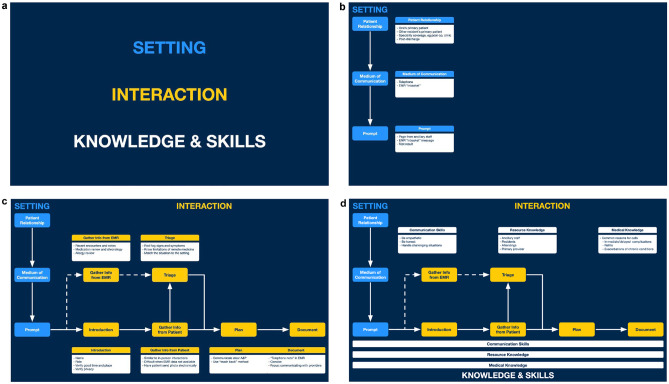
Materials and methods: We utilized a Delphi technique to determine skills needed for OTCs and created a 9-min video teaching these skills. Senior medical students were randomized to Intervention (viewed video) and Control (did not view video) groups. Students were assessed pre-/post-intervention on simulated OTCs. The primary outcome was the between-group difference in improvement.
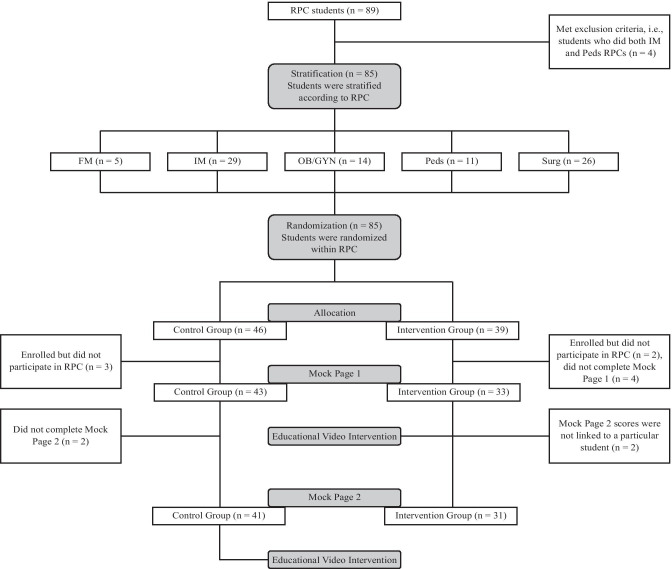
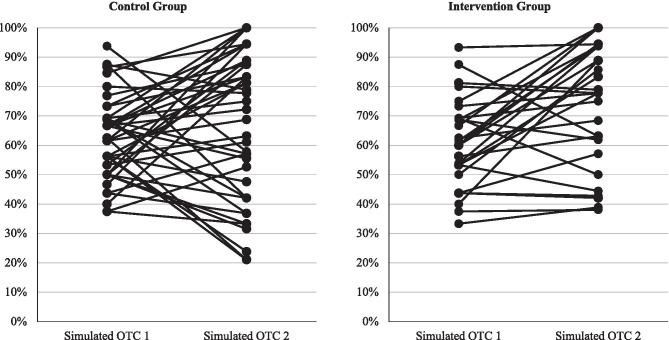
Results: The Delphi yielded 34 important skills with the highest focus on communication (n = 13) and triage (n = 6). Seventy-two students completed assessments (Control, n = 41; Intervention, n = 31). The score (mean ± SD) improved 4.3% in the Control group (62.3 ± 14.3% to 66.6 ± 25.0%) and 12.2% in the Intervention group (60.7 ± 15.2% to 72.9 ± 20.4%, p = 0.15). The effect size measured by Cohen's d was 0.55, considered effective (> 0.33) for an educational intervention.
Conclusions: This project fills a gap in OTC training. The use of the Delphi technique, intervention development based on the results, and evaluation of efficacy is a process that could be reproduced for other educational gaps.
Supplementary information: The online version contains supplementary material available at 10.1007/s40670-021-01331-w.
Keywords: Delphi technique; Mock paging; Randomized controlled trial; Residency preparation course; Transition to residency.
© International Association of Medical Science Educators 2021.
Conflict of interest statement
Conflict of InterestThe authors declare no competing interests.
Figures
References
-
- Killip S, Ireson CL, Love MM, Fleming ST, Katirai W, Sandford K. Patient safety in after-hours telephone medicine. Fam Med. 2007;39:404–409. - PubMed
-
- Hannis MD, Elnicki DM, Morris DK, Flannery MT. Can you hold please? How internal medicine residents deal with patient telephone calls. Telephone Encounters Learning Initiative Group. Am J Med Sci 1994;308:349–52. 10.1097/00000441-199412000-00007. - PubMed
-
- Cykert S, Flannery MT, Huber EC, Keyserling T, Moses GA, Elnicki DM, et al. Telephone medical care administered by internal medicine residents: concerns of program directors and implications for residency training. Am J Med Sci. 1997;314:198–202. doi: 10.1097/00000441-199709000-00009. - DOI - PubMed
-
- Daniel H, Sulmasy LS. Health and Public Policy Committee of the American College of Physicians. Policy recommendations to guide the use of telemedicine in primary care settings: an American College of Physicians position paper. Ann Intern Med 2015;163:787–9. 10.7326/M15-0498. - PubMed
LinkOut - more resources
Full Text Sources
Miscellaneous