


Contribution of Research in the West Indies and Northeast Amazonia to Knowledge of the 2014-2015 Chikungunya Epidemic in the Americas
- PMID: 34178576
- PMCID: PMC8214063
- DOI: 10.1007/s40475-021-00242-5
Contribution of Research in the West Indies and Northeast Amazonia to Knowledge of the 2014-2015 Chikungunya Epidemic in the Americas
Abstract
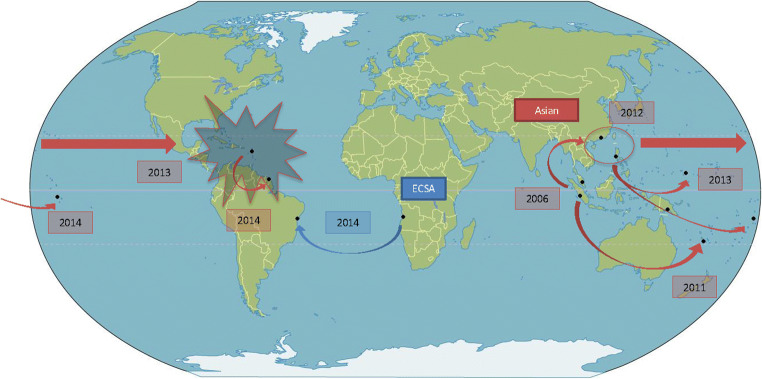
Purpose of review: Although the chikungunya virus was discovered more than 60 years ago, it has only really been studied since the outbreak in La Reunion in 2005-2006. Ten years later, between 2014 and 2015, the chikungunya virus spread throughout the Americas, affecting millions of people. The objective of this review is to describe the contributions of research on chikungunya virus infection gained from epidemic in the West Indies and the Guiana Shield.
Recent findings: Prevalence data were similar to those found in the Indian Ocean or Asia during epidemics. Clinically, there is now a better understanding of the typical, atypical, and severe forms. Several studies have insisted on the presence of neurological forms of chikungunya infection, such as encephalitis or Guillain-Barré syndrome. Cases of septic shock due to chikungunya virus as well as thrombotic thrombocytopenic purpura were described for the first time. Given the magnitude of the epidemic and the large number of people affected, this has led to a better description and new classifications of chikungunya virus infections in specific populations such as pregnant women, the elderly, and children. Several studies also described the behavior of populations faced with an emerging disease.
Summary: Current epidemiological data from tropical regions highlights the risk of spreading emerging diseases at higher latitudes, especially concerning arboviruses, since the vector Aedes albopictus is already established in many parts of northern countries. A better understanding of the disease and its epidemic dynamics will foster better management, the crucial importance of which was demonstrated during the COVID-19 epidemic.
Keywords: America; Arbovirus; Chikungunya; Guiana Shield; Outbreak; West Indies.
© The Author(s) 2021.
Conflict of interest statement
Conflict of InterestThe authors declare no competing interests.
Figures
References
-
- Thiberville S-D, Boisson V, Gaudart J, Simon F, Flahault A, de Lamballerie X. Chikungunya fever: a clinical and virological investigation of outpatients on Reunion Island, South-West Indian Ocean. Tesh RB, éditeur. PLoS Negl Trop Dis. 2013;7(1):e2004. doi: 10.1371/journal.pntd.0002004. - DOI - PMC - PubMed
-
- SPILF. Recommandations nationales sur la prise en charge du chikungunya. 2014 nov.
-
- Cassadou S, Boucau S, Petit-Sinturel M, Huc P, Leparc-Goffart I, Ledrans M. Emergence of chikungunya fever on the French side of Saint Martin island, October to December 2013. Euro Surveill Bull Eur Sur Mal Transm Eur Commun Dis Bull. 2014;19(13). - PubMed
-
- Nsoesie EO, Kraemer MU, Golding N, Pigott DM, Brady OJ, Moyes CL, et al. Global distribution and environmental suitability for chikungunya virus, 1952 to 2015. Eurosurveillance [Internet]. 19 mai 2016 [cité 13 août 2016];21(20). Disponible sur: http://www.eurosurveillance.org/ViewArticle.aspx?ArticleId=22480 - PMC - PubMed
Publication types
LinkOut - more resources
Full Text Sources
Research Materials