


Predictors of mortality in patients with drug-resistant tuberculosis: A systematic review and meta-analysis
- PMID: 34181701
- PMCID: PMC8238236
- DOI: 10.1371/journal.pone.0253848
Predictors of mortality in patients with drug-resistant tuberculosis: A systematic review and meta-analysis
Abstract
Background: Even though the lives of millions have been saved in the past decades, the mortality rate in patients with drug-resistant tuberculosis is still high. Different factors are associated with this mortality. However, there is no comprehensive global report addressing these risk factors. This study aimed to determine the predictors of mortality using data generated at the global level.
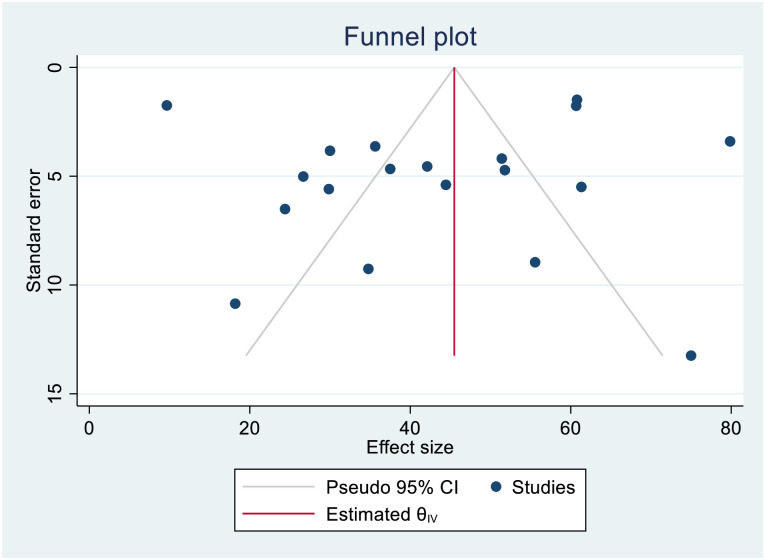
Methods: We systematically searched five electronic major databases (PubMed/Medline, CINAHL, EMBASE, Scopus, Web of Science), and other sources (Google Scholar, Google). We used the Joanna Briggs Institute Critical Appraisal tools to assess the quality of included articles. Heterogeneity assessment was conducted using the forest plot and I2 heterogeneity test. Data were analyzed using STATA Version 15. The pooled hazard ratio, risk ratio, and odd's ratio were estimated along with their 95% CIs.
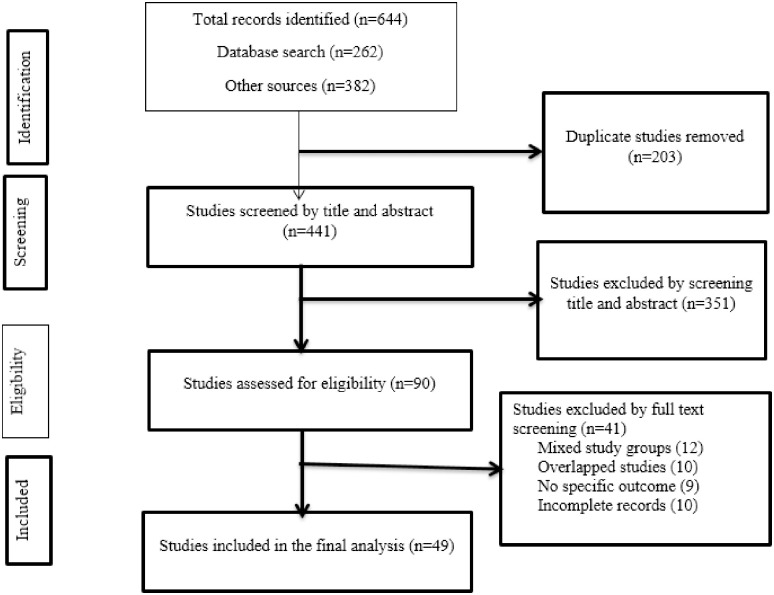
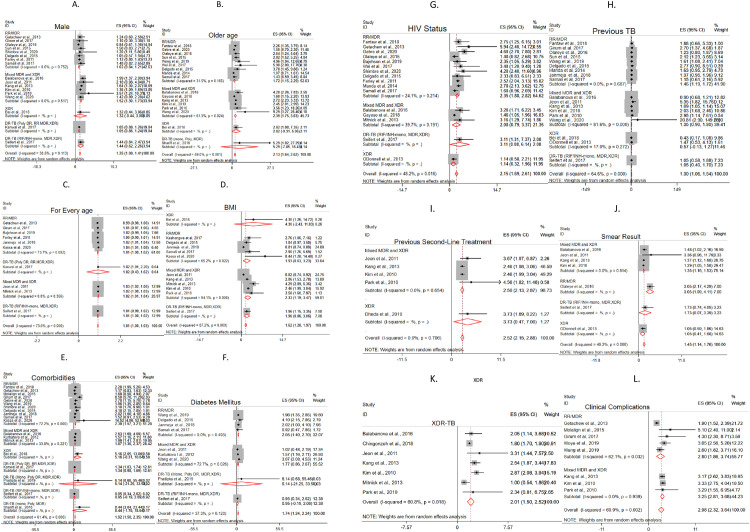
Result: After reviewing 640 articles, 49 studies met the inclusion criteria and were included in the final analysis. The predictors of mortality were; being male (HR = 1.25,95%CI;1.08,1.41,I2;30.5%), older age (HR = 2.13, 95%CI;1.64,2.62,I2;59.0%,RR = 1.40,95%CI; 1.26, 1.53, I2; 48.4%) including a 1 year increase in age (HR = 1.01, 95%CI;1.00,1.03,I2;73.0%), undernutrition (HR = 1.62,95%CI;1.28,1.97,I2;87.2%, RR = 3.13, 95% CI; 2.17,4.09, I2;0.0%), presence of any type of co-morbidity (HR = 1.92,95%CI;1.50-2.33,I2;61.4%, RR = 1.61, 95%CI;1.29, 1.93,I2;0.0%), having diabetes (HR = 1.74, 95%CI; 1.24,2.24, I2;37.3%, RR = 1.60, 95%CI;1.13,2.07, I2;0.0%), HIV co-infection (HR = 2.15, 95%CI;1.69,2.61, I2; 48.2%, RR = 1.49, 95%CI;1.27,1.72, I2;19.5%), TB history (HR = 1.30,95%CI;1.06,1.54, I2;64.6%), previous second-line anti-TB treatment (HR = 2.52, 95% CI;2.15,2.88, I2;0.0%), being smear positive at the baseline (HR = 1.45, 95%CI;1.14,1.76, I2;49.2%, RR = 1.58,95%CI;1.46,1.69, I2;48.7%), having XDR-TB (HR = 2.01, 95%CI;1.50,2.52, I2;60.8%, RR = 2.44, 95%CI;2.16,2.73,I2;46.1%), and any type of clinical complication (HR = 2.98, 95%CI; 2.32, 3.64, I2; 69.9%). There are differences and overlaps of predictors of mortality across different drug-resistance categories. The common predictors of mortality among different drug-resistance categories include; older age, presence of any type of co-morbidity, and undernutrition.
Conclusion: Different patient-related demographic (male sex, older age), and clinical factors (undernutrition, HIV co-infection, co-morbidity, diabetes, clinical complications, TB history, previous second-line anti-TB treatment, smear-positive TB, and XDR-TB) were the predictors of mortality in patients with drug-resistant tuberculosis. The findings would be an important input to the global community to take important measures.
Conflict of interest statement
The authors have declared that no competing interests exist.
Figures
References
-
- WHO. Global Tuberculosis Report. Geneva, Switzerland: World Health Organization; 2019.
-
- WHO. What is DOTS? A Guide to Understanding the WHO-recommended TB Control Strategy Known as DOTS. World Health Organization; 1999.
-
- WHO. Global Tuberculosis Report. Geneva, Switzerland: World Health Organization; 2014.
Publication types
MeSH terms
LinkOut - more resources
Full Text Sources
Medical
Miscellaneous
