


Accelerated burn wound healing with photobiomodulation therapy involves activation of endogenous latent TGF-β1
- PMID: 34183697
- PMCID: PMC8238984
- DOI: 10.1038/s41598-021-92650-w
Accelerated burn wound healing with photobiomodulation therapy involves activation of endogenous latent TGF-β1
Erratum in
-
Author Correction: Accelerated burn wound healing with photobiomodulation therapy involves activation of endogenous latent TGF-β1.Sci Rep. 2021 Aug 31;11(1):17706. doi: 10.1038/s41598-021-97271-x. Sci Rep. 2021. PMID: 34465840 Free PMC article. No abstract available.
Abstract
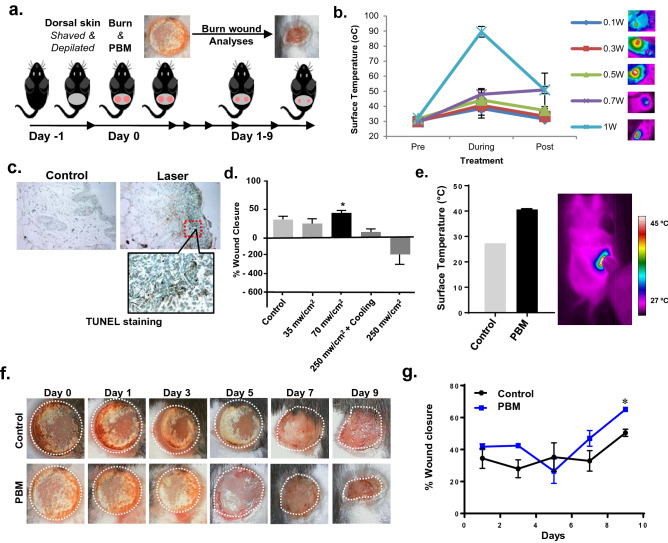
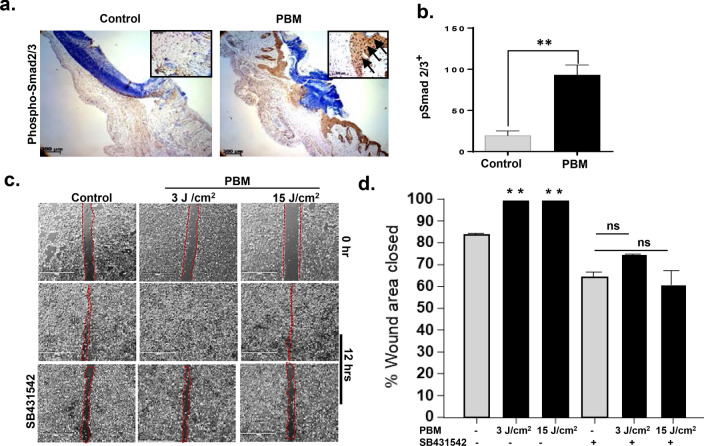
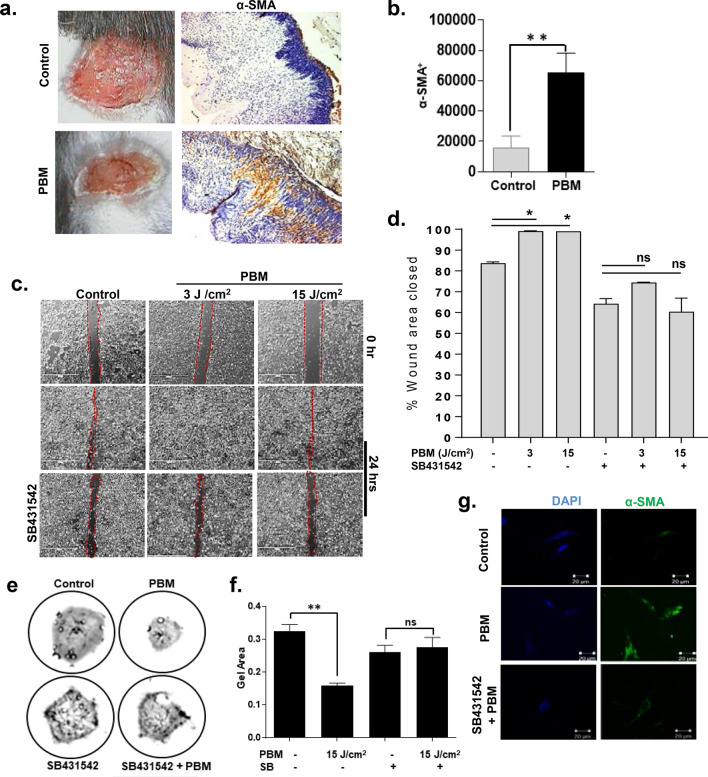
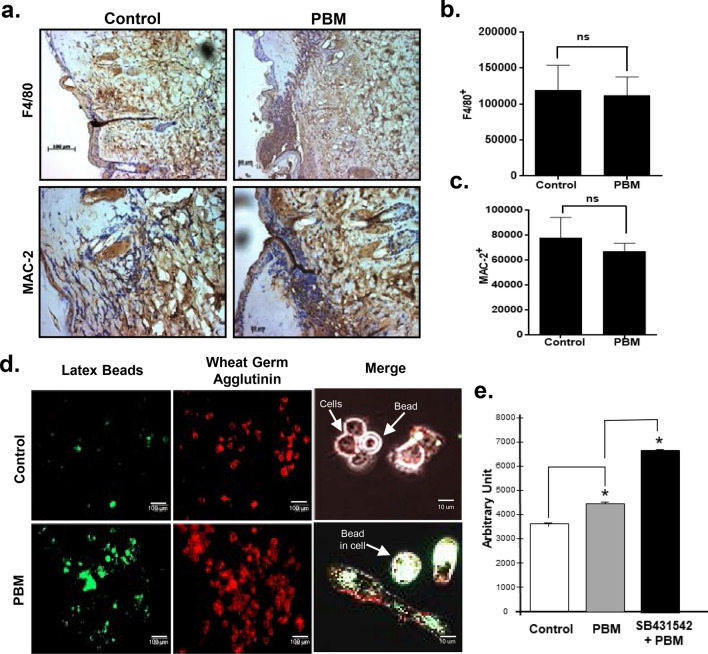
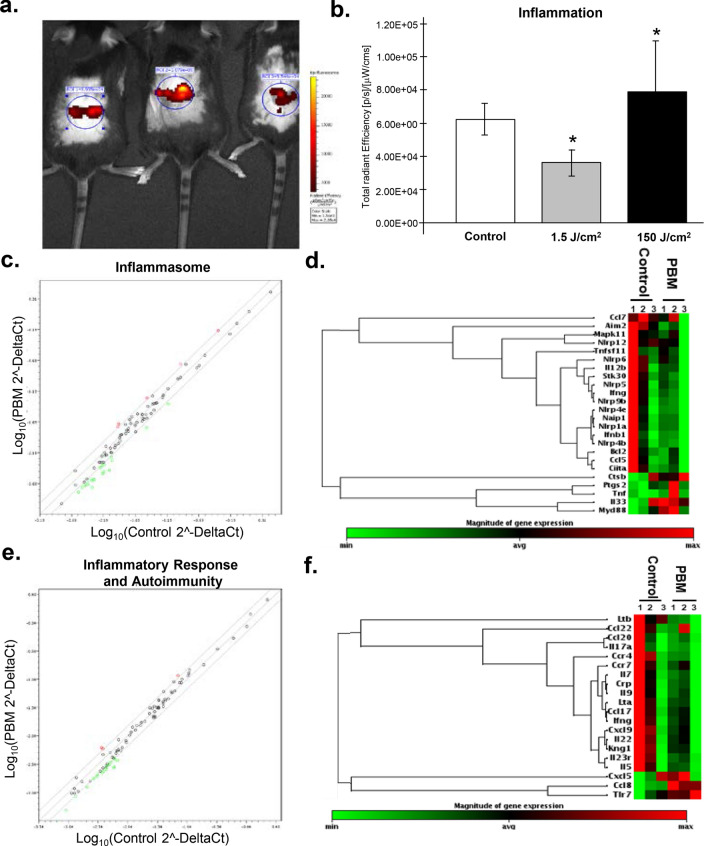
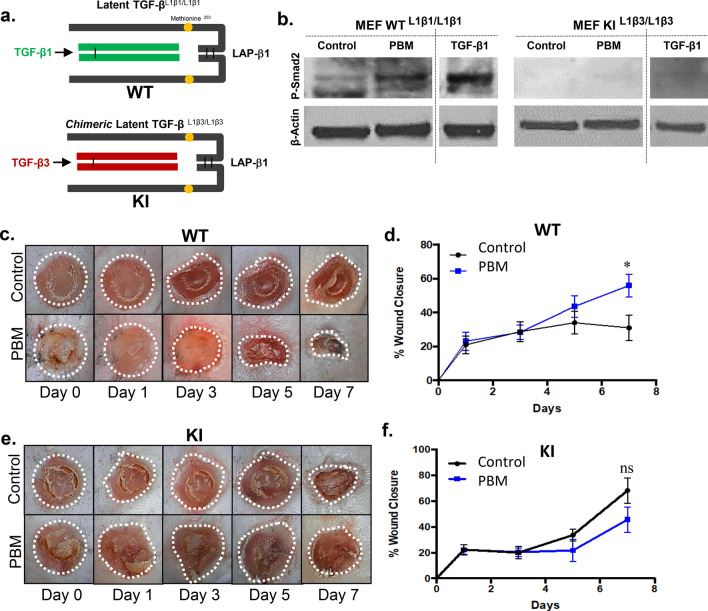
The severity of tissue injury in burn wounds from associated inflammatory and immune sequelae presents a significant clinical management challenge. Among various biophysical wound management approaches, low dose biophotonics treatments, termed Photobiomodulation (PBM) therapy, has gained recent attention. One of the PBM molecular mechanisms of PBM treatments involves photoactivation of latent TGF-β1 that is capable of promoting tissue healing and regeneration. This work examined the efficacy of PBM treatments in a full-thickness burn wound healing in C57BL/6 mice. We first optimized the PBM protocol by monitoring tissue surface temperature and histology. We noted this dynamic irradiance surface temperature-monitored PBM protocol improved burn wound healing in mice with elevated TGF-β signaling (phospho-Smad2) and reduced inflammation-associated gene expression. Next, we investigated the roles of individual cell types involved in burn wound healing following PBM treatments and noted discrete effects on epithelieum, fibroblasts, and macrophage functions. These responses appear to be mediated via both TGF-β dependent and independent signaling pathways. Finally, to investigate specific contributions of TGF-β1 signaling in these PBM-burn wound healing, we utilized a chimeric TGF-β1/β3 knock-in (TGF-β1Lβ3/Lβ3) mice. PBM treatments failed to activate the chimeric TGF-β1Lβ3/Lβ3 complex and failed to improve burn wound healing in these mice. These results suggest activation of endogenous latent TGF-β1 following PBM treatments plays a key role in burn wound healing. These mechanistic insights can improve the safety and efficacy of clinical translation of PBM treatments for tissue healing and regeneration.
Conflict of interest statement
The authors declare no competing interests.
Figures
References
Publication types
MeSH terms
Substances
Grants and funding
LinkOut - more resources
Full Text Sources
Medical
Molecular Biology Databases
