


When anaerobes encounter oxygen: mechanisms of oxygen toxicity, tolerance and defence
- PMID: 34183820
- PMCID: PMC9191689
- DOI: 10.1038/s41579-021-00583-y
When anaerobes encounter oxygen: mechanisms of oxygen toxicity, tolerance and defence
Abstract
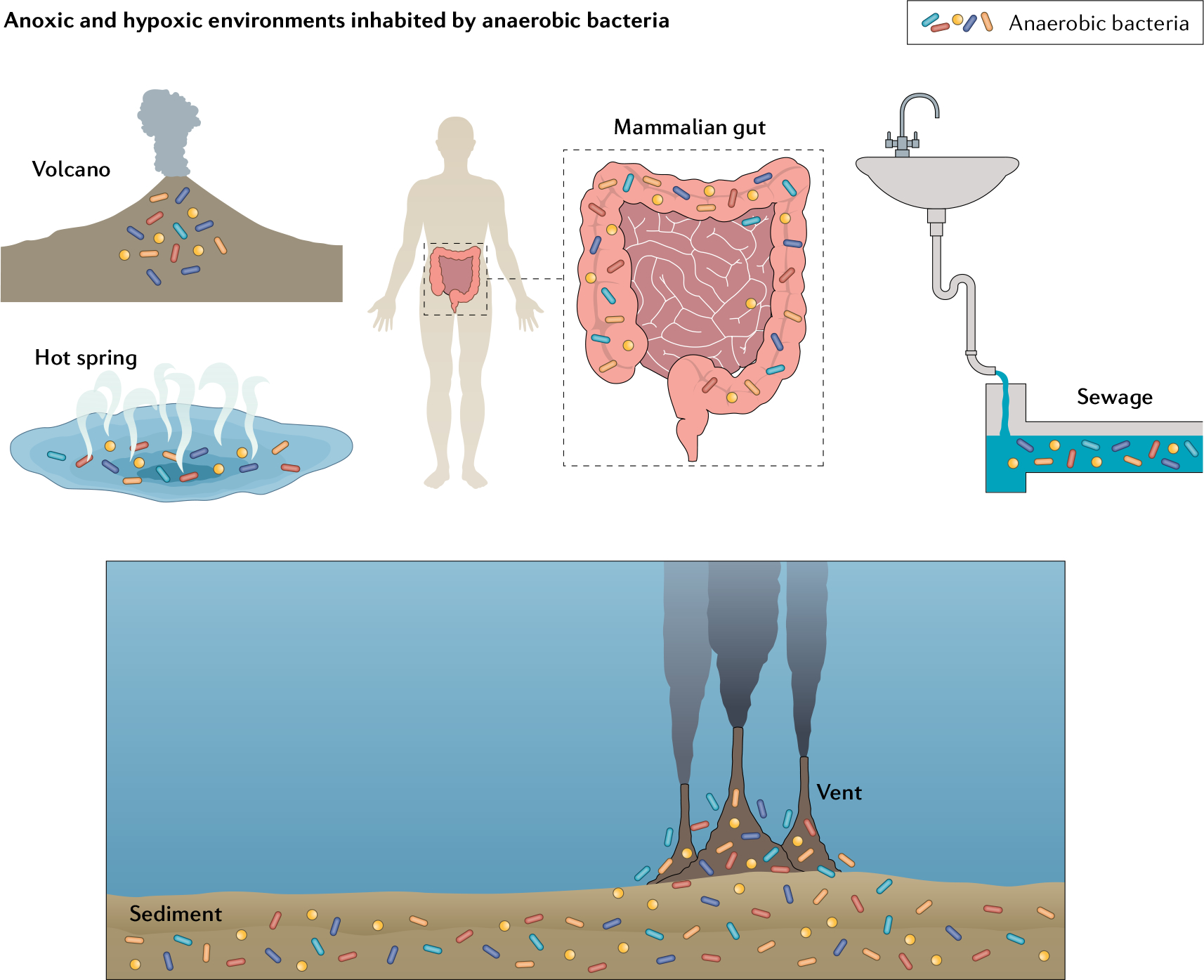
The defining trait of obligate anaerobes is that oxygen blocks their growth, yet the underlying mechanisms are unclear. A popular hypothesis was that these microorganisms failed to evolve defences to protect themselves from reactive oxygen species (ROS) such as superoxide and hydrogen peroxide, and that this failure is what prevents their expansion to oxic habitats. However, studies reveal that anaerobes actually wield most of the same defences that aerobes possess, and many of them have the capacity to tolerate substantial levels of oxygen. Therefore, to understand the structures and real-world dynamics of microbial communities, investigators have examined how anaerobes such as Bacteroides, Desulfovibrio, Pyrococcus and Clostridium spp. struggle and cope with oxygen. The hypoxic environments in which these organisms dwell - including the mammalian gut, sulfur vents and deep sediments - experience episodic oxygenation. In this Review, we explore the molecular mechanisms by which oxygen impairs anaerobes and the degree to which bacteria protect their metabolic pathways from it. The emergent view of anaerobiosis is that optimal strategies of anaerobic metabolism depend upon radical chemistry and low-potential metal centres. Such catalytic sites are intrinsically vulnerable to direct poisoning by molecular oxygen and ROS. Observations suggest that anaerobes have evolved tactics that either minimize the extent to which oxygen disrupts their metabolism or restore function shortly after the stress has dissipated.
© 2021. Springer Nature Limited.
Conflict of interest statement
Competing interests
The authors declare no competing interests.
Figures
References
-
- Slesak I, Kula M, Slesak H, Miszalski Z & Strzalka K How to define obligatory anaerobiosis? An evolutionary view on the antioxidant response system and the early stages of the evolution of life on Earth. Free. Radic. Biol. Med 140, 61–73 (2019). - PubMed
-
-
Lyons TW, Reinhard CT & Planavsky NJ The rise of oxygen in Earth’s early ocean and atmosphere. Nature 506, 307–315 (2014).
This paper describes current thinking on the history of O2 on Earth.
-
-
- Clemmey H & Badham N Oxygen in the Precambrian atmosphere: an evaluation of the geological evidence. Geology 10, 141–146 (1982).
-
- Fischer WW, Hemp J & Johnson JE Evolution of oxygenic photosynthesis. Annu. Rev. Earth Planet. Sci 44, 647–683 (2016).
Publication types
MeSH terms
Substances
Grants and funding
LinkOut - more resources
Full Text Sources
Miscellaneous
