


Adipose-specific ATGL ablation reduces burn injury-induced metabolic derangements in mice
- PMID: 34185433
- PMCID: PMC8181198
- DOI: 10.1002/ctm2.417
Adipose-specific ATGL ablation reduces burn injury-induced metabolic derangements in mice
Abstract
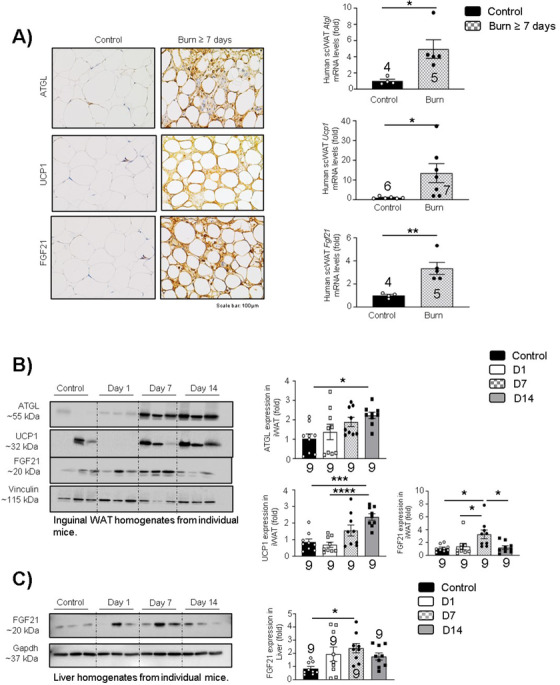
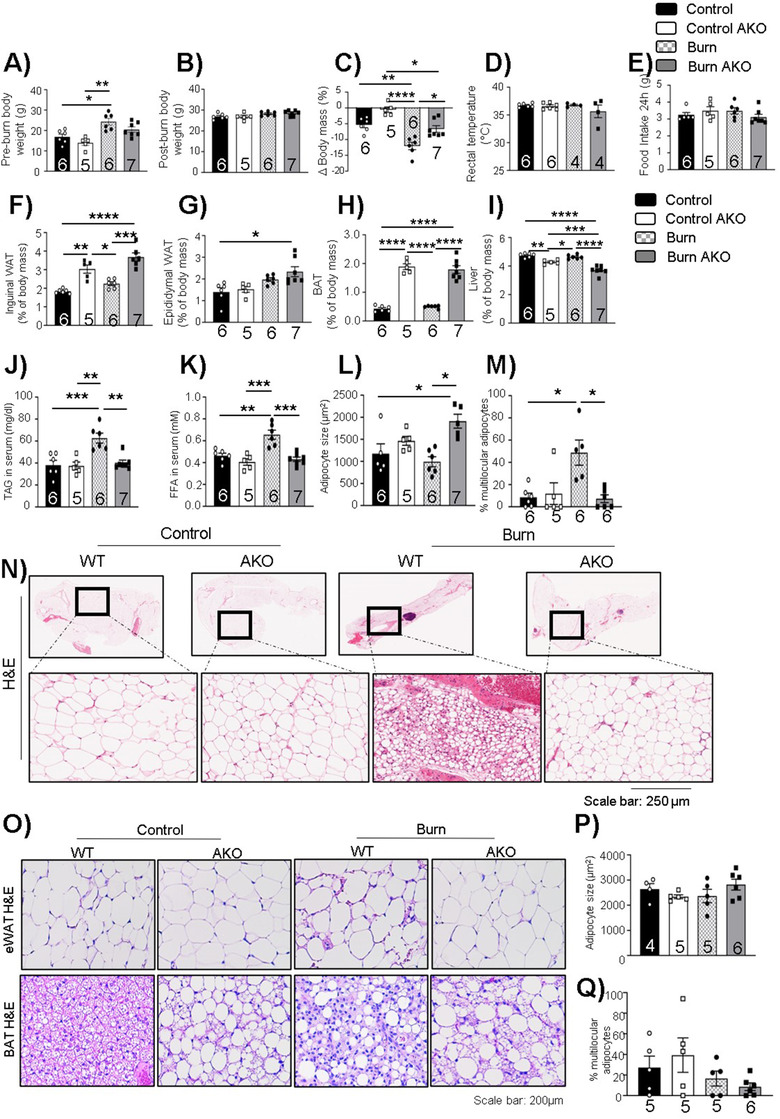
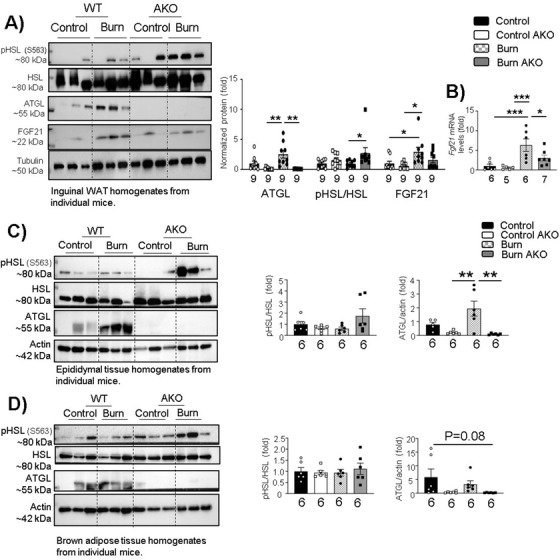
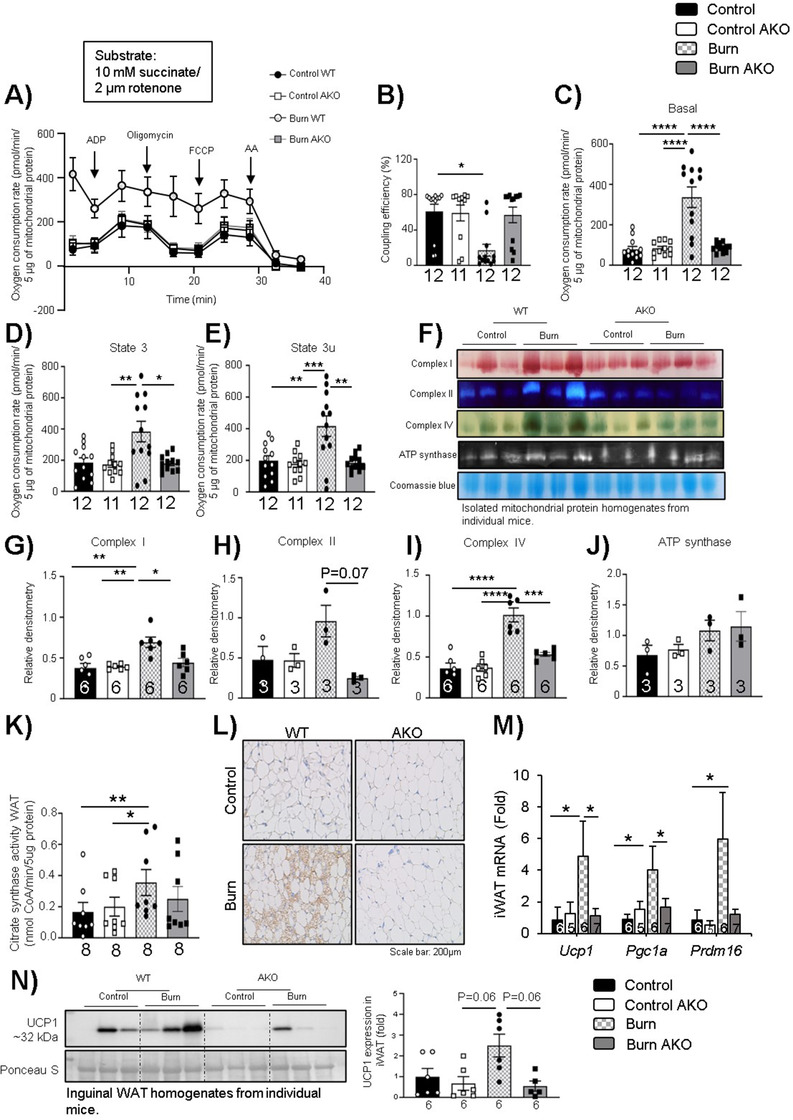
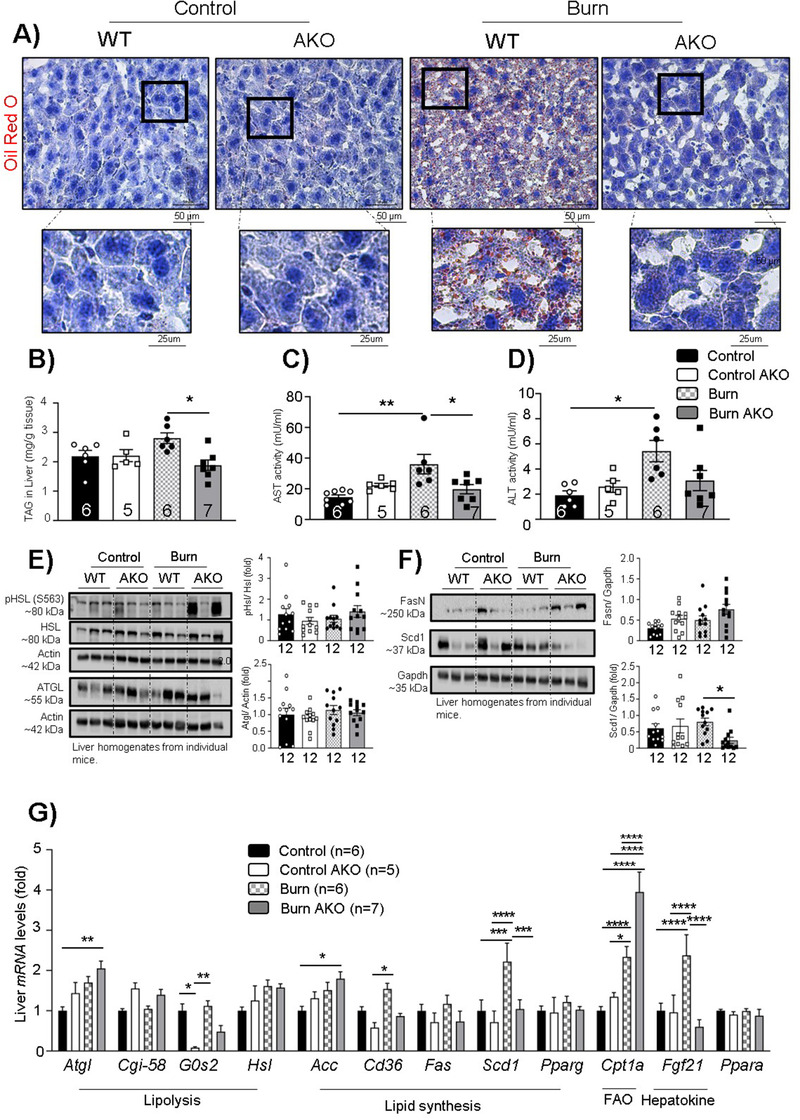
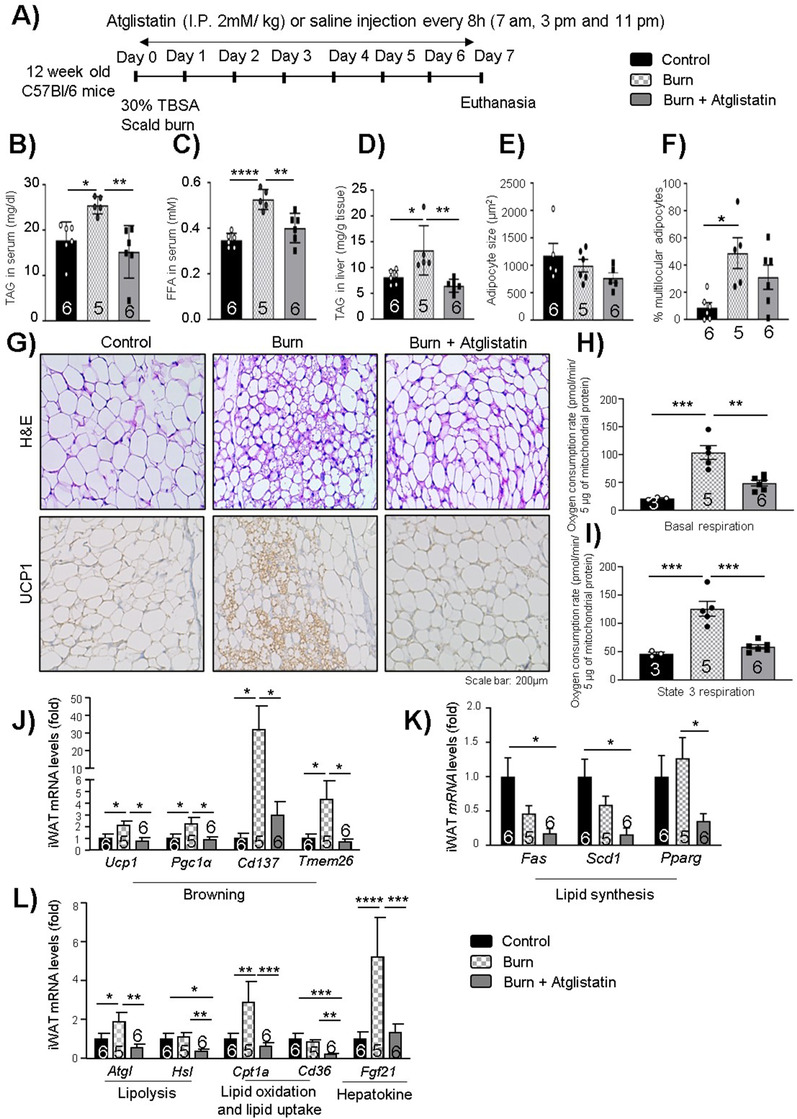
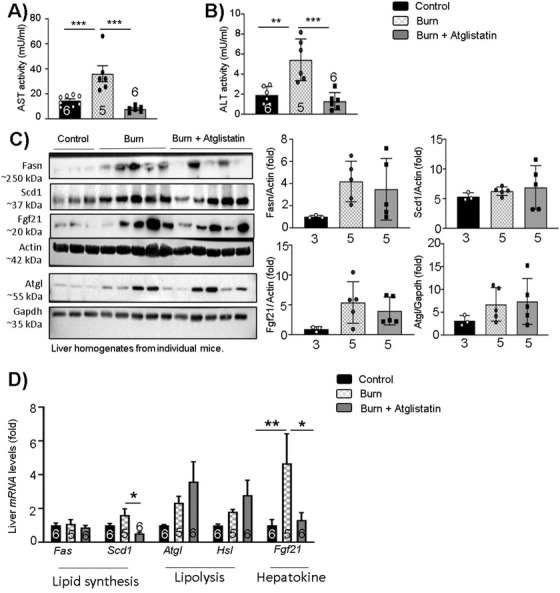
Hypermetabolism following severe burn injuries is associated with adipocyte dysfunction, elevated beige adipocyte formation, and increased energy expenditure. The resulting catabolism of adipose leads to detrimental sequelae such as fatty liver, increased risk of infections, sepsis, and even death. While the phenomenon of pathological white adipose tissue (WAT) browning is well-documented in cachexia and burn models, the molecular mechanisms are essentially unknown. Here, we report that adipose triglyceride lipase (ATGL) plays a central role in burn-induced WAT dysfunction and systemic outcomes. Targeting adipose-specific ATGL in a murine (AKO) model resulted in diminished browning, decreased circulating fatty acids, and mitigation of burn-induced hepatomegaly. To assess the clinical applicability of targeting ATGL, we demonstrate that the selective ATGL inhibitor atglistatin mimics the AKO results, suggesting a path forward for improving patient outcomes.
Keywords: FGF21; adipose triglyceride lipase; browning; burns; mitochondria; trauma; uncoupling.
© 2021 The Authors. Clinical and Translational Medicine published by John Wiley & Sons Australia, Ltd on behalf of Shanghai Institute of Clinical Bioinformatics.
Conflict of interest statement
The authors have no conflict of interest to declare.
Figures
References
-
- Fole N, Marshall S, Pikul J, Salter K, Teasell R. Hypermetabolism following moderate to severe traumatic acute brain injury: a systematic review. J Neurotrauma. 2008;25(12):1415–1431. - PubMed
-
- Vassimo HS, Monteiro JP, Machado AA, et al. Which equation should be used to measure energy expenditure in HIV‐infected patients?. Revista de Nutrição. 2013;26:225–232.
Publication types
MeSH terms
Substances
Grants and funding
LinkOut - more resources
Full Text Sources
Medical
Molecular Biology Databases