An Evidence-Based Review of the Pathophysiology, Treatment, and Prevention of Exercise-Associated Muscle Cramps
- PMID: 34185846
- PMCID: PMC8775277
- DOI: 10.4085/1062-6050-0696.20
An Evidence-Based Review of the Pathophysiology, Treatment, and Prevention of Exercise-Associated Muscle Cramps
Abstract
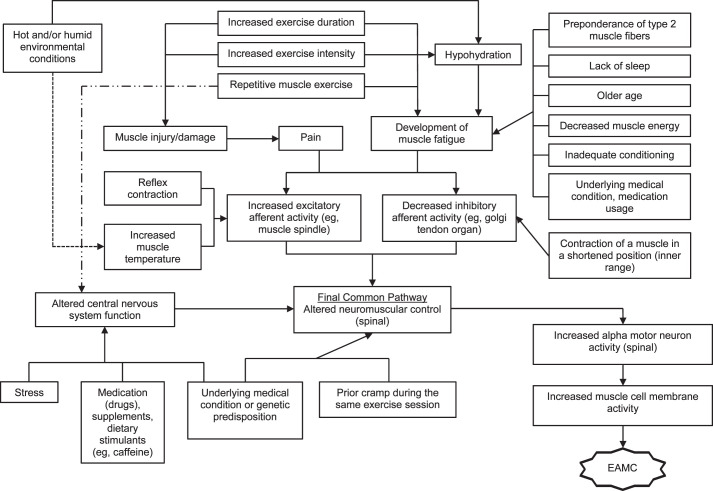
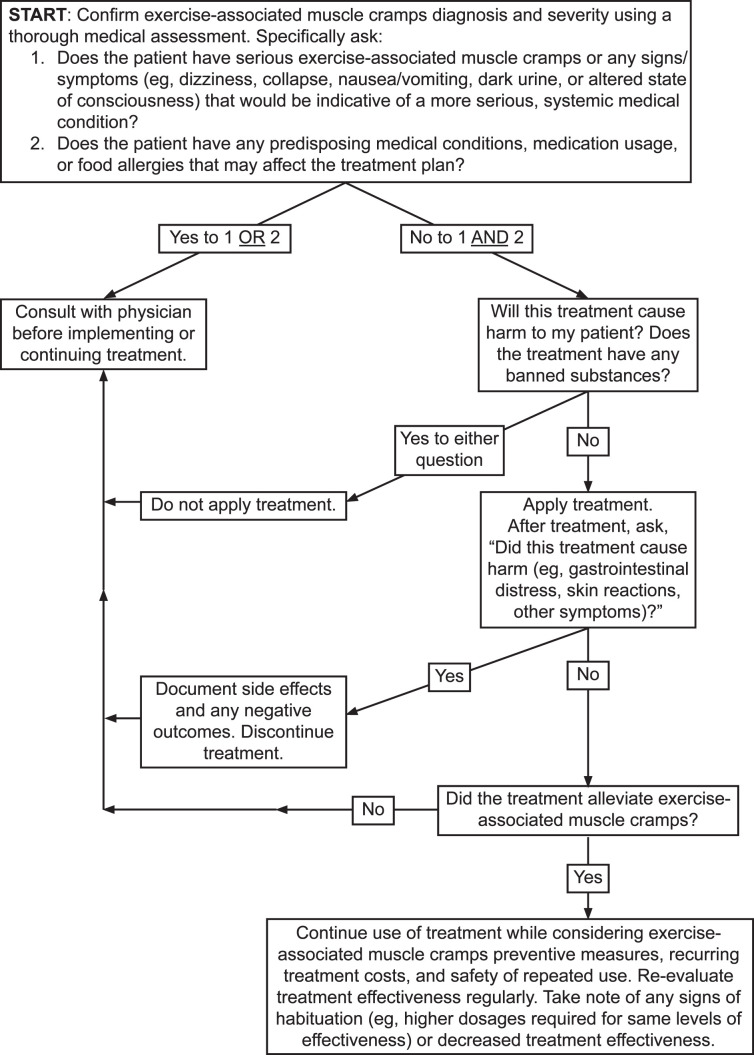
Exercise-associated muscle cramps (EAMCs) are common and frustrating for athletes and the physically active. We critically appraised the EAMC literature to provide evidence-based treatment and prevention recommendations. Although the pathophysiology of EAMCs appears controversial, recent evidence suggests that EAMCs are due to a confluence of unique intrinsic and extrinsic factors rather than a singular cause. The treatment of acute EAMCs continues to include self-applied or clinician-guided gentle static stretching until symptoms abate. Once the painful EAMCs are alleviated, the clinician can continue treatment on the sidelines by focusing on patient-specific risk factors that may have contributed to the onset of EAMCs. For EAMC prevention, clinicians should obtain a thorough medical history and then identify any unique risk factors. Individualizing EAMC prevention strategies will likely be more effective than generalized advice (eg, drink more fluids).
Keywords: best practice; dehydration; electrolytes; fatigue; risk factors.
© by the National Athletic Trainers' Association, Inc.
Figures
References
-
- Schwabe K, Schwellnus MP, Derman W, Swanevelder S, Jordaan E. Less experience and running pace are potential risk factors for medical complications during a 56 km road running race: a prospective study in 26 354 race starters—SAFER study II. Br J Sports Med . 2014;48(11):905–911. doi: 10.1136/bjsports-2014-093471. - DOI - PubMed
-
- Miller KC. WM Adams, Jardine JF., editors. Exercise-associated muscle cramps. Exertional Heat Illness A Clinical and EvidenceBased Guide . 2020. Springer; 117–136.
Publication types
MeSH terms
LinkOut - more resources
Full Text Sources
Medical