


Comparison of different mechanical chest compression devices in the alpine rescue setting: a randomized triple crossover experiment
- PMID: 34187532
- PMCID: PMC8244219
- DOI: 10.1186/s13049-021-00899-x
Comparison of different mechanical chest compression devices in the alpine rescue setting: a randomized triple crossover experiment
Abstract
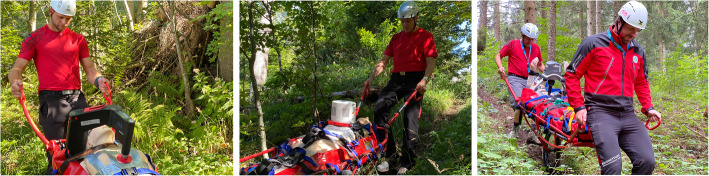
Background: Cardiopulmonary resuscitation in mountain environment is challenging. Continuous chest compressions during transport or hoist rescue are almost impossible without mechanical chest compression devices. Current evidence is predominantly based on studies conducted by urbane ambulance service. Therefore, we aimed to investigate the feasibility of continuous mechanical chest compression during alpine terrestrial transport using three different devices.
Methods: Randomized triple crossover prospective study in an alpine environment. Nineteen teams of the Austrian Mountain Rescue Service trained according to current ERC guidelines performed three runs each of a standardised alpine rescue-scenario, using three different devices for mechanical chest compression. Quality of CPR, hands-off-time and displacement of devices were measured.
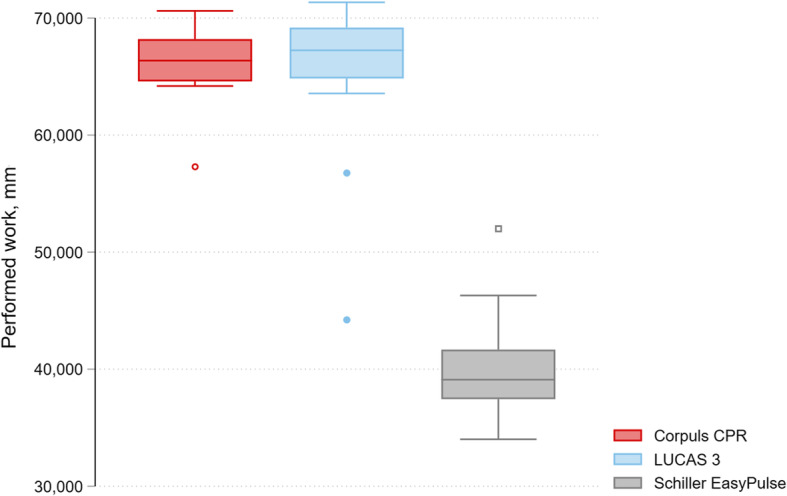
Results: The primary outcome of performed work (defined as number of chest compressions x compression depth) was 66,062 mm (2832) with Corpuls CPR, 65,877 mm (6163) with Physio-Control LUCAS 3 and 40,177 mm (4396) with Schiller Easy Pulse. The difference both between LUCAS 3 and Easy Pulse (Δ 25,700; 95% confidence interval 21,118 - 30,282) and between Corpuls CPR and Easy Pulse (Δ 25,885; 23,590 - 28,181) was significant. No relevant differences were found regarding secondary outcomes.
Conclusion: Mechanical chest compression devices provide a viable option in the alpine setting. For two out of three devices (Corpuls CPR and LUCAS 3) we found adequate quality of CPR. Those devices also maintained a correct placement of the piston even during challenging terrestrial transport. Adequate hands-off-times and correct placement could be achieved even by less trained personnel.
Keywords: Alpine rescue mission; Hypothermic cardiac arrest; Mechanical chest compression; Out-of-hospital cardiac arrest.
Conflict of interest statement
None.
The authors declare that they have no competing interests.
Figures


References
-
- Sicherheit ÖKfA. Jahresrückblick Alpinunfälle 2020. 20.01.2021 (https://www.alpinesicherheit.at/data/docs/2021/presseaussendung_rueckbli...). Accessed 7 Feb 2021.
Publication types
MeSH terms
LinkOut - more resources
Full Text Sources
Medical
