


Catastrophic costs among tuberculosis-affected households in Zimbabwe: A national health facility-based survey
- PMID: 34192392
- PMCID: PMC8519355
- DOI: 10.1111/tmi.13647
Catastrophic costs among tuberculosis-affected households in Zimbabwe: A national health facility-based survey
Abstract
Objectives: To determine the incidence and major drivers of catastrophic costs among TB-affected households in Zimbabwe.
Methods: We conducted a nationally representative health facility-based survey with random cluster sampling among consecutively enrolled drug-susceptible (DS-TB) and drug-resistant TB (DR-TB) patients. Costs incurred and income lost due to TB illness were captured using an interviewer-administered standardised questionnaire. We used multivariable logistic regression to determine the risk factors for experiencing catastrophic costs.
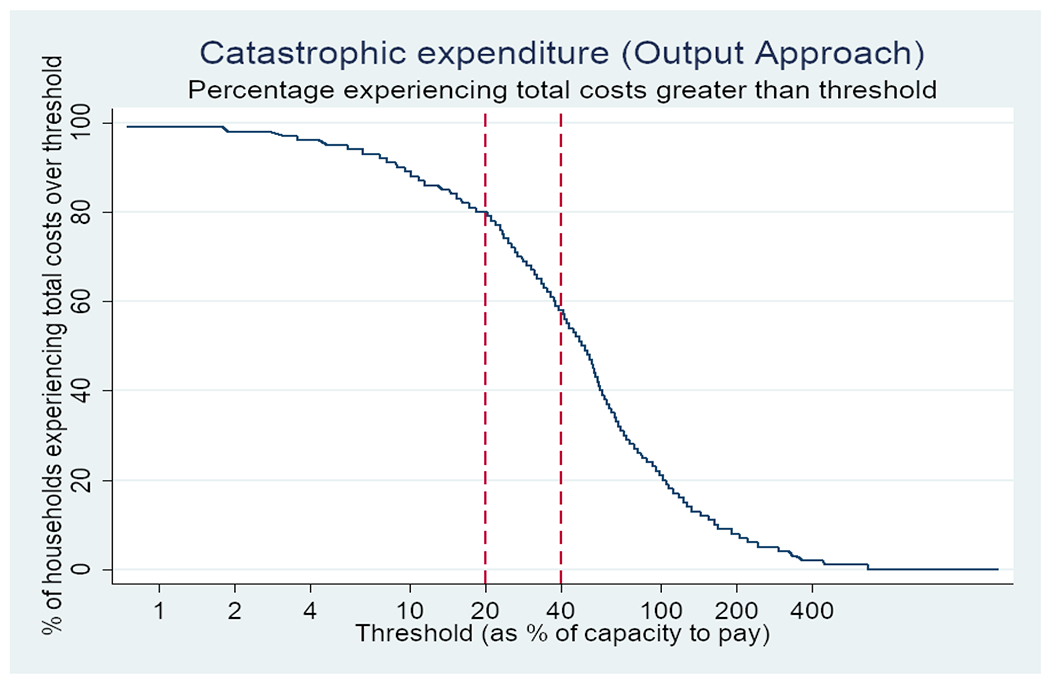
Results: A total of 841 patients were enrolled and were weighted to 900 during data analysis. There were 500 (56%) males and 46 (6%) DR-TB patients. Thirty-five (72%) DR-TB patients were HIV co-infected. Overall, 80% (95% CI: 77-82) of TB patients and their households experienced catastrophic costs. The major cost driver pre-TB diagnosis was direct medical costs. Nutritional supplements were the major cost driver post-TB diagnosis, with a median cost of US$360 (IQR: 240-600). Post-TB median diagnosis costs were three times higher among DR-TB (US$1,659 [653-2,787]) than drug DS-TB-affected households (US$537 [204-1,134]). Income loss was five times higher among DR-TB than DS-TB patients. In multivariable analysis, household wealth was the only covariate that remained significantly associated with catastrophic costs: The poorest households had 16 times the odds of incurring catastrophic costs versus the wealthiest households (adjusted odds ratio [aOR: 15.7 95% CI: 7.5-33.1]).
Conclusion: The majority of TB-affected households, especially those affected by DR-TB, experienced catastrophic costs. Since the major cost drivers fall outside the healthcare system, multi-sectoral approaches to TB control and linking TB patients to social protection may reduce catastrophic costs.
Keywords: Zimbabwe; financial protection; patient cost; social protection; tuberculosis; universal health coverage.
© 2021 John Wiley & Sons Ltd.
Conflict of interest statement
Competing interests
The authors declare they have no competing interests
Figures

References
-
- World Health Organisation. Global Tuberculosis Report 2020 [Internet]. Geneva, Switzerland; 2020. Available from: https://www.who.int/publications/i/item/9789240013131
-
- Timire C, Metcalfe JZ, Chirenda J, Scholten JN, Manyame-murwira B, Ngwenya M, et al. International Journal of Infectious Diseases Prevalence of drug-resistant tuberculosis in Zimbabwe: A health facility-based cross-sectional survey. Int J Infect Dis [Internet]. 2019;87:119–25. Available from: 10.1016/j.ijid.2019.07.021 - DOI - PMC - PubMed
-
- World Health Organisation. Global Tuberculosis Report 2018 [Internet]. Geneva, Switzerland; 2018. Available from: WHO/CDS/TB/2018.20
-
- STOP TB Partnership. The paradigm shift 2016-2020: Global plan to End TB [Internet]. Geneva, Switzerland; 2015. Available from: http://www.stoptb.org/global/plan/plan2/
