


Evolving therapeutic landscape in follicular lymphoma: a look at emerging and investigational therapies
- PMID: 34193230
- PMCID: PMC8247091
- DOI: 10.1186/s13045-021-01113-2
Evolving therapeutic landscape in follicular lymphoma: a look at emerging and investigational therapies
Abstract
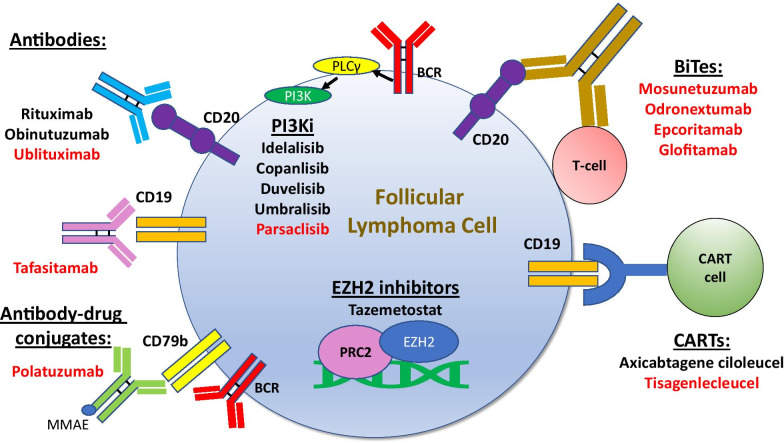
Follicular Lymphoma (FL) is the most common subtype of indolent B cell non-Hodgkin lymphoma. The clinical course can be very heterogeneous with some patients being safely observed over many years without ever requiring treatment to other patients having more rapidly progressive disease requiring multiple lines of treatment for disease control. Front-line treatment of advanced FL has historically consisted of chemoimmunotherapy but has extended to immunomodulatory agents such as lenalidomide. In the relapsed setting, several exciting therapies that target the underlying biology and immune microenvironment have emerged, most notable among them include targeted therapies such as phosphoinositide-3 kinase and Enhancer of Zeste 2 Polycomb Repressive Complex 2 inhibitors and cellular therapies including chimeric antigen receptor T cells and bispecific T cell engagers. There are several combination therapies currently in clinical trials that appear promising. These therapies will likely reshape the treatment approach for patients with relapsed and refractory FL in the coming years. In this article, we provide a comprehensive review of the emerging and investigational therapies in FL and discuss how these agents will impact the therapeutic landscape in FL.
Keywords: BiTe; CART; EZH2; Follicular lymphoma; PI3Ki.
Conflict of interest statement
WH and NE has no relevant COI pertaining to the manuscript.
Figures
References
-
- Schmitt C, Balogh B, Grundt A, Buchholtz C, Leo A, Benner A, et al. The bcl-2/IgH rearrangement in a population of 204 healthy individuals: occurrence, age and gender distribution, breakpoints, and detection method validity. Leuk Res. 2006;30(6):745–750. doi: 10.1016/j.leukres.2005.10.001. - DOI - PubMed
Publication types
MeSH terms
Substances
LinkOut - more resources
Full Text Sources
Other Literature Sources
