


Cardiac regeneration by direct reprogramming in this decade and beyond
- PMID: 34193320
- PMCID: PMC8247073
- DOI: 10.1186/s41232-021-00168-5
Cardiac regeneration by direct reprogramming in this decade and beyond
Abstract
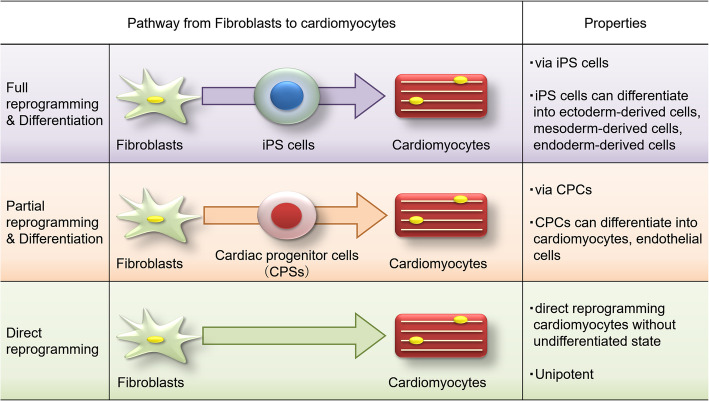
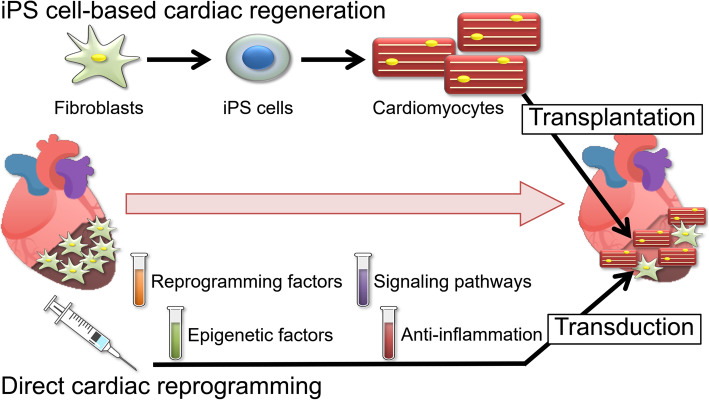
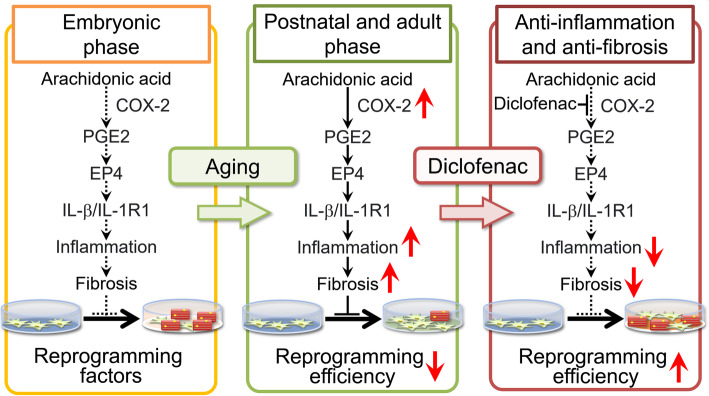
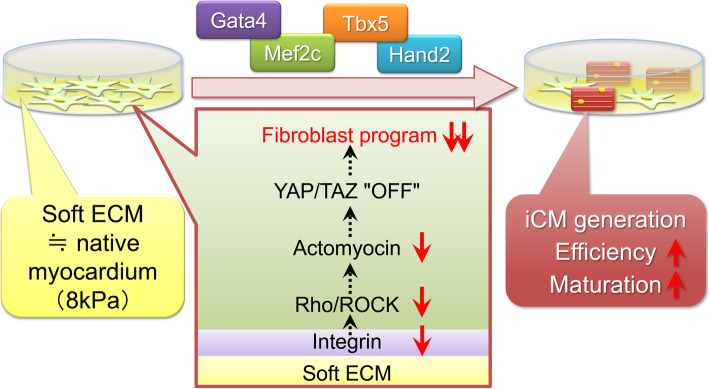
Japan faces an increasing incidence of heart disease, owing to a shift towards a westernized lifestyle and an aging demographic. In cases where conventional interventions are not appropriate, regenerative medicine offers a promising therapeutic option. However, the use of stem cells has limitations, and therefore, "direct cardiac reprogramming" is emerging as an alternative treatment. Myocardial regeneration transdifferentiates cardiac fibroblasts into cardiomyocytes in situ.Three cardiogenic transcription factors: Gata4, Mef2c, and Tbx5 (GMT) can induce direct reprogramming of fibroblasts into induced cardiomyocytes (iCMs), in mice. However, in humans, additional factors, such as Mesp1 and Myocd, are required. Inflammation and immune responses hinder the reprogramming process in mice, and epigenetic modifiers such as TET1 are involved in direct cardiac reprogramming in humans. The three main approaches to improving reprogramming efficiency are (1) improving direct cardiac reprogramming factors, (2) improving cell culture conditions, and (3) regulating epigenetic factors. miR-133 is a potential candidate for the first approach. For the second approach, inhibitors of TGF-β and Wnt signals, Akt1 overexpression, Notch signaling pathway inhibitors, such as DAPT ((S)-tert-butyl 2-((S)-2-(2-(3,5-difluorophenyl) acetamido) propanamido)-2-phenylacetate), fibroblast growth factor (FGF)-2, FGF-10, and vascular endothelial growth factor (VEGF: FFV) can influence reprogramming. Reducing the expression of Bmi1, which regulates the mono-ubiquitination of histone H2A, alters histone modification, and subsequently the reprogramming efficiency, in the third approach. In addition, diclofenac, a non-steroidal anti-inflammatory drug, and high level of Mef2c overexpression could improve direct cardiac reprogramming.Direct cardiac reprogramming needs improvement if it is to be used in humans, and the molecular mechanisms involved remain largely elusive. Further advances in cardiac reprogramming research are needed to bring us closer to cardiac regenerative therapy.
Keywords: Cardiac fibroblast; Direct cardiac reprogramming; Induced cardiomyocytes (iCMs); Micro RNAs; Sendai virus; Transcription factors; iPS cells.
Conflict of interest statement
The authors declare that they have no competing interests.
Figures
References
Publication types
Grants and funding
- 18K08047/Grant-in-Aid for Scientific Research (C) from The Ministry of Education, Culture, Sports, Science and Technology (MEXT KAKENHI)
- JP20ek0109305/Practical Research Project for Rare/Intractable Diseases
- (JP20bm0704030/the Research Center Network for Realization of Regenerative Medicine
- 19K22613/the Japan Society for the Promotion of Science (JSPS)
LinkOut - more resources
Full Text Sources
Miscellaneous
