


From human to mouse and back offers hope for patients with fibromyalgia
- PMID: 34196306
- PMCID: PMC8245165
- DOI: 10.1172/JCI150382
From human to mouse and back offers hope for patients with fibromyalgia
Abstract
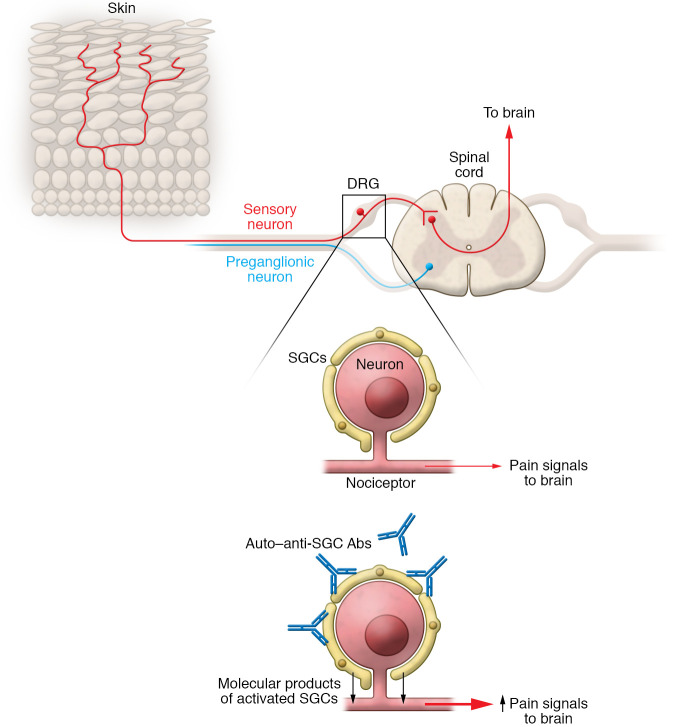
Fibromyalgia syndrome (FMS) is a highly prevalent, debilitating disease with heterogeneous symptoms of widespread pain and tenderness, fatigue, sleep disturbance, and impaired cognition. The cause of FMS is unknown, but the clinical constellation of symptoms and abnormalities in the neuroendocrine system, autonomic nervous system, and sleep implicate the nervous system in its pathogenesis. In this issue of the JCI, Goebel, Krock, et al. identified antibodies from patients with FMS that produce FMS in mice by binding to satellite glial cells (SGCs), which envelope sensory neurons. Because antibodies harvested from patients with FMS, but not controls, stimulated SGCs to an activated state known to mediate chronic pain by augmenting neuronal activity, these findings reveal a pivotal role for autoreactive IgG in the pathophysiology of FMS. These important findings pave a pathway to study mechanism-based experimental therapeutics targeting IgG titers or antibody binding to SGCs underlying the neuroimmune dysfunction of FMS.
Conflict of interest statement
Figures
Comment on
-
Passive transfer of fibromyalgia symptoms from patients to mice.J Clin Invest. 2021 Jul 1;131(13):e144201. doi: 10.1172/JCI144201. J Clin Invest. 2021. PMID: 34196305 Free PMC article.
References
Publication types
MeSH terms
Grants and funding
LinkOut - more resources
Full Text Sources
Medical
Miscellaneous
